US officials announced on 23/12/2024 that the country had dispatched a significant number of special operations aircraft, along with troops and equipment, to the Caribbean Sea region. According to one official, at least 10 CV-22B tiltrotor aircraft, used by US special forces, flew from Cannon Air Force Base in New Mexico to the Caribbean on 22/12/2024.
Commercial satellite images taken on 22/12/2024 showed at least 5 MC-130J special operations aircraft at Rafael Hernandez Airport in Puerto Rico. These aircraft appear to have arrived on 17/12/2024.
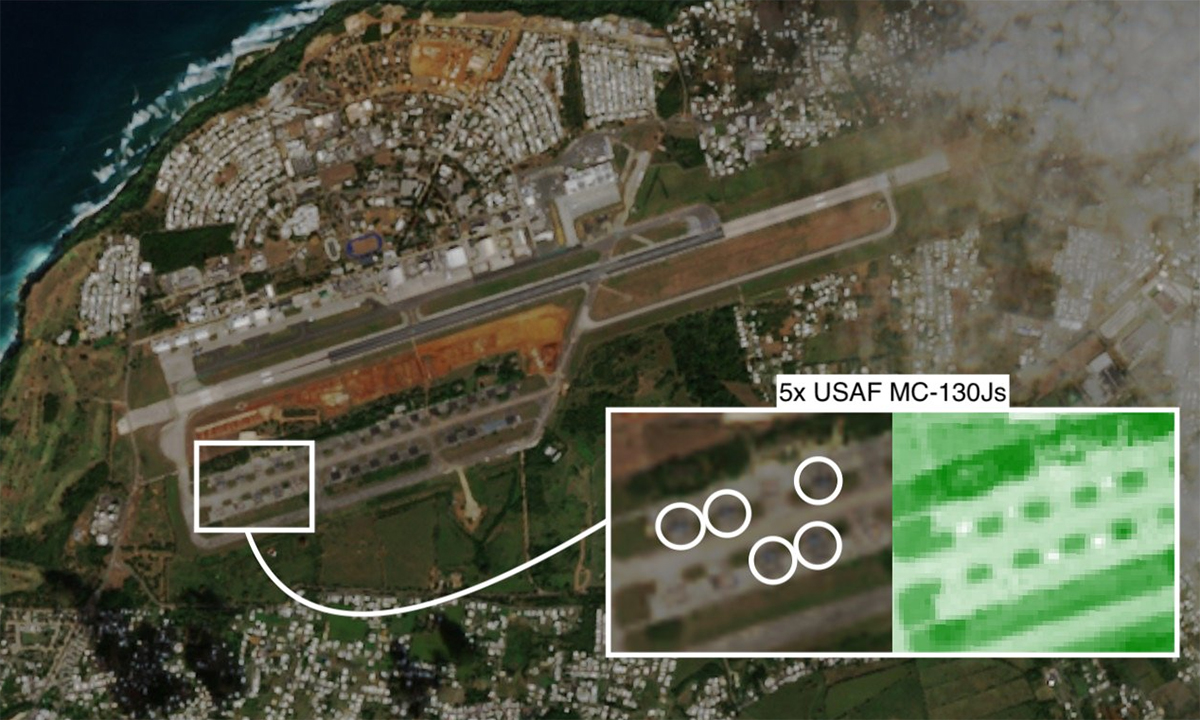 |
A US MC-130J transport aircraft at an airport in Puerto Rico, pictured on 22/12/2024. Photo: Copernicus Sentinel |
Civilian flight tracking data also indicated transport aircraft moving from Fort Stewart and Fort Campbell to Puerto Rico on 22/12/2024. A US official stated that these aircraft transported troops and military equipment, but did not provide specific details.
Cannon Air Force Base is home to the US Air Force's 27th Special Operations Wing. Fort Campbell is the base for the 160th Special Operations Aviation Regiment and the US Army's 101st Airborne Division, while the 75th Ranger Regiment has a battalion stationed at Hunter Army Airfield within Fort Stewart.
The 27th Special Operations Wing and the 160th Special Operations Aviation Regiment specialize in high-risk infiltration and rescue missions, as well as providing air support for ground troops. US Army Rangers are trained to seize airfields, infrastructure, and ensure security for special forces like SEAL or Delta during joint operations.
Howard Altman, editor of the US military news site War Zone, noted that the presence of CV-22B tiltrotor aircraft and MC-130J aircraft in the southern Caribbean would significantly expand air support capabilities within "Operation Southern Spear", which Washington is currently conducting.
"The CV-22 has much greater range and speed than traditional helicopters, allowing them to penetrate deep into combat zones without refueling. This can provide a major advantage when operating in large countries like Venezuela", Altman said.
Meanwhile, the MC-130J, with its ability to land on austere runways, is considered a highly effective transport aircraft, capable of delivering cargo and troops deep into combat zones. Additionally, MC-130J aircraft refuel the CV-22 fleet, along with HH-60, MH-60, and MH-47 helicopters.
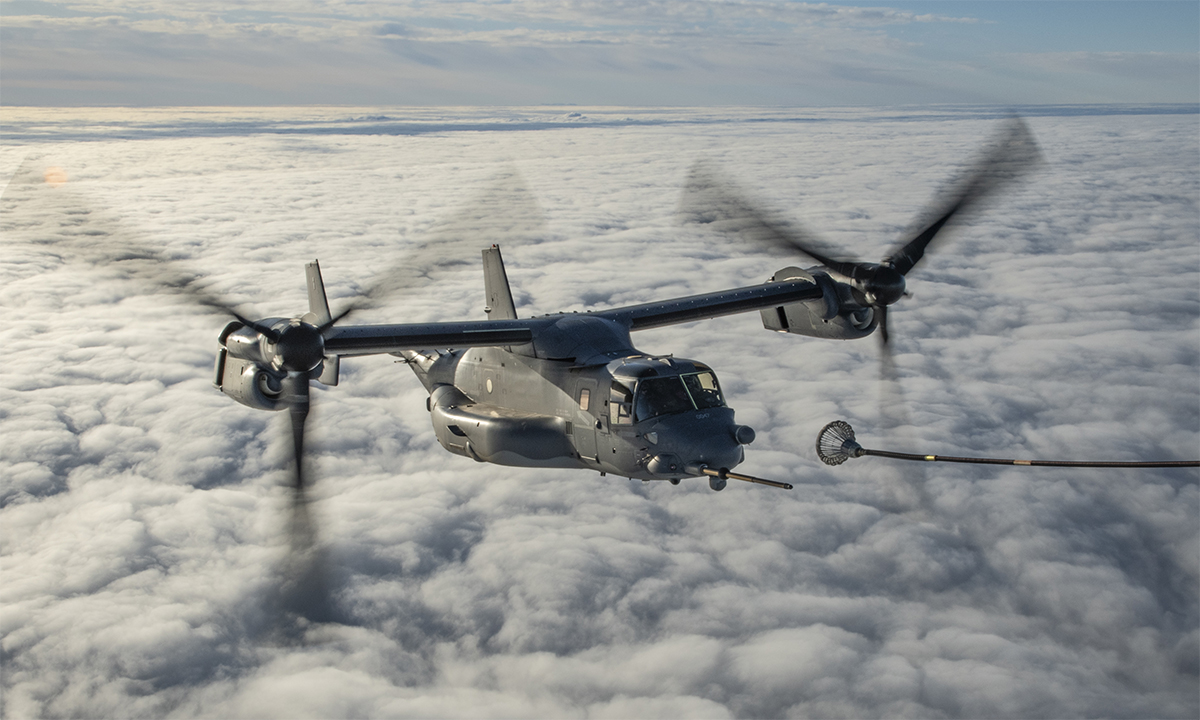 |
A US CV-22B tiltrotor aircraft refuels from an MC-130J aircraft during an exercise in Sweden in 11/2020. Photo: USAF |
"The US military is positioning forces to support the operation. Deploying such assets indicates that President Donald Trump's administration has decided on a course of action. The question is, what will this bring?", said retired General David Deptula, who leads the Mitchell Institute for Aerospace Studies, based in the US.
A spokesperson for US Southern Command (USSOUTHCOM), the agency responsible for US military operations in Latin America, declined to comment on the details. "The US military routinely rotates equipment and personnel to bases. As a matter of practice, we do not disclose or comment on rotation processes to ensure security", the spokesperson stated.
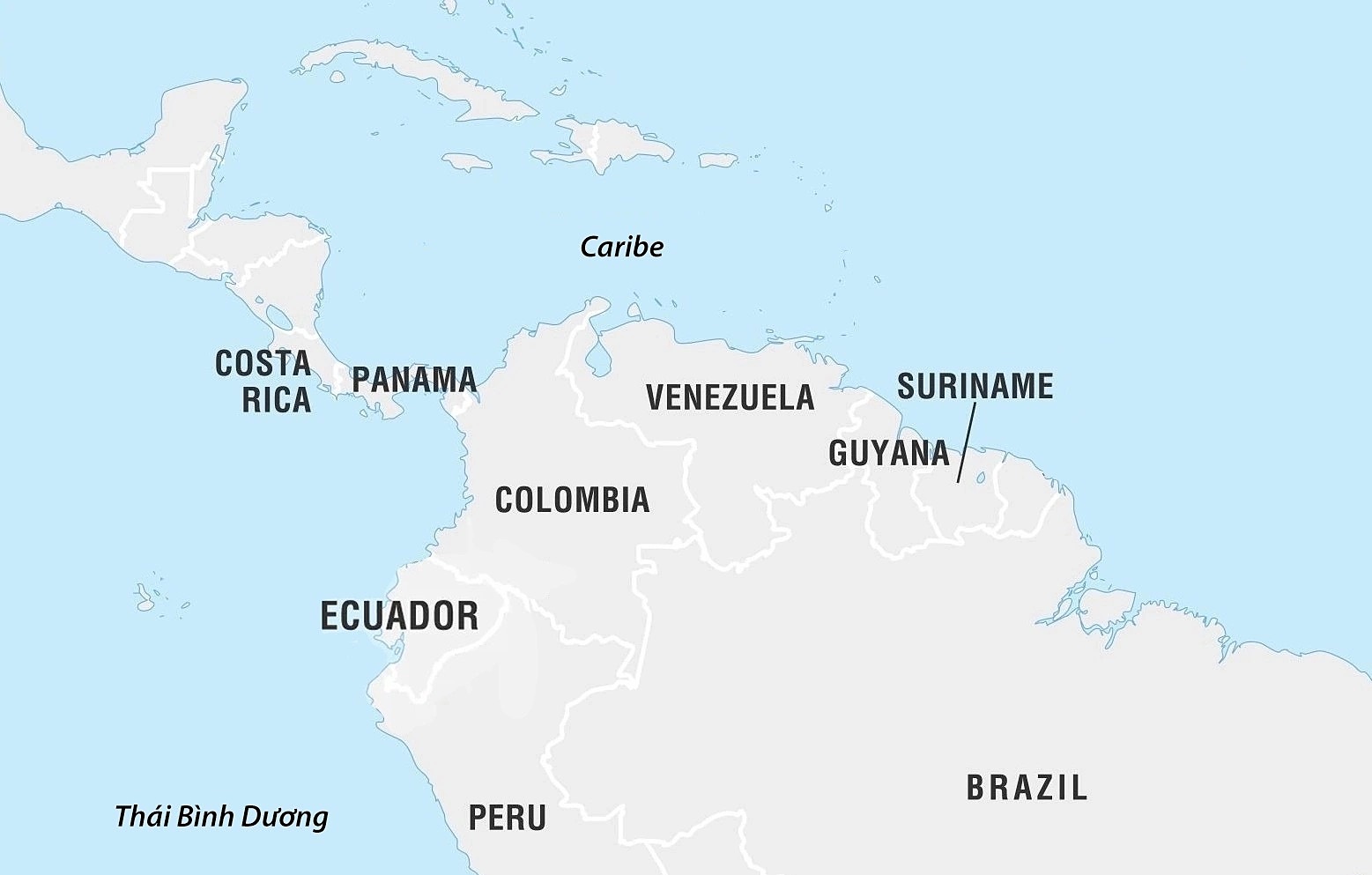 |
Location of Venezuela and the Caribbean Sea. Graphic: Britannica |
The US has recently increased pressure on Venezuelan President Nicolas Maduro's government, deploying various military assets to the region, citing anti-drug missions. US military airstrikes on suspected drug boats in the Caribbean and Pacific since 9/2024 have resulted in over 100 deaths.
Maduro argues that the mobilization of forces indicates the US intends to change the regime in Venezuela and wants to "steal its land and minerals".
Nguyen Tien (According to WSJ, War Zone, AFP, AP)