An F-16 fighter jet belonging to the 149th Fighter Wing of the Texas Air National Guard crashed on the afternoon of 17/9. The incident occurred during a routine training mission near Traverse City, Michigan. It was not immediately clear if the aircraft was carrying weapons at the time of the crash.
Images from the scene show the aircraft crashed into an empty field, causing a small fire, with debris scattered near a road.
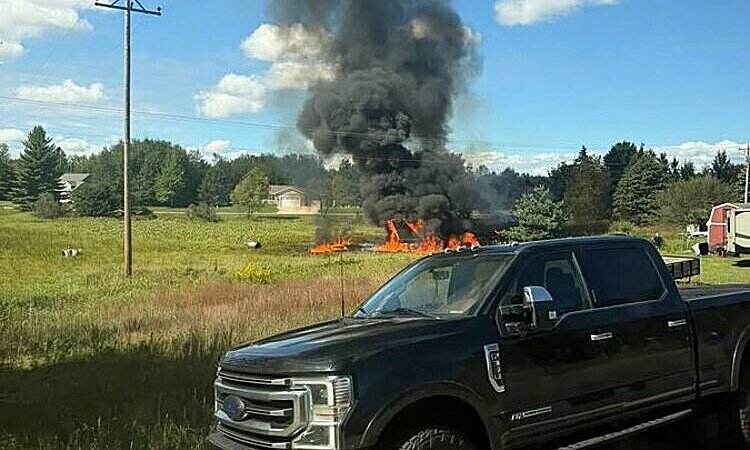 |
The F-16 crash site is in an empty field, near an intersection in Michigan. Photo: X/BabakTaghvaee1
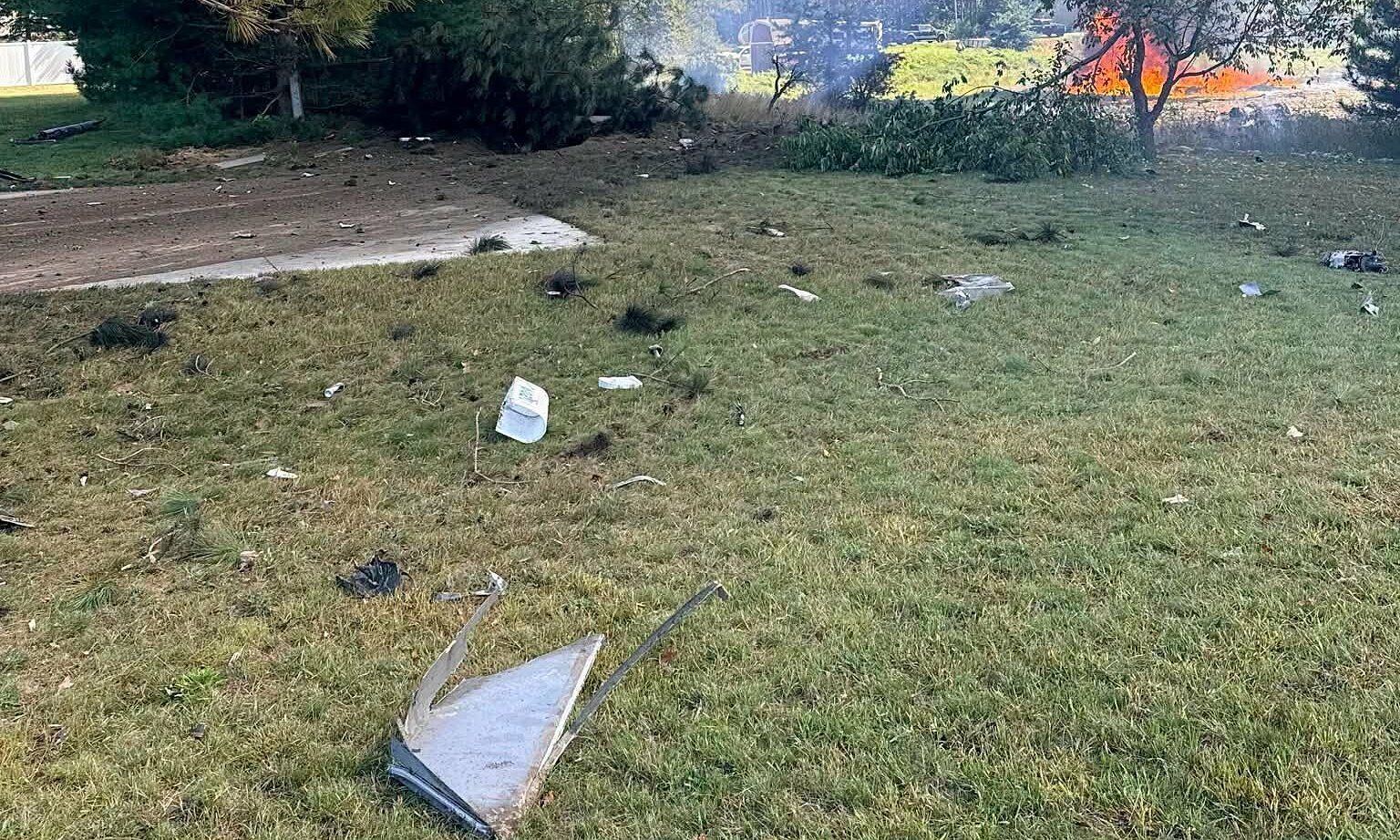 |
Debris from the F-16 fighter jet is scattered at the scene. Photo: X/BabakTaghvaee1
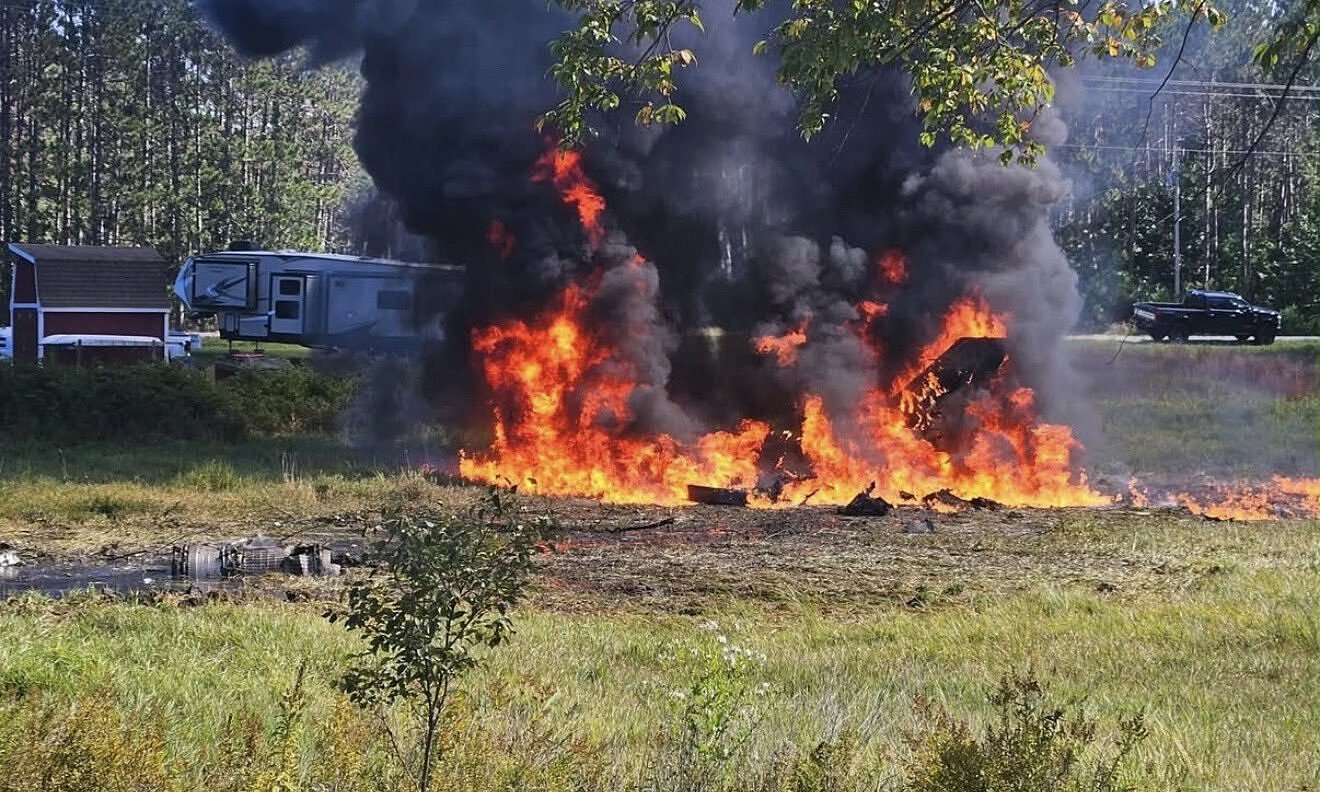 |
The F-16 fighter jet on fire at the crash site. Photo: X/fl360aero
Grand Traverse County officials promptly issued an evacuation order for a 1,5 km radius around the crash site. Local authorities had previously advised residents to shelter in place, close windows and vents, and follow instructions from emergency responders.
"The pilot successfully ejected. The incident is currently under investigation", the 149th Fighter Wing stated in a social media announcement, adding that further details would be released when available.
Military aviation expert FL360Aero, an X account specializing in aviation tracking, reported that the F-16C crashed within Grand Traverse County, near the intersection of roads 633 and Blair Townhall. Rescue teams found the pilot conscious and responsive, and they were subsequently transported to a local hospital for a medical check-up. Michigan State Police confirmed no injuries were reported on the ground.
A plume of black smoke rises from the F-16 fighter jet crash site in Michigan. Video: X/FL360Aero
According to military aviation specialist Aviationist, an F-16 crash site remains a particularly hazardous area, even if the aircraft is not carrying weapons or a large quantity of fuel.
One of the main threats is H-70, a mixture comprising 70% hydrazine and 30% water, which is used to operate the electrical system and emergency power unit (EPU) if the main engine ceases to function in flight.
Hydrazine is a colorless liquid, easily mistaken for water, with an odor similar to ammonia, and is exceptionally toxic. The US Air Force indicates that vaporized H-70 can cause irritation to the eyes and respiratory tract. Individuals exposed for a short duration may experience hand tremors, while prolonged exposure can result in liver and kidney failure, seizures, and even death.
This significant risk has led the US Air Force to establish specific protocols for handling F-16 crash incidents, as well as for responding to in-flight emergencies that could lead to hydrazine leaks or necessitate EPU activation.
Thanh Danh (According to AFP, CBS)