On 17/9, Australia's Home Affairs Minister Tony Burke outlined changes designed to ensure the government meets its target of reducing net migration from 300,000 to 225,000 people by 2028. Under these new rules, international students will only be permitted to extend their study visas if they pursue a higher-level academic program.
Currently, spouses and partners of international students are allowed to work in Australia, although the permitted working hours vary depending on the student's course. Students can also bring dependent children under 18 years old.
The new regulations will generally prohibit dependents for most study visa categories. However, some students from Pacific Island and Southeast Asian nations will still be allowed to bring their spouses and children.
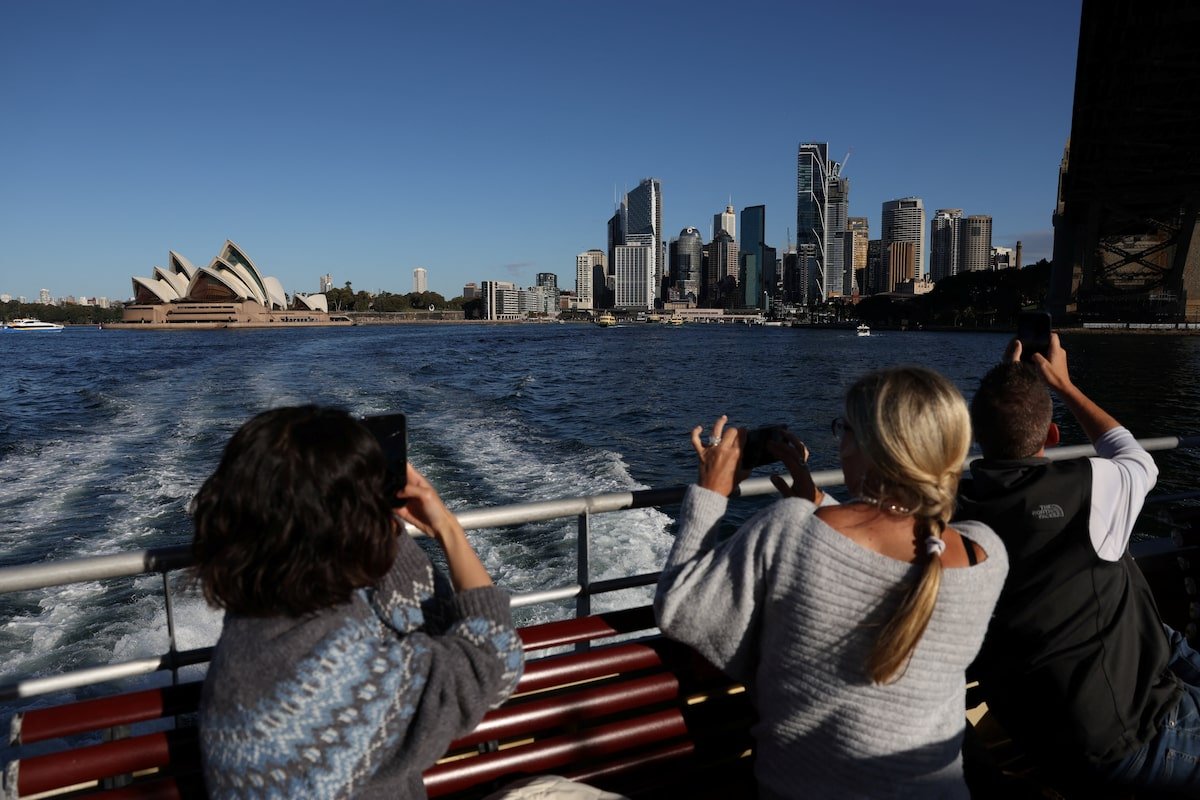 |
Visitors photograph the Sydney Opera House, Australia on 9/7/2025. Photo: Reuters |
Additionally, a lottery system will be implemented for visitors seeking to extend their "working holiday" visas. All tourist visas will include a "no further stay" condition, preventing holders from remaining in Australia to apply for a different visa type, such as a marriage visa.
Burke stated that Australia will enhance enforcement against visa overstayers. This includes recruiting an additional 100 compliance staff and considering converting a pandemic-era quarantine facility in Melbourne into a detention center for immigration violators.
The government's move comes as the right-wing One Nation party has seen an increase in recent opinion poll support. Advocating an "Australia first" motto with policies often compared to those of US President Donald Trump, the party has declared its intention to cut 750,000 temporary migrants over three years to provide "breathing room" for citizens, aiming to limit annual net migration to 130,000 people after this period.
Home Affairs Minister Tony Burke dismissed suggestions that the administration's changes were politically motivated due to the One Nation party.
The number of immigrants to Australia, primarily international students, tourists, and temporary workers, surged after the country reopened its borders post-Covid in 2/2022. While this figure has begun to cool down over the past two years, public criticism persists due to the pressure from the immigration wave on housing, infrastructure, and social welfare systems.
As of 30/6/2025, international students accounted for over half of Australia's net migration. By the end of 6/2025, this figure was 306,000 people, compared to 429,000 people in 2024, after peaking at 518,000 people in 2023.