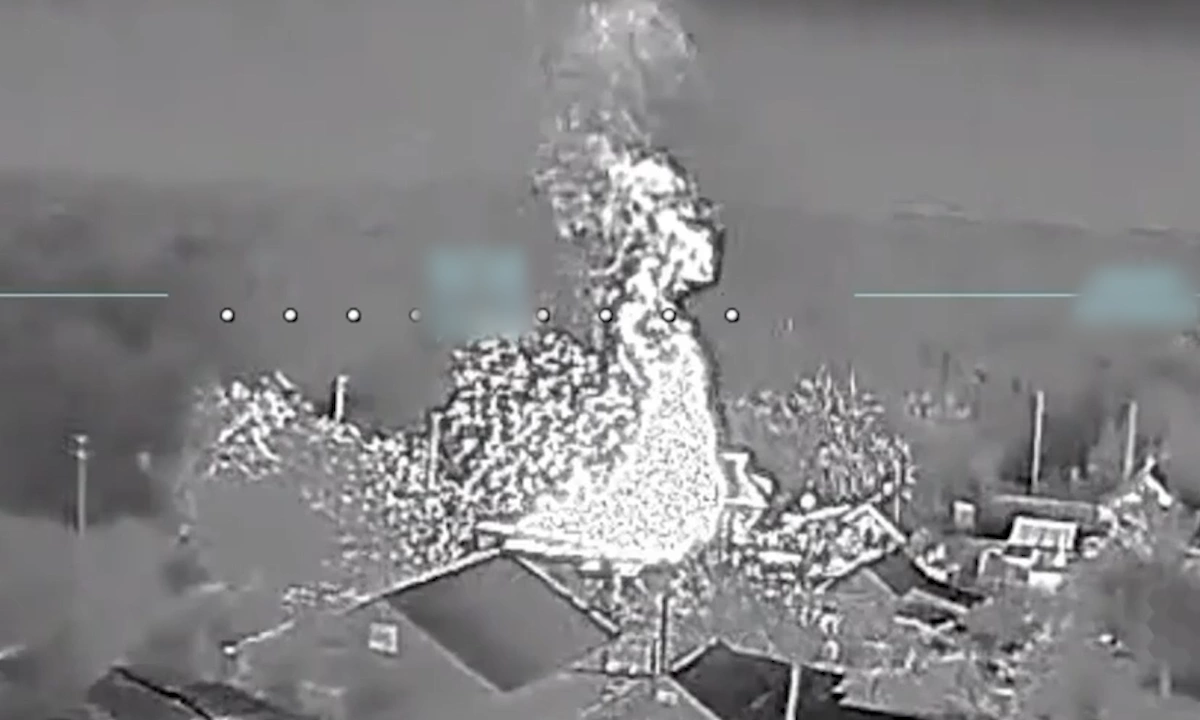
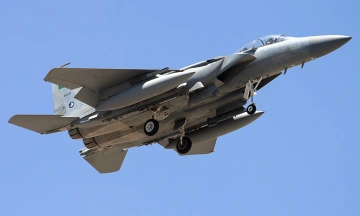
On 15/9, the Houthi armed group claimed to have used a domestic air defense missile to shoot down a Saudi Arabian F-15 heavy fighter jet. The incident occurred while the jet was conducting "hostile actions" over Yemen's Marib province. Houthi units also launched missiles at "hai formations of F-15 and Typhoon fighters searching for the wreckage," forcing them to retreat.
Images released showed the aircraft crashed and burned, with the fate of the crew unknown. The vertical stabilizer of the aircraft displayed the Saudi Arabian flag and tail number 5539, indicating it was an F-15SA multirole fighter from the 55th Squadron, based at King Khalid air base.
This marks the first clear evidence of Houthi forces shooting down a Saudi Arabian F-15 fighter. The Yemeni armed group successfully downed the most powerful fighter jet in Saudi Arabia's inventory, also one of the world's most modern F-15 variants.
Saudi Arabia has received more than 220 F-15 fighters since the early 1980s, making it the country with the thu hai largest F-15 fleet globally, after the US. The Saudi Air Force operates older F-15C/D variants alongside the more modern F-15S and F-15SA variants.
In 12/2011, the US signed a USD 29,4 billion agreement to sell Saudi Arabia 84 newly manufactured F-15SA fighters and upgrade 68 existing F-15S aircraft to the SA configuration. The deal also included weapons, spare parts, and technical support. Officials from both countries did not disclose the factory cost of the F-15SA, but the average contract price per aircraft was about USD 190 million.
The first F-15SA was produced at Boeing's facility in St. Louis in 2013, with the final aircraft delivered in 12/2020.
The F-15SA (Saudi Advanced) variant initiated the F-15 Advanced Eagle project. Boeing implemented this program to deeply modernize the F-15E Strike Eagle line, integrating various upgrade packages previously seen on the F-15K (South Korea) and F-15SG (Singapore) models. It features a fly-by-wire flight control system, replacing the mechanical-electrical systems of previous variants.
The aircraft's wing structure was also reinforced, increasing the number of weapon pylons from 9 to 11. This allows it to carry a maximum of 12 air-to-air missiles or 24 ground weapons. The cockpit was redesigned to incorporate large flat-panel displays, similar to the F-35 stealth fighter, replacing the smaller screens and analog gauges of the original F-15.
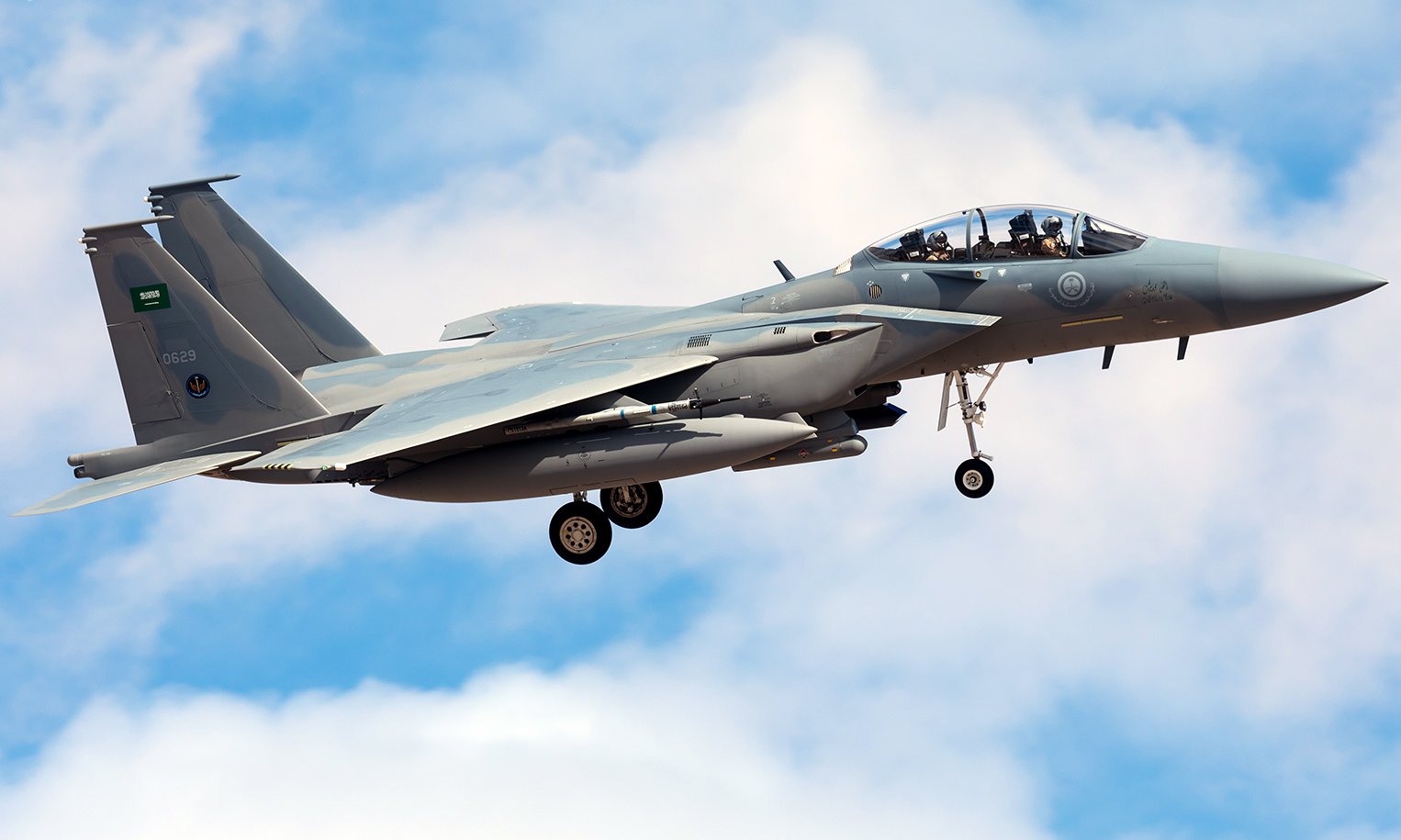 |
An F-15SA during a training flight in the US in 2019. Photo: Jetphotos |
The F-15SA's primary sensor is the AN/APG-63(V)3 active electronically scanned array radar, with a tracking range of approximately 180 km. Manufacturer Raytheon describes this as a combination of the proven software from the AN/APG-63V(2) model with hardware innovations from the AN/APG-79 radar, creating a "high-performance, reliable, and cost-effective system."
The F-15SA fighter is also equipped with the AN/ALQ-239 digital electronic warfare system and the AN/AAR-57 missile warning system, both manufactured by BAE Systems.
The manufacturer states that the AN/ALQ-239 offers advanced electronic countermeasures capabilities, allowing the aircraft to penetrate deep into areas protected by modern multi-layered air defense systems.
"The AN/ALQ-239 is designed to counter current and future threats, ensuring rapid and precise 360-degree defensive and electronic attack capabilities across all frequency bands, keeping the crew aware of the battlefield situation," a BAE Systems brochure noted.
The AN/AAR-57 system consists of ultraviolet electro-optical sensors installed at multiple points on the aircraft. These sensors detect heat sources from incoming missile engines, allowing it to track missiles using heat-seeking seekers, which do not trigger radar warning systems.
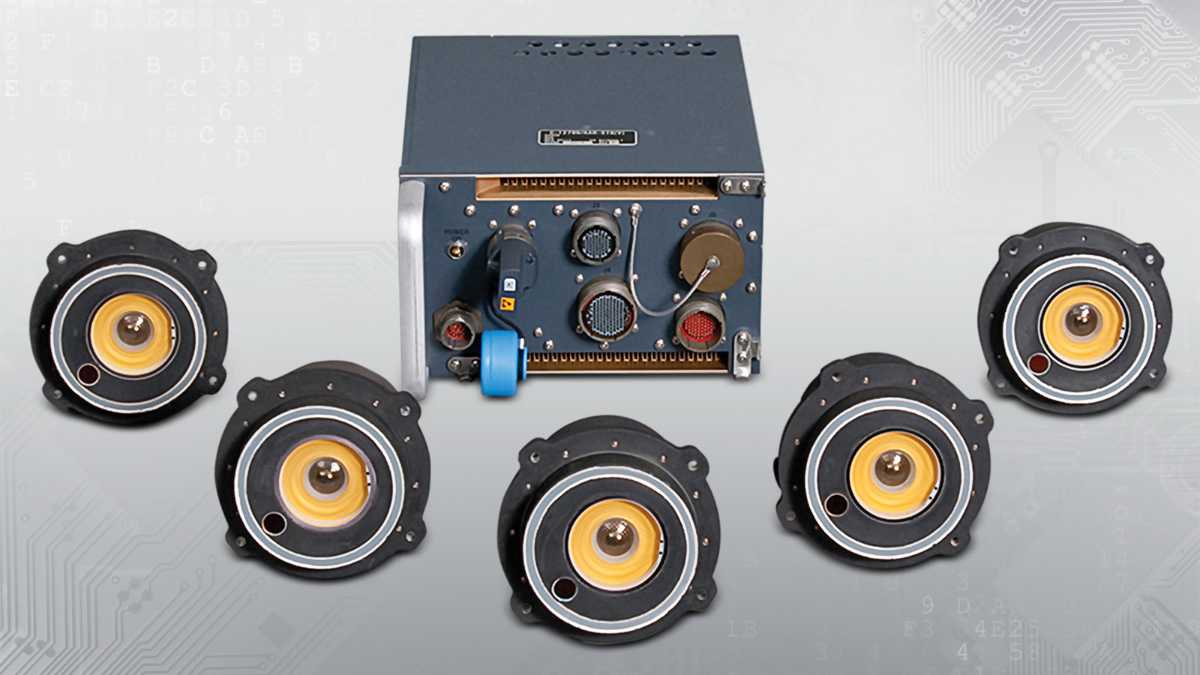 |
Sensors and control computer of the AN/AAR-57 system. Photo: BAE Systems |
In addition to providing audible and graphic alerts for the crew, the AN/AAR-57 can connect to decoy launchers like the AN/ALE-47 and directed infrared countermeasure (DIRCM) devices. This allows for automatic activation of defensive measures upon missile approach detection.
Each F-15SA is fitted with at least 4 AN/AAR-57 sensors, located in protrusions on both sides of the cockpit and under the vertical stabilizer. This system is not equipped on the US Air Force's F-15E line, and while the advanced F-15EX Eagle II aircraft have the protrusions, they are not fitted with AN/AAR-57 sensors.
The F-15SA fighter also integrates the AN/AAS-42 infrared search and track system, helmet-mounted displays for both crew members, Link 16 data link, the AN/AAQ-33 targeting pod, and the AN/AAQ-13 low-altitude navigation and targeting infrared for night system.
These features position the F-15SA as one of the world's most modern F-15 variants, serving as the foundation for the development of the F-15EX for the US and Qatar's F-15QA.
The F-15SA's sensor and warning systems seemingly functioned when Houthi forces launched the missile. Video footage extracted from infrared sensors shows the crew engaging afterburners and continuously maneuvering. Some objects were also ejected from the aircraft, likely radar decoys, as they did not emit light like thermal flares.
However, evasive maneuvers and decoy efforts proved ineffective. The missile detonated at close range, causing the fighter jet to catch fire.
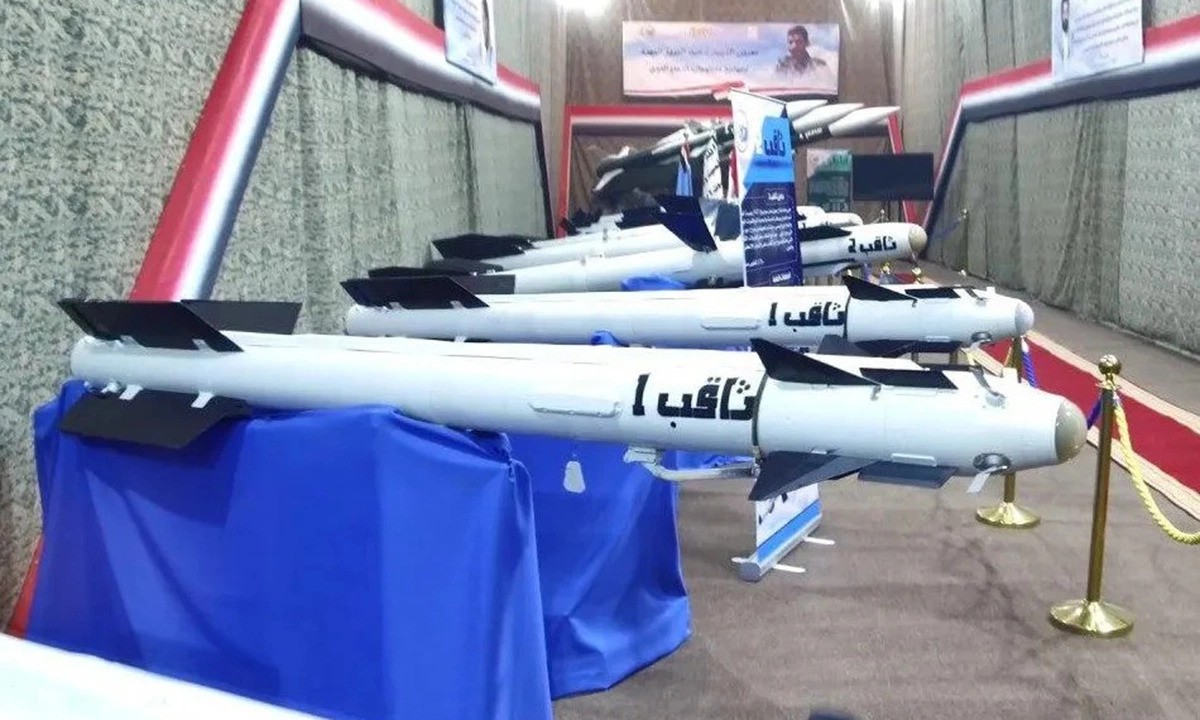 |
Houthi R-73, R-27T, and R-77 series missiles in a photo posted in 2024. Photo: X/Global Defense Insight |
Houthi forces have not disclosed the type of weapon used to shoot down the F-15SA fighter. Similar to previous incidents, they likely used infrared sensors for target tracking and missile guidance. Unlike radar, this type of sensor does not emit radio waves and does not activate radar warning systems, leaving the crew only a few seconds to react before the missile strikes.
"Maneuverability and passive sensor capabilities can challenge even the most modern combat aircraft. Houthi forces have demonstrated their ability to threaten US manned and unmanned aircraft," noted Thomas Newdick, editor of the military news site War Zone.
Houthi air defenses previously shot down dozens of Saudi Arabian military aircraft during the 2015-2022 conflict. These included at least 30 unmanned aerial vehicles (UAVs), 12 helicopters, and 5 jet fighters. A Saudi Arabian F-15 fighter also crashed into the Red Sea when hostilities erupted in 2015, while another was hit by a Houthi missile but returned safely to base in 2018.
Several US defense officials stated in 5/2025 that the Yemeni armed group nearly hit a series of F-16 fighters and mot F-35A stealth fighter during Operation Rough Rider. Another official later revealed that the F-35A was approached so closely by a missile that the pilot had to make an abrupt maneuver to avoid the projectile.
"The downing of the Saudi Arabian F-15SA fighter once again demonstrates Houthi's combat capabilities and their ability to counter suppression measures, which are far better than the primitive appearance of their weapons suggests," Newdick warned.
Pham Giang (According to War Zone, AFP, National Interest)