"I believe we will get it done by 3/2," US House Speaker Mike Johnson stated on a program broadcast by NBC on 1/2.
"We are facing a logistical challenge in trying to get everyone together. From my conversation with Democratic leader Hakeem Jeffries, I know we need to pass a rule and will likely have to do much of it ourselves," he added.
The US Senate approved a government budget package on 30/1 with 71 votes in favor and 29 against. However, the document did not pass the US House of Representatives before the chamber adjourned for the weekend. This led to a US government shutdown beginning on 31/1.
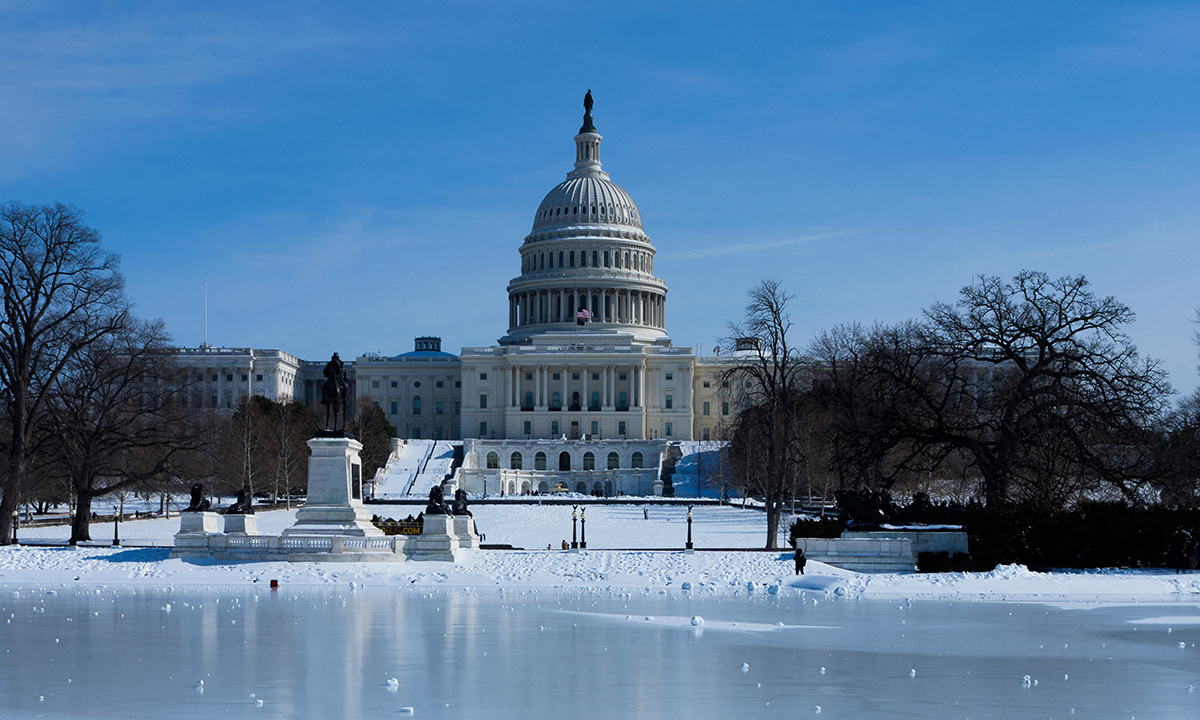 |
The US Capitol building in Washington D.C. on 31/1. Photo: AFP |
The stalemate over the US government budget originated from the Democratic party's discontent with the harsh immigration crackdown measures implemented by President Donald Trump's administration, particularly after two incidents this month where white US citizens were shot dead in Minneapolis. These events ignited tensions and increased opposition to approving new funding for the Department of Homeland Security (DHS).
Under an agreement between the White House and Democratic leaders in the US Senate, legislators passed five outstanding budget bills to fund most of the federal government through the end of the fiscal year in September. Funding for the DHS was separated and extended for only two weeks, allowing lawmakers time to negotiate changes to the agency's operations.
House Democratic leader Hakeem Jeffries indicated that he and his colleagues would discuss DHS reforms with Republicans. "The administration cannot just talk; they need to act. That should start today, not in two weeks," he stated.
If the US House of Representatives approves the Senate's agreement, lawmakers will have two weeks to negotiate the DHS budget bill. Both parties acknowledge that discussions will be difficult, as Democrats are demanding new controls on immigration enforcement activities, while Republicans prioritize advancing their policy agenda.
President Trump publicly endorsed the agreement and urged both parties to find common ground on the budget issue. This indicates his desire to avoid a second prolonged government shutdown during his term, following last year's record 43-day stoppage that cost the US economy approximately 11 billion USD.
A government shutdown freezes funding for non-essential federal operations, forcing agencies to halt services, furlough employees without pay, or require them to work without compensation. Departments ranging from defense, education, and transportation to housing would be significantly affected if the shutdown persists.
According to the US Congressional Research Service, the US government has experienced ten budget disruptions lasting no more than three days since 1977, most of which had no significant impact.
Nguyen Tien (According to AFP, AP, Reuters)