On 21/4, Air Force Two remained on standby for nearly the entire day at Andrews Air Force Base outside Washington, ready to transport Vice President JD Vance to Islamabad, Pakistan. The trip was intended for negotiations on a potential deal with Iran, as the two-week ceasefire between the nations neared its expiration.
Pakistan, serving as the negotiation mediator, had previously announced that Iran's top leaders confirmed their delegation would also arrive in Islamabad on 21/4 for discussions with the US side the following day. However, Iran reversed its decision at the last minute.
By early afternoon, Vice President Vance's trip was put on hold. By evening, it was indefinitely postponed.
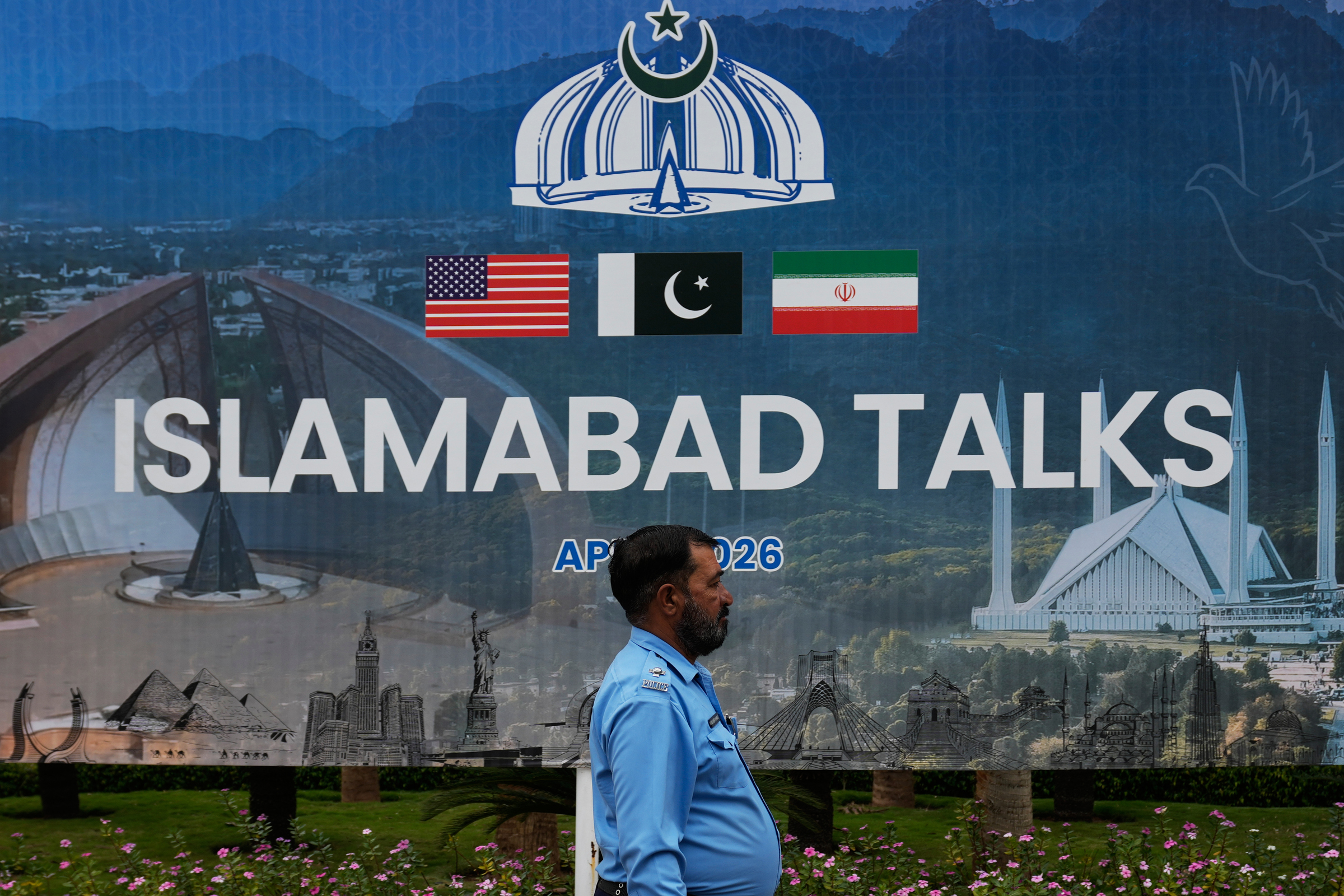 |
A police officer walks past a sign announcing US-Iran negotiations in Islamabad, Pakistan on 11/4. *AP*
Advisers informed President Donald Trump that the Iranian government was not a "unified entity" and that hardliners in Tehran were unwilling to concede to Washington's demands. Questions arose at the White House regarding Iran's genuine readiness to negotiate and adhere to any commitments.
President Trump asked his advisers whether the US should resume attacks on Iran. However, even then, officials indicated that President Trump seemed cautious about restarting the campaign and prolonging a conflict already facing public opposition in the US.
President Trump and his team opted for a compromise: maintaining indefinite pressure on Iran until they presented a concrete offer to the US. He would then assess whether negotiations could proceed or if he would need to order a new round of attacks on Iran.
"The stalemate, where President Trump is unwilling to lift the blockade and Iran refuses to negotiate while the blockade remains, is a difficult problem to resolve," said Ali Vaez, head of the Iran program at the International Crisis Group.
Vaez added that this situation requires one side to concede first, or both to compromise. "I am not optimistic about this scenario," he stated.
Tehran entered the first round of negotiations in early April with confidence that its control over the Strait of Hormuz and its capacity to inflict damage on the Gulf region and global economy provided significant leverage. However, the comprehensive blockade imposed by the US on all Iranian ports shortly thereafter diminished Iran's advantage.
"I think that move balanced the pressure between the US and Iran," commented Michael Singh, former senior director for Middle East affairs at the National Security Council and currently with the Washington Institute, referring to the US port blockade on Iran.
Samer Al-Atrush, a Middle East analyst for The Times, noted that the risk of renewed conflict persists as both President Trump and Iran threaten escalation if talks fail. The analyst suggested other potential scenarios include a vague framework agreement for the future or maintaining the stalemate, where Iran remains under blockade until one side can no longer withstand the economic strain.
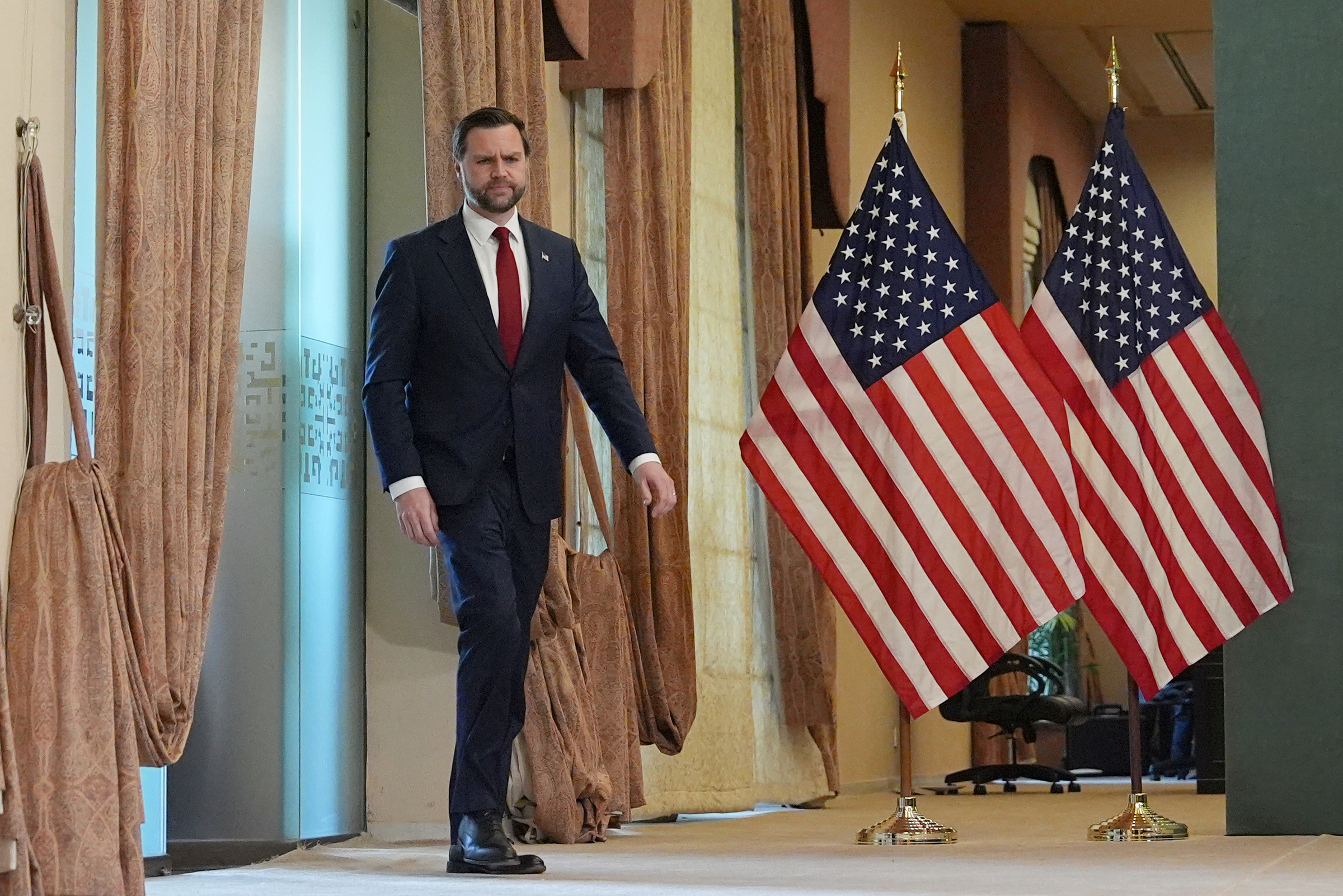 |
US Vice President JD Vance attends a press conference after meeting the Iranian delegation in Islamabad, Pakistan on 12/4. *AP*
Even if both sides agree on a framework to guide negotiations over the next two months, it would be a vague document rife with unresolved issues, according to Vaez.
"Such an approach would leave many of the thorniest issues unaddressed. It would only outline a direction, without finalizing any specific solutions. The two sides are still far apart from reaching a final agreement," Vaez explained.
The obstacles remain identical to those before the war. Iran is unwilling to abandon nuclear enrichment, though it might agree to a multi-year pause, excluding purposes for medical research. Tehran will also refuse demands to reduce its missile and drone capabilities, which proved effective in the war, and will not cease supporting armed groups like Hezbollah and Hamas.
"Any potential agreement is expected to be similar in scope to the JCPOA agreement that Iran signed with Western powers under President Barack Obama, which President Trump abandoned during his first term," Al-Atrush indicated.
Meanwhile, Danny Citrinowicz, a former Israeli intelligence officer, believes that the scenario of the US continuing its port blockade on Iran also carries risks of escalation, even with the ceasefire extension.
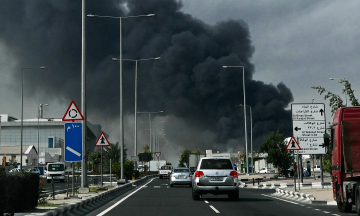
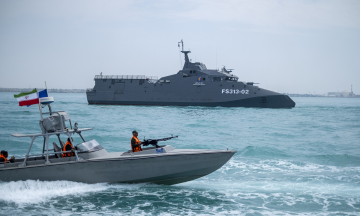
Today, Iran's Islamic Revolutionary Guard Corps (IRGC) announced the seizure of two commercial ships passing through the Strait of Hormuz. The force's speedboats also fired upon three cargo ships near the strait, causing damage to the vessels.
"The issue is that tension is almost inevitable. Sooner or later there will be clashes, and these can easily lead to escalation," he said. "If the blockade is effective, Iran will increase pressure on the international economy through actions such as oil tanker attacks, at which point an outbreak of war is difficult to avoid."
Should that scenario occur, the war could inflict heavy losses on both sides. After over 6 weeks of airstrikes, the US and Israel have few military targets left to strike and might target electricity infrastructure and seawater desalination plants, as President Trump once threatened.
"Escalatory actions will progress very quickly, dramatically, and will resume exactly from where they paused previously," Citrinowicz stated.
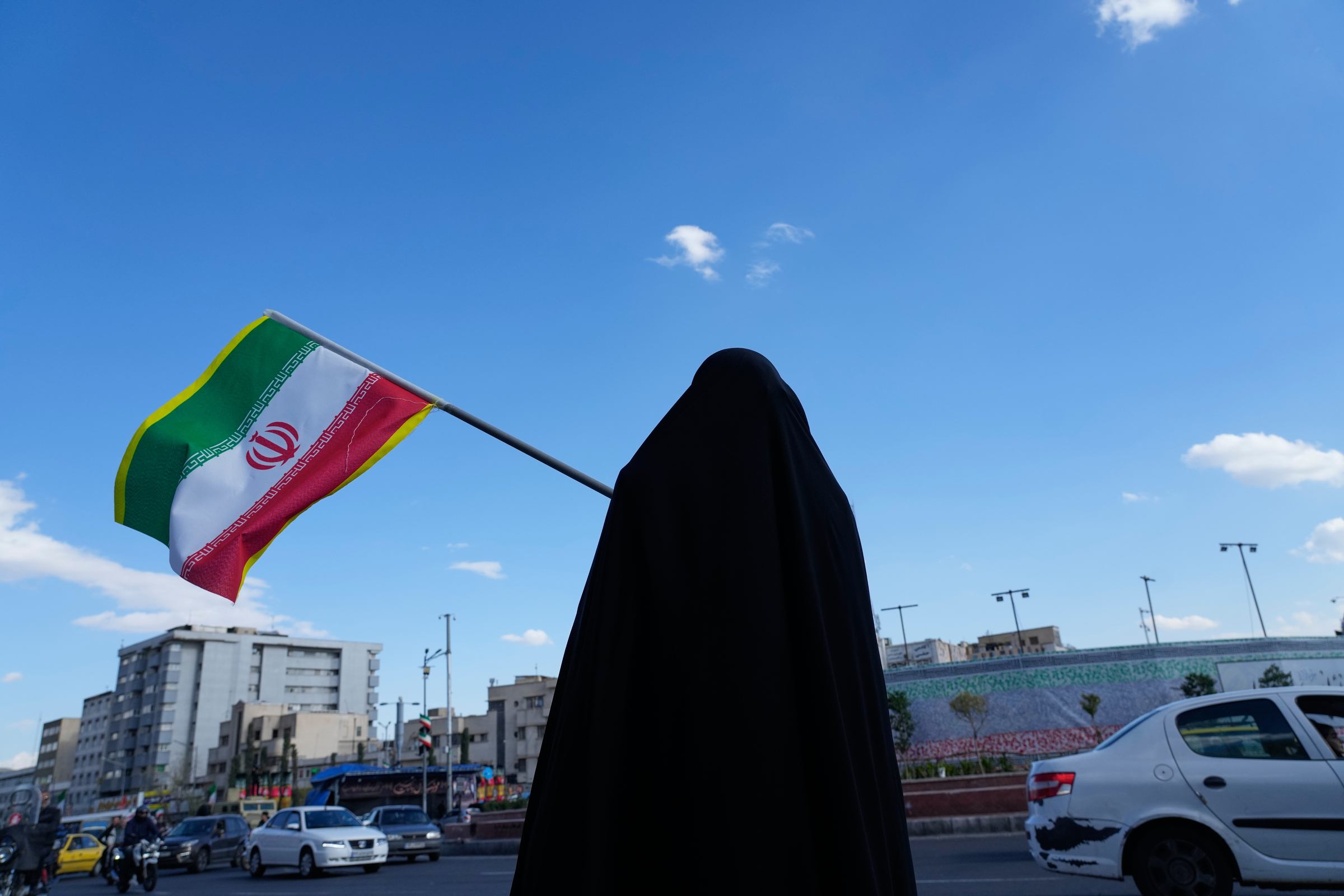 |
A woman holds an Iranian flag on a street in Tehran on 30/3. *AP*
Currently, the prospect of negotiations between the two sides is fragile. Mohammad Reza Mohseni Sani, a member of the National Security Committee of Iran's Parliament, said that "negotiations are unacceptable" under the current circumstances, accusing the US of "making excessive demands" and pursuing hidden objectives for internal interests.
Ali Vaez believes the main barrier to any further rounds of negotiations is "whether the US is willing to reduce pressure enough for diplomacy to become credible, and whether Iran is willing to restrain its leverage enough to sustain the talks."
Thanh Tam (According to The Times, WSJ, Al Jazeera)