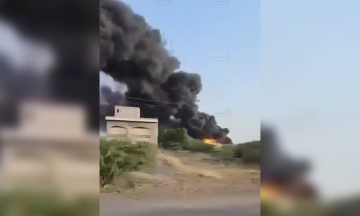
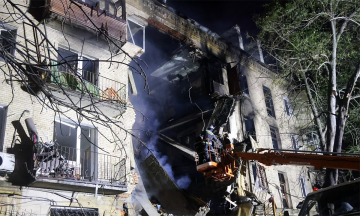
On 13/10, Russia launched a significant attack on Ukraine, utilizing 5 Iskander-M ballistic missiles, S-400 air defense missiles modified for ground targets, 7 cruise missiles, 108 unmanned aerial vehicles (UAVs), and 8 Banderol hybrid UAV missiles. Despite the large-scale assault, Ukraine failed to issue timely warnings, a lapse that open-source intelligence suggests may stem from US reconnaissance satellites missing the initial launch activities.
The Ukrainian Air Force Command reported that its air defense units successfully intercepted 88 UAVs, including 58 jet-powered aircraft. However, the attack still resulted in 17 locations being struck, with debris falling in 7 other areas. Ballistic missiles hit 7 positions, though some failed to reach their intended targets. The Command did not clarify the discrepancy between the number of ballistic missile impacts and the total ballistic missiles reported.
AMK Mapping, an X account specializing in open-source intelligence on the Ukraine conflict, indicated that air raid sirens were not activated before Russian missiles impacted their targets. This suggests that the US reconnaissance satellite network likely failed to detect the launch platforms and firing activities necessary to warn Ukraine. A similar incident occurred on 2/10, when an Iskander-M ballistic missile launched from Taganrog, southwestern Russia, struck a target in Ukraine’s Mykolaiv province without prior warning.
AMK Mapping explained that while Western satellites are capable of detecting Russian ballistic missile launchers and relaying information to the General Directorate of Military Intelligence of Ukraine (GUR) for attack warnings in vulnerable areas, this method is imperfect. Western satellites have, on multiple occasions, failed to detect Russian ballistic missile activity. Furthermore, Ukrainian radar systems likely did not detect incoming RM-48U rounds from the S-400 complex, even as they tracked subsequent Iskander-M launches.
The account noted, "Ukraine has its own radar network capable of covering its entire airspace, not relying on Western surveillance systems to detect targets. The reason Ukraine failed to detect RM-48U until they struck or impacted their targets, which has happened multiple times, remains unclear."
 |
An S-400 complex missile leaves its launcher in an image released in 2/2019. Photo: Gazeta |
On the same day, Russia’s Ministry of Defense announced it had deployed high-precision ground-launched weapons and UAVs. These strikes targeted defense industrial facilities, logistics centers, railway and port infrastructure, and ships suspected of transporting military supplies for Ukraine. In Kyiv, Russian forces reportedly struck a factory producing long-range missiles and UAVs, along with a facility specializing in repairing and restoring locomotives and freight cars for the Ukrainian military. A logistics center and a warehouse in Mykolaiv province, as well as a cargo ship en route to a port in the same province, were also attacked.
Nguyen Tien (According to Kyiv Post, RIA Novosti, AFP, Reuters)