The New York Times reported on 12/8, citing an anonymous US defense official, that the Pentagon believes Iran's swarm of unmanned aerial vehicles (UAVs) "provided critical information to commanders, helping them target the F-15E fighter jet" in the shootdown incident in early april.
According to the official, Iranian UAVs collected data on the F-15E's coordinates, speed, and flight direction, then transmitted it to command headquarters. This information allowed Iranian air defenses to intercept the US fighter and shoot down the target with a shoulder-fired missile. The F-15E's warning system activated only about half a second before the projectile hit its target.
The US Department of Defense has not commented on the information.
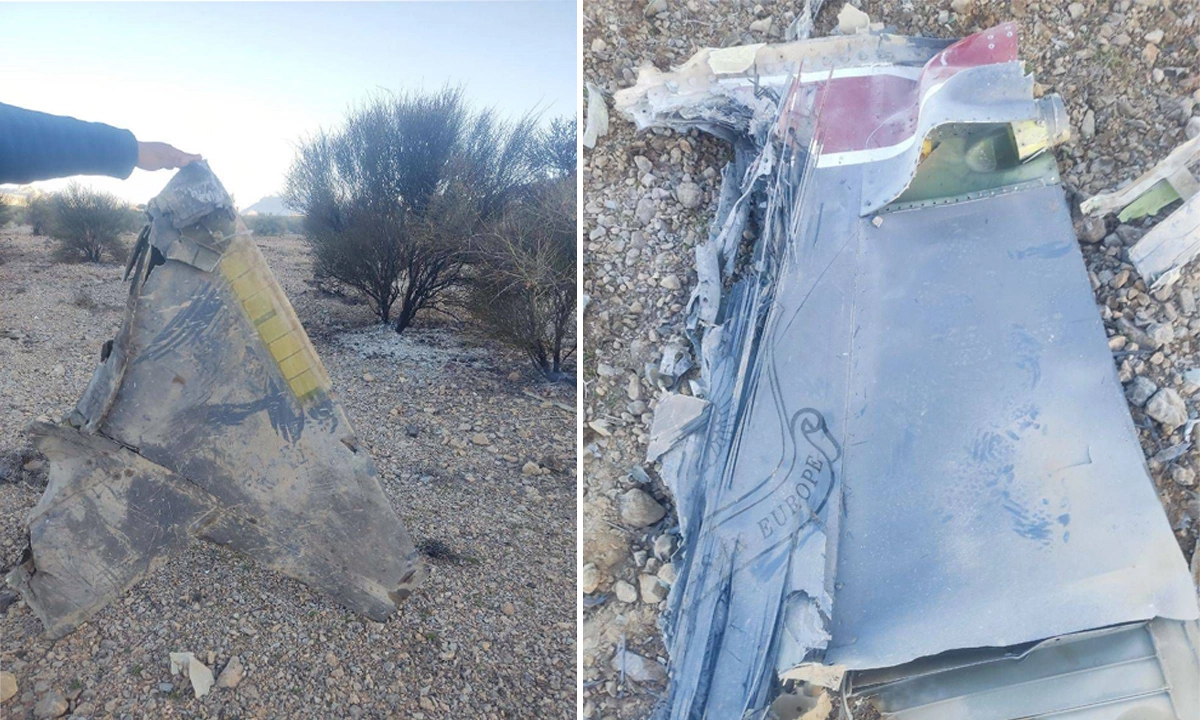 |
Debris from a US F-15E fighter jet shot down by Iran on 3/4. Photo: Tasnim |
Debris from a US F-15E fighter jet shot down by Iran on 3/4. Photo: Tasnim
CNN reported on 23/6, citing sources, that the F-15E pilot observed "Iranian UAVs linked together and moving in sync, with some smaller, more maneuverable drones flying below." One person described this UAV and drone formation as resembling a jellyfish, while sources said US F-15E pilots called it an "aerial drone minefield."
"This information paints an interesting picture of what may have transpired in the skies over Iran on 3/4. If partially accurate, it could gradually reveal Iran's capability to use a network of UAV-mounted sensors to aid in shooting down the F-15E fighter jet," stated Thomas Newdick, editor of the US military specialized website War Zone.
Newdick assessed that a large number of UAVs and drones flying in formation does not necessarily mean Iran possesses sophisticated technology for these vehicles to coordinate as a swarm, though he conceded this hypothesis is "not far-fetched."
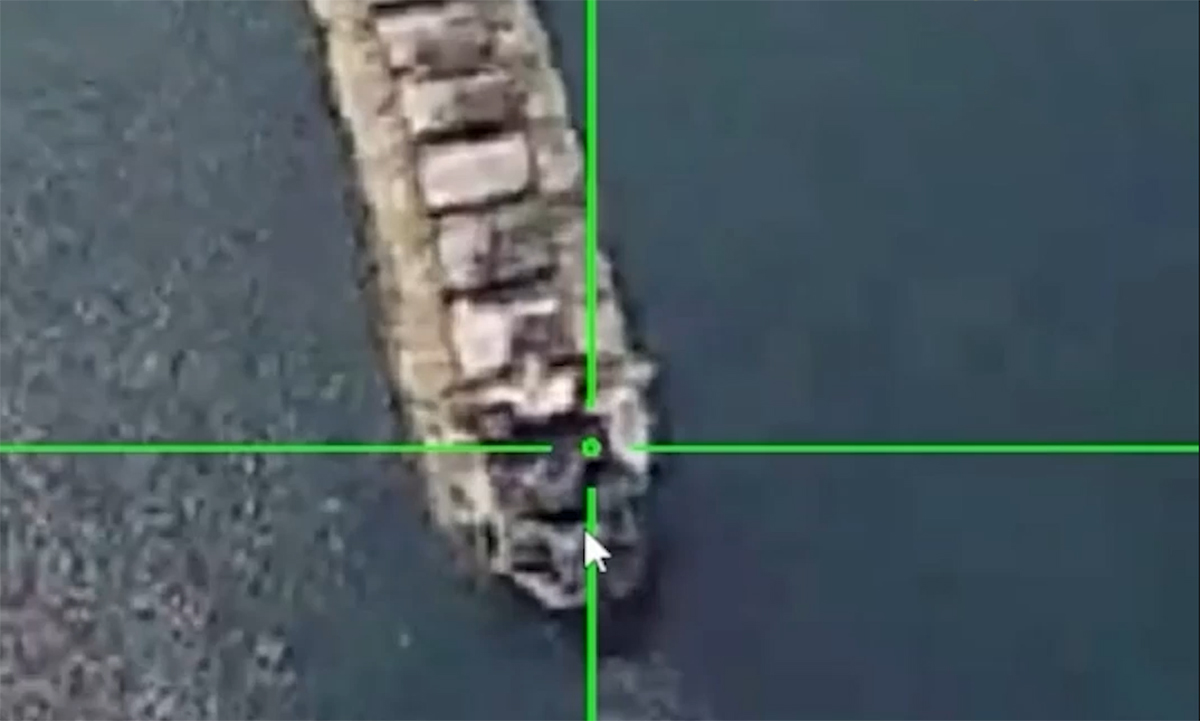
Moment Iranian air defense targeted a US F/A-18 fighter jet in a video posted on 25/3. Video: Tasnim, Clash Report
The US expert also hypothesized that another aircraft present in the area, rather than the "UAV jellyfish swarm", detected the F-15E.
"The use of UAVs and drones, even those with simple sensors, is an asymmetric and improvised air defense solution, serving as a backup when traditional surveillance networks suffer heavy losses after large-scale attacks early in a conflict," Newdick stated.
Newdick believes a UAV network's capabilities are far inferior to traditional radars, and luck also plays a significant role in target detection. "An advanced UAV network could possess better capabilities, but it would require high technological proficiency and complex command and control infrastructure," the US expert said.
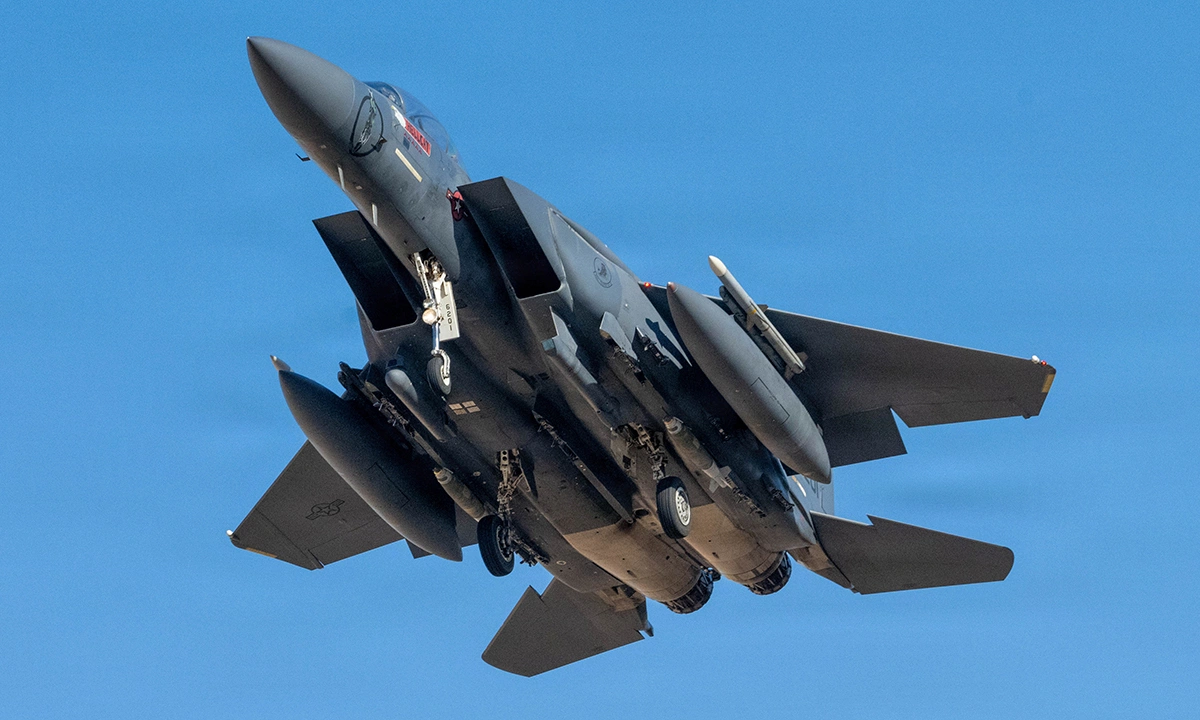 |
A US F-15E fighter jet participating in an airstrike operation in Iran on 9/3. Photo: USAF |
A US F-15E fighter jet participating in an airstrike operation in Iran on 9/3. Photo: USAF
UAVs and drones can also carry radio signal detection equipment to pinpoint enemy positions, especially when deployed in a network over a wide area. Ground-based systems can perform similar functions but are limited by target altitude, flexibility, and the ability to coordinate with decoys to activate enemy aircraft radars.
"The information about Iran using UAVs to detect the US F-15E fighter jet, as well as the pilot's account of the 'UAV jellyfish swarm', adds an intriguing and mysterious dimension to one of the most dramatic engagements in recent memory," Newdick commented.
Nguyen Tien (According to War Zone, AP, CNN)