A report by the National Employment Law Project (NELP) released on 3/12, titled "Raises from Coast to Coast 2026", details that 22 states and 66 cities and counties across the US will simultaneously adjust their minimum wages. This initiative is particularly significant given that the federal minimum wage has remained stagnant at 7,25 USD an hour since 2009.
These new minimum wage regulations will take effect in 19 states and 49 localities on 1/1/2026. The remaining states and localities are set to further increase their base wages mid-year, either by adjusting for inflation or through voter initiatives. By the end of 2026, 79 jurisdictions across the US are projected to meet or surpass a 15 USD an hour wage, with 57 areas, including major states like California, New Jersey, New York, and Washington, exceeding 17 USD an hour.
Specific examples illustrate the varied increases. In New York state, New York City, Long Island, and Westchester County will see their minimum wage rise to 17 USD an hour, while the rest of the state will reach 16 USD an hour. Denver, Colorado, is set to reach 19,29 USD an hour. Some localities also tailor wages based on business size; for instance, in Novato, California, large companies with over 100 employees must pay a minimum of 17,73 USD an hour, compared to 16,90 USD an hour for small businesses with fewer than 25 employees.
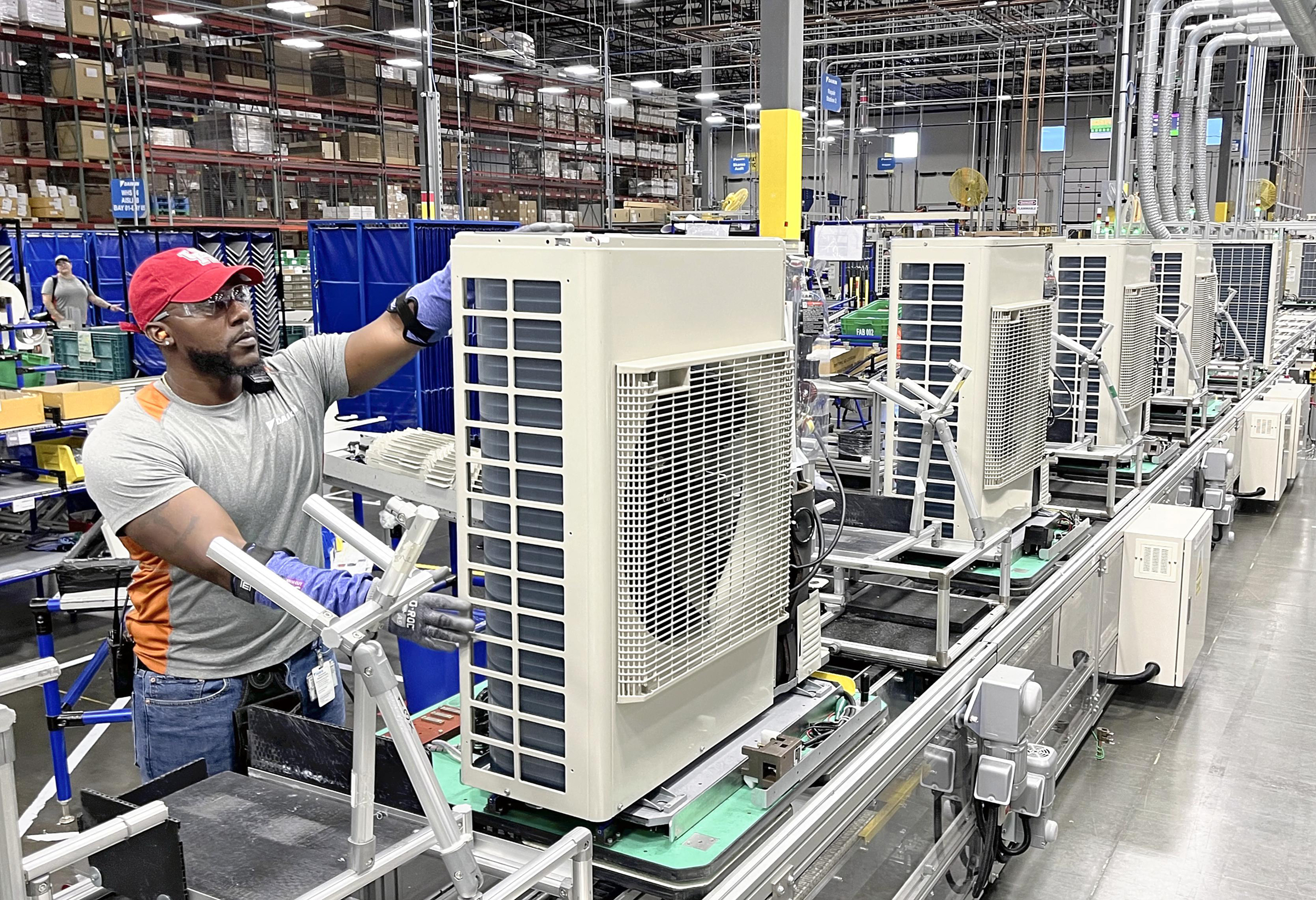 |
Workers at an air conditioner manufacturing plant in Texas, 15/10. Photo: AFP
According to NELP, these new minimum wage regulations are being implemented as the US confronts a "cost of living crisis". Overall goods prices have climbed by over 23% since 2020. Yannet Lathrop, a senior researcher at NELP, views these policies as a "lifeline" for low-income workers, helping them cover basic needs like housing and food.
However, significant regional disparities persist. Under the Fair Labor Standards Act, the federal minimum wage has been stuck at 7,25 USD an hour since 2009. Currently, 20 states, predominantly in the southern US and led by the Republican party, such as Alabama, Texas, and Iowa, still apply this federal rate. The NELP report underscores that this disparity disproportionately affects Black and Latin American workers, who form a substantial part of the workforce in these southern states and are most vulnerable to low wages and a fluctuating economy.
The policy of increasing wages has not been without opposition from businesses and some lawmakers. In Rhode Island, a proposal to raise the minimum wage to 20 USD an hour by 2030 was ultimately reduced to 17 USD by 2027. This change occurred after the business community warned of potential employee layoffs and increased consumer prices. Rhode Island State Representative David Place, a Republican, cautioned that the "real minimum wage will fall to 0 USD" if new regulations make employers unable to afford payments, leading to job losses.
Similarly, in Missouri, despite voter approval for a wage increase and sick leave provisions, Republican lawmakers passed legislation to repeal the sick leave mandate and eliminate future automatic inflation-based wage increases. Their stated goal was to "protect small businesses" and reduce expensive regulations on enterprises.
Thanh Danh (According to CBS, Syracuse, Stateline)