


A US KC-135R tanker aircraft, tail number 62-3578, activated an emergency transponder code and began descending on 5/5 while operating over the Persian Gulf. Data from the civilian aviation tracking website FlightRadar24 showed the aircraft taking off from Al Dhafra Air Base in Abu Dhabi, United Arab Emirates (UAE).
The aircraft initially flew several closed circuits at altitudes between 7,000 and 8,200 m in international airspace over the Persian Gulf. It then diverted towards Qatari airspace, where it activated the "7700" transponder code and initiated a descent. The KC-135R’s tracking signal was lost at an altitude of approximately 4,200 m. Following this event, two H125 light utility helicopters departed from Al Udeid Air Base in Qatar, heading towards the area where the KC-135R’s signal was lost. However, it is not yet clear if their deployment was directly related to the incident.
The flight path of the US KC-135R before activating the 7700 code (turning red) and losing signal on 5/5. *Video: X/HormuzLetter*
The "7700" code is used to indicate an in-flight emergency, such as an engine malfunction, loss of cabin pressure, or a medical emergency requiring assistance. When this code is activated, pilots are required to inform air traffic control in the area about the nature of their problem.
US Central Command (CENTCOM), which oversees US military operations in the Middle East, has not yet commented on the incident.
According to Ian Petchenik, a Boeing 757/767 captain, 99% of 7700 transponder activations recorded on civilian tracking sites are "normal events." He emphasized that a 7700 signal does not always mean an aircraft faces imminent danger. Instead, it can signify a pilot exercising caution and wishing to notify authorities of an unusual situation.
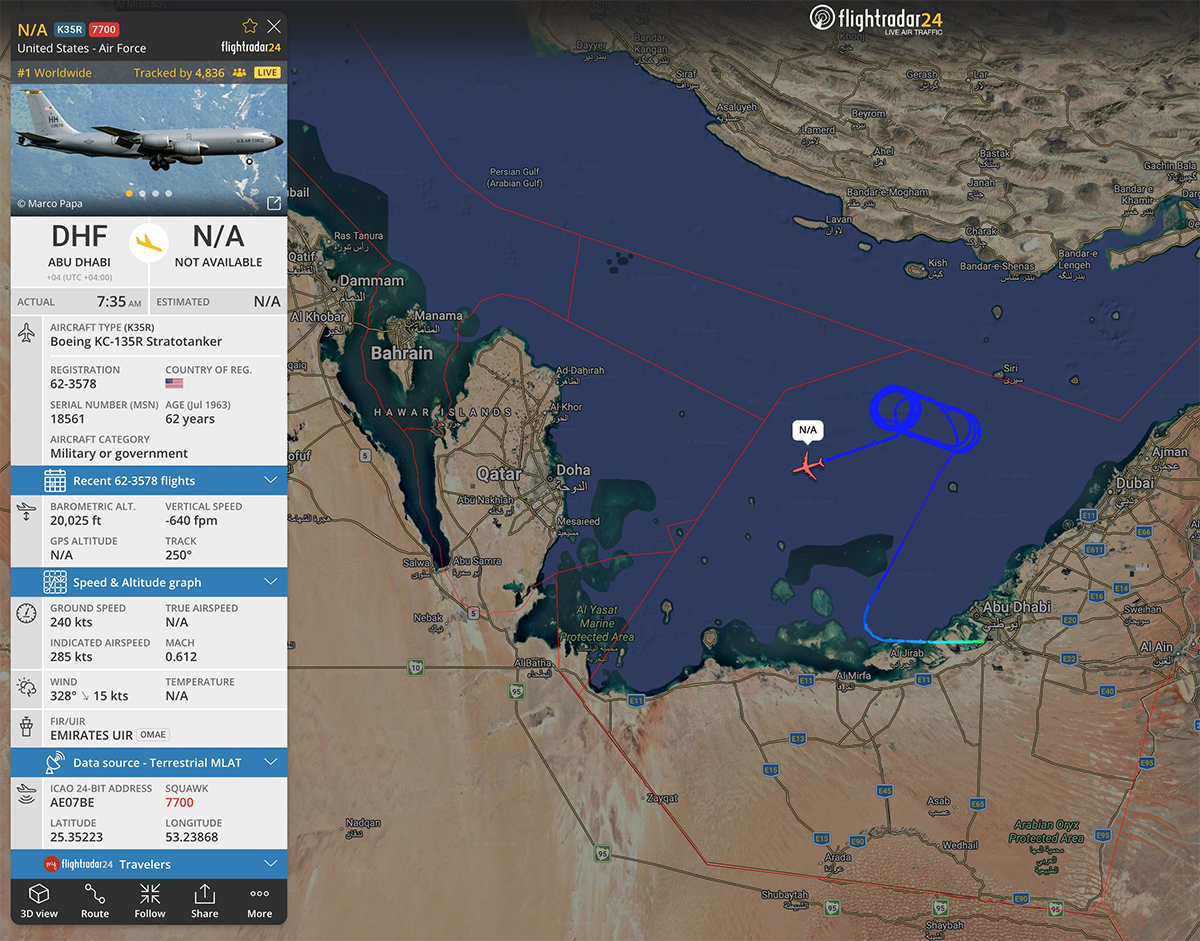 |
Flight path of a US KC-135 tanker aircraft over the Persian Gulf on 5/5. *Graphic: FlightRadar24*
"In an international environment, when communication becomes difficult due to language differences, transmitting a 7700 signal helps air traffic control understand that the aircraft needs priority and assistance," Petchenik explained.
The KC-135R operates in a conflict zone characterized by complex electronic warfare and jamming. These conditions can disrupt communication and navigation, potentially prompting pilots to activate the 7700 code even when the aircraft itself is not in danger.
The KC-135 series has been in service since 1957, sharing its original design with the Boeing 707 passenger aircraft. Each KC-135 has a crew of 3-4, can reach a top speed of 933 km/h, and has an operational range of 2,100 km while carrying 68 tons of fuel for other aircraft.
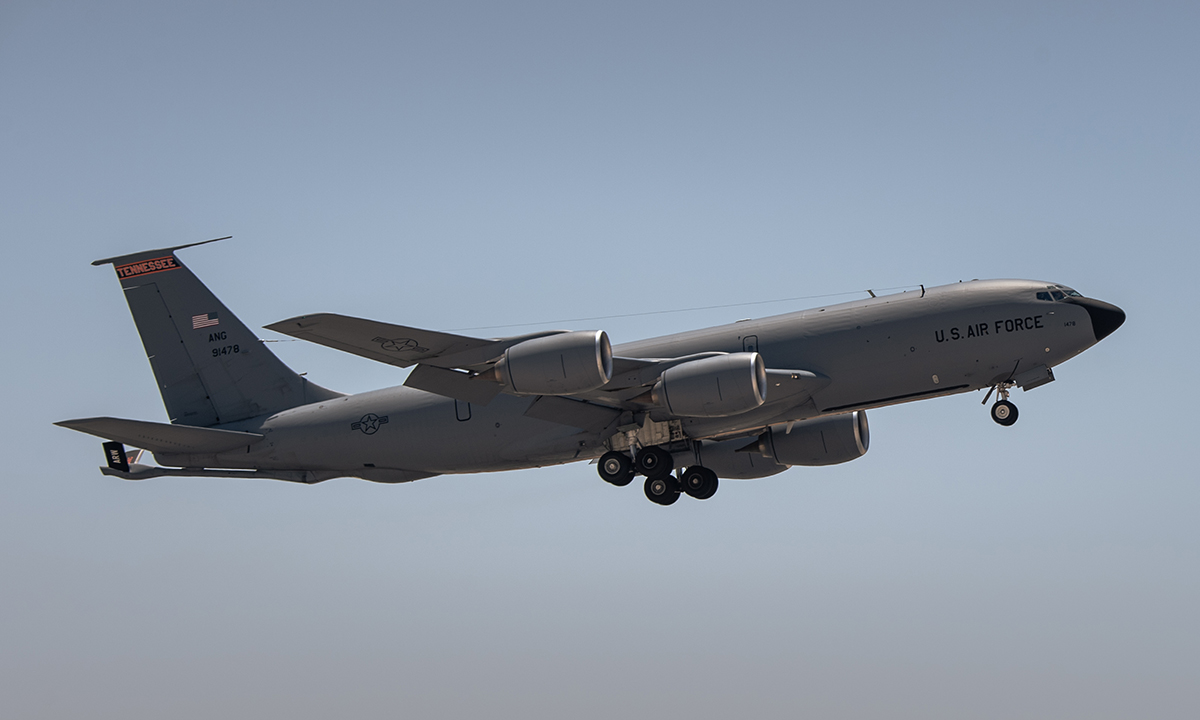 |
A US KC-135 tanker aircraft taking off from a Middle Eastern base in 4/2024. *Photo: USAF*
A total of 803 KC-135 aircraft were manufactured between 1955 and 1965. By the end of 2024, the US military maintained 376 KC-135 aircraft in its fleet, though the exact number ready for duty remains undisclosed. Each KC-135 was estimated to cost nearly 40 million USD in 1998, equivalent to 77 million USD today.
Over six weeks of conflict in the Middle East, the US Air Force has experienced the loss of several KC-135 aircraft. These losses include one aircraft that crashed due to a mid-air collision and multiple others struck by Iranian fire while on the ground.
Nguyen Tien (According to AP, AFP, Times of India)



