From 6/5 to 8/5, satellites from the European Union’s (EU) Copernicus Earth observation program detected a grey and white slick covering the waters west of Iran’s Kharg Island.
“The slick visually resembles an oil spill,” said Leon Moreland, a researcher at the UK-based Environmental Conflicts Observatory. He estimated the affected area to be about 45 square kilometers.
Louis Goddard, co-founder of climate and commodity consulting firm Data Desk, also stated that satellite images likely indicate an oil slick. He believes this is likely the largest spill since the US-Israel-Iran conflict erupted.
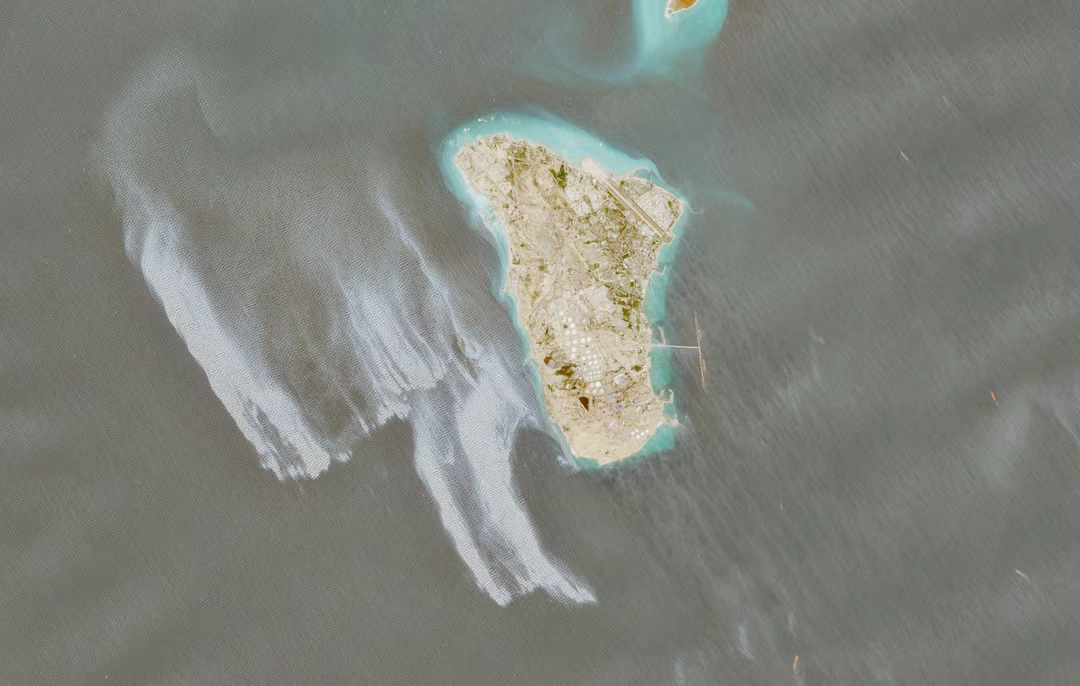 |
A grey and white slick in the waters west of Iran's Kharg Island. Photo: Reuters |
The US military and Iran’s mission to the United Nations in Geneva have not commented on these images. The cause and origin of the suspected oil spill remain unknown.
Kharg Island is situated in the Persian Gulf, approximately 25 kilometers off the Iranian coast and over 480 kilometers from the Strait of Hormuz. It spans about 6 kilometers in length with an area of 20 square kilometers.
Facilities on Kharg Island have a processing capacity of 7 million barrels of oil per day, handling about 90% of Iran’s crude oil exports. The US has claimed all military targets on the island were destroyed.
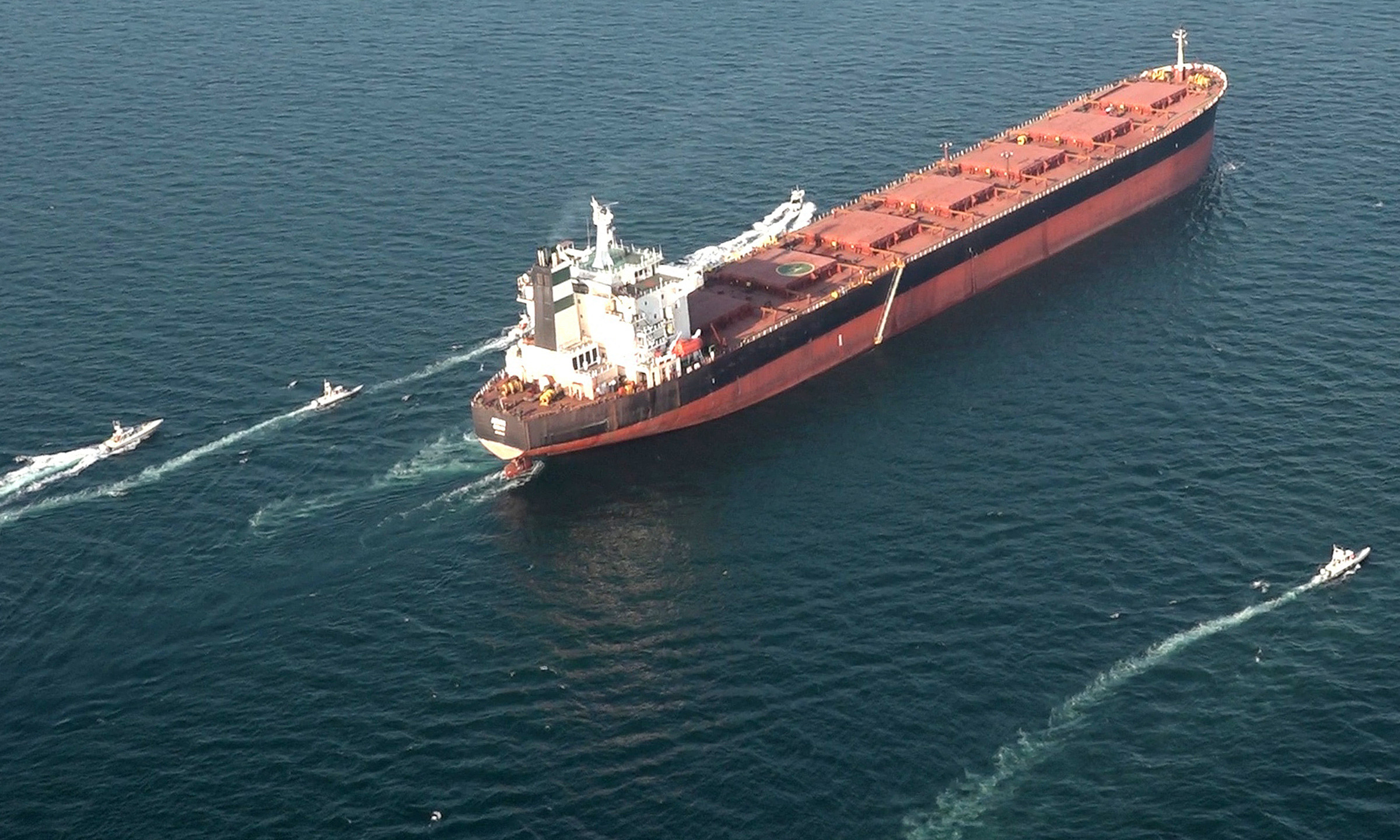
The ongoing conflict has left hundreds of fuel vessels stranded in the Gulf, impacting global oil and natural gas supplies.
The US imposed a blockade on Iranian ports on 13/4, days after negotiations between the two sides in Pakistan failed to achieve a breakthrough to end the conflict. This blockade prevents Iran from exporting oil by sea, likely forcing it to store oil at onshore facilities and on Kharg Island.
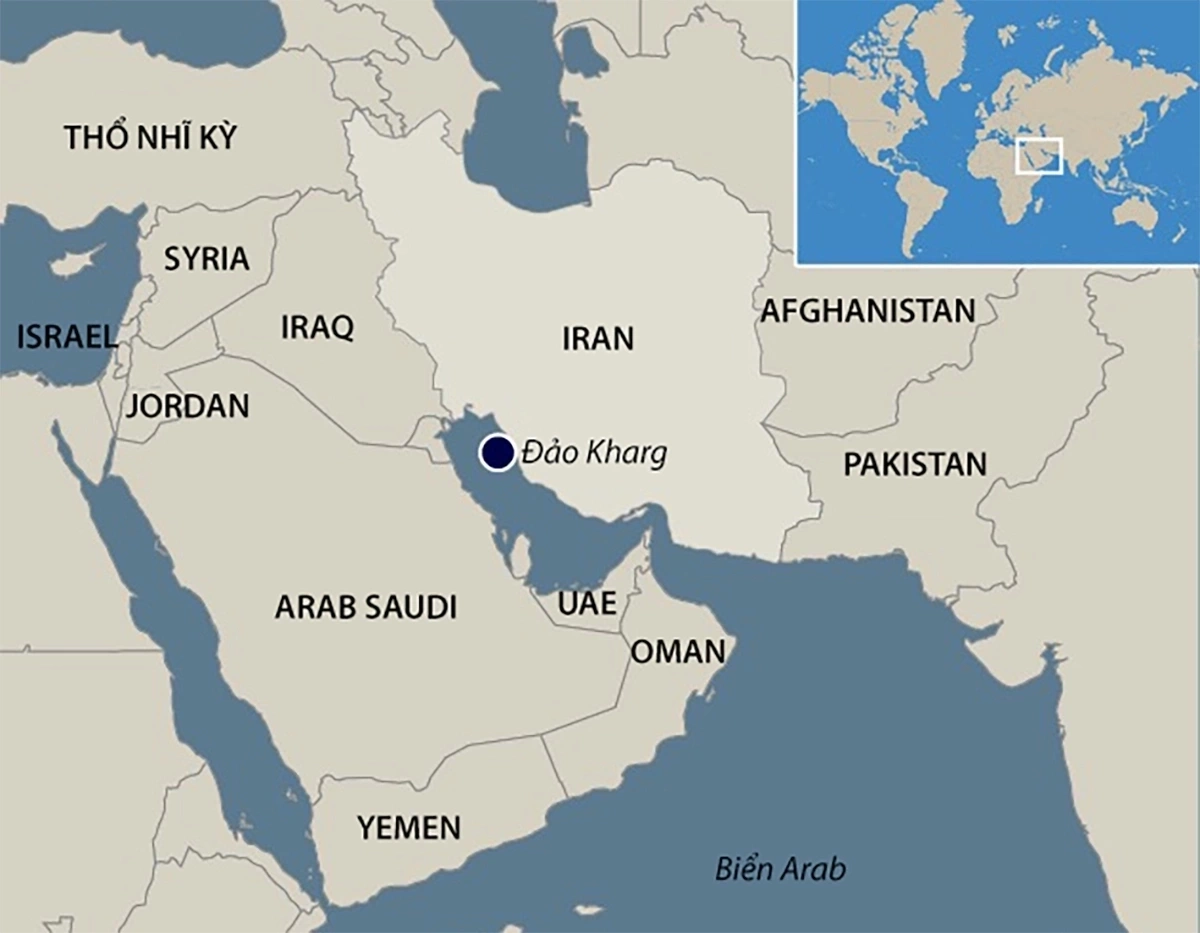 |
Location of Kharg Island. Graphic: CNBC |
US President Donald Trump warned on 26/4 that Iran’s oil infrastructure could “explode” due to severe technical incidents caused by the US blockade.
“When enormous oil reserves are confined within a system with no ships or storage tanks to consume them due to a blockade, the pressure will cause pipelines to rupture from within, even exploding underground. Once that occurs, Iran will never be able to restore its infrastructure to its previous state,” Trump stated in an interview with Fox News.
Despite US pressure, Iran has maintained a firm stance on negotiations and tightened control of the Strait of Hormuz in recent days. Esmaeil Baqaei, spokesperson for Iran’s Ministry of Foreign Affairs, said Tehran would inform intermediary Pakistan of its position “after completing its review.” However, a firefight between the US and Iran in the Strait of Hormuz on 7/5 further diminished prospects for peace between the two nations.