"Science shows testosterone levels naturally decline with age", US Secretary of Defense Pete Hegseth announced on social media on 15/7, detailing a testosterone testing program for service members aged 30 and above during their annual physicals.
Testosterone is the most crucial male sex hormone, influencing physical characteristics like facial hair, muscle mass, and voice. It also regulates libido, maintains fertility, bone density, and overall health.
Hegseth emphasized that the program's goal is not to artificially enhance soldiers' capabilities. Instead, it aims to restore and optimize the body's natural functions, protecting long-term health while ensuring service members possess the "necessary biological foundation to maintain combat readiness".
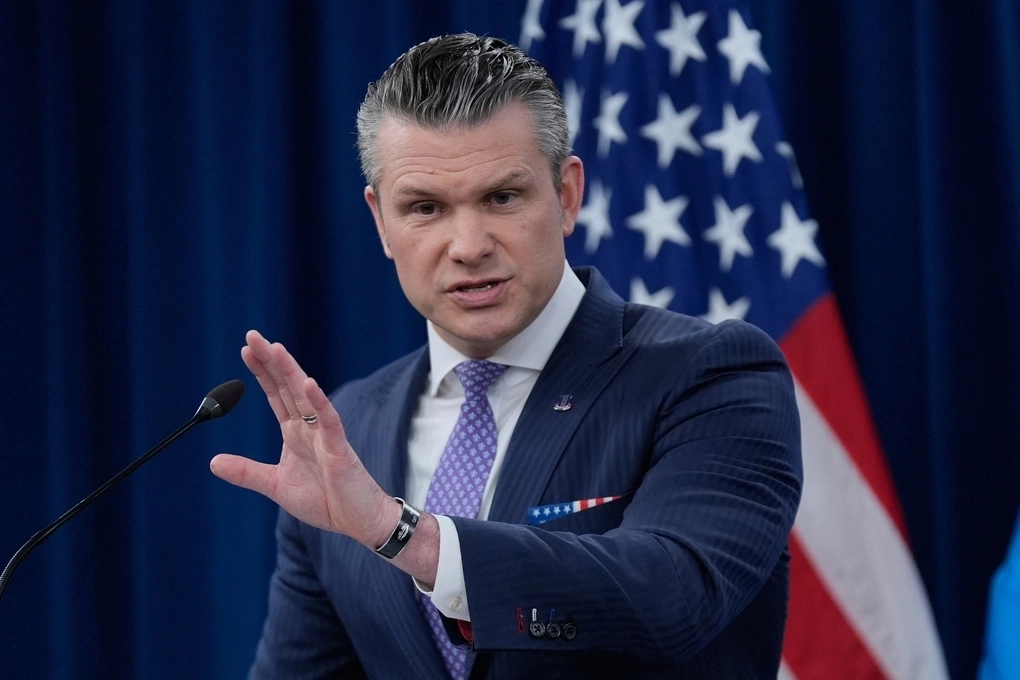 |
US Secretary of Defense Pete Hegseth speaking at the Pentagon in March. Photo: AP |
The US Secretary of Defense affirmed that treatment for testosterone deficiency will not be mandatory. Service members with low testosterone can decide whether to pursue recommended treatment. Additionally, service members under 30 can still request testing if needed.
Hegseth used gender-neutral terms such as "service member" and "soldier", without specifying if the testing and treatment program applies to female service members. Women's bodies also produce testosterone, albeit at much lower levels than men, and these levels also decline over time.
According to the American Urological Association, the criteria for defining testosterone deficiency are not fully standardized. This leads to a wide variation in prevalence, ranging from 2% to 50% depending on the study.
At a testosterone replacement therapy workshop in 2025, then-leader of the US Food and Drug Administration (FDA), Marty Makary, cited a 2007 study. This research indicated that about 5,6% of men in the country aged 30-79 had testosterone deficiency, accompanied by symptoms like depression and decreased muscle strength.
Researchers have also found that military training and operational intensity can affect soldiers' testosterone levels.
Major Theodore Crisostomo-Wynne, a urologist at the US Madigan Army Medical Center, stated that testosterone deficiency is particularly concerning in special forces. This is due to the high operational intensity and significant stress levels experienced by these personnel.
"We believe this syndrome stems from prolonged stress, exposure to blast waves from explosions, traumatic brain injury, and sleep disorders, leading to hormonal imbalances as well as mood and cognitive changes. Among the medical and psychological issues related to this syndrome, testosterone deficiency and endocrine disorders appear in most cases", he added.
Huyen Le (According to AFP, CBS News)