The US military has withdrawn its F-22 fighter jets from Israel, with a squadron landing in the United Kingdom on 10/7. This move occurs as tensions between Washington and Tehran escalate. US military news outlet War Zone reported that 10 F-22 stealth fighters departed Ovda military airport in Israel, arriving in three waves at Fairford Air Base in the UK.
The squadron, part of the 1st Fighter Wing based at Langley Air Force Base in Virginia, had been deployed to Ovda since late February for an operation targeting Iran. US Central Command (CENTCOM) publication, Citadel, stated in late March that F-22 forces attacked Iranian air defense systems, nuclear infrastructure, and command centers linked to the Islamic Revolutionary Guard Corps during "Operation Horrific Fury". It remains unclear if the US will deploy replacement forces to Ovda.
During their deployment, the F-22s played a crucial role. "The F-22 fighters suppressed S-300 and Bavar-373 air defense batteries, paving the way for allied forces to penetrate enemy airspace," Citadel reported. US officials noted the squadron conducted over 200 combat missions in 10 days without detection by Iranian radar. The jets carried GBU-39/B small diameter bombs and GBU-32 JDAMs internally to strike ground targets, coordinating with B-2 strategic bombers and EA-18G electronic warfare fighter jets.
Despite Iranian efforts, the F-22s proved resilient. Citadel indicated that Iranian forces launched dozens of air defense missiles during the first week of the operation, but no F-22 fighters were "successfully locked on".
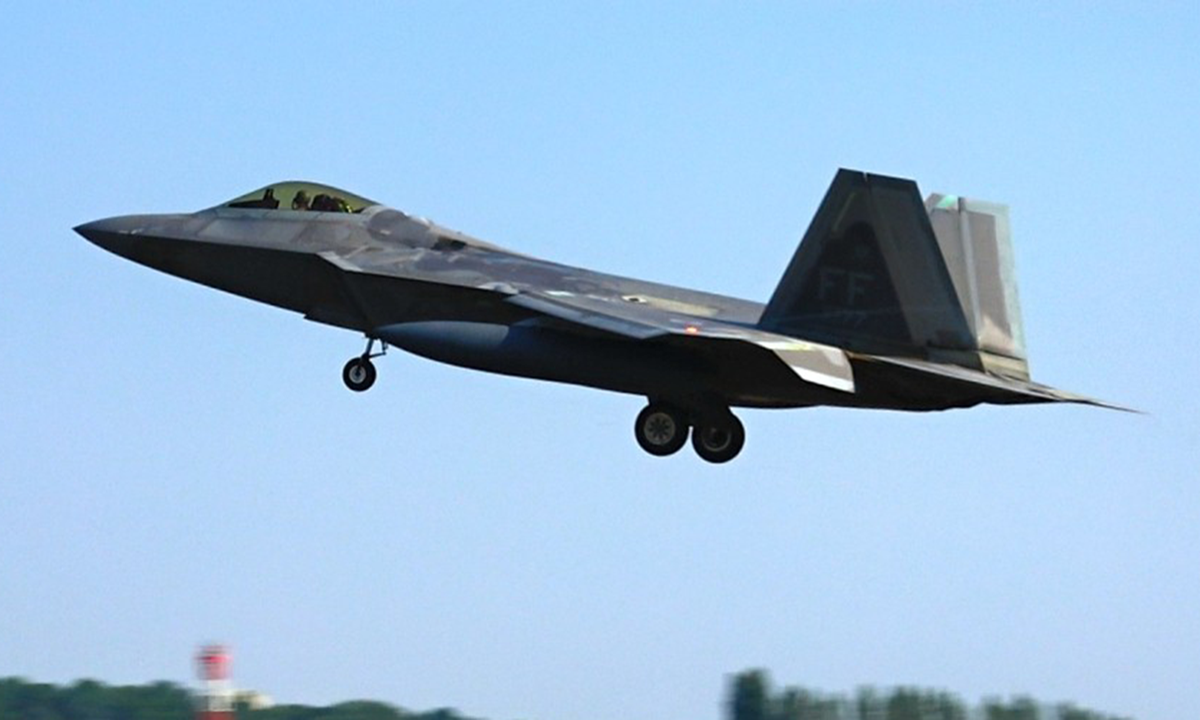 |
A US F-22 fighter jet landing at Fairford Air Base in the UK on 10/7. *Photo: War Zone* |
The withdrawal of the F-22s is part of a broader trend. The US military has recently pulled several forces from the Middle East and its European bases, even as tensions with Iran are rising. B-52 bombers also departed Fairford on 1/7 after a deployment for operations against Iran. Tactical aircraft, including F-15E fighters and A-10 attack aircraft, have also left the Middle East and returned home.
Howard Altman, editor of War Zone, commented on the implications of these movements. "The US began strengthening its forces in the Middle East in January. It is highly likely that a series of warships, aircraft, and troops will have to depart the area under CENTCOM's responsibility in the coming weeks," Altman said.
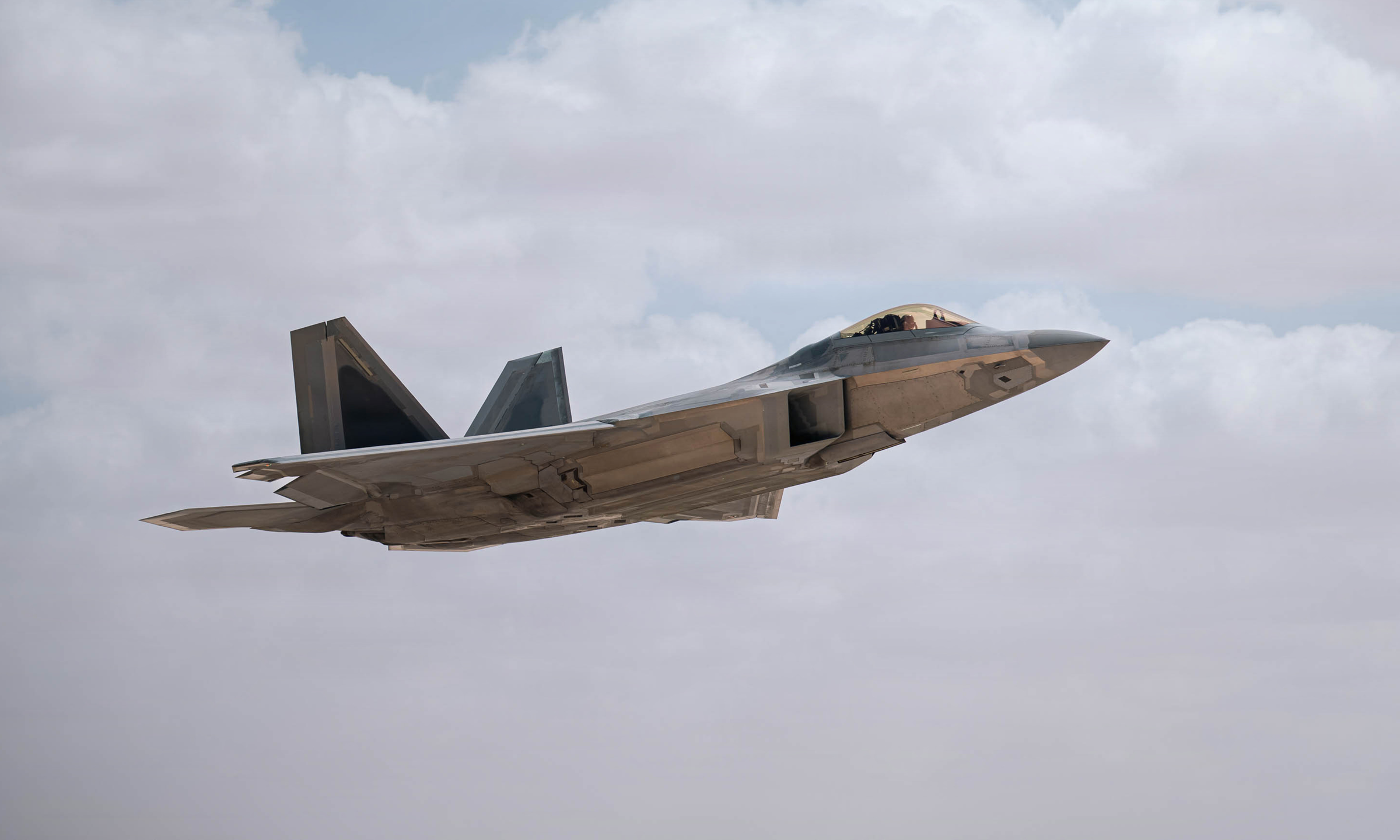 |
A US F-22 fighter jet operating as part of the strike operation against Iran on 20/3. *Photo: USAF* |
Recent events underscore the volatile situation. Last week, the US conducted strikes on several targets in Iran, citing retaliation for attacks on cargo ships in the Strait of Hormuz. Iranian forces responded by attacking US bases in Bahrain and Kuwait, including the headquarters of the US 5th Fleet in Manama.
President Donald Trump declared on 8/7 that the ceasefire between the US and Iran had ended, stating that "negotiations are just a waste of time". Iran announced that key provisions in the memorandum of understanding signed with the US in June had been nullified by Trump's statement, warning Washington of dangerous consequences.
The potential for renewed large-scale conflict looms. "If Trump decides to resume large-scale military operations, it will take time to rebuild a formidable force in the Middle East, even if only a portion has been withdrawn," Altman stated.
Pham Giang (Source: War Zone, Citadel)