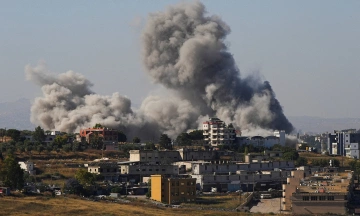
Vice President JD Vance has repeatedly questioned the accuracy of information provided by the Pentagon regarding the conflict with Iran during closed-door meetings, The Atlantic magazine reported on 27/4, citing two unnamed senior US officials. Vance also expressed concerns about the inventory levels of certain missile types when discussing with President Donald Trump.
These concerns reflect "Vance's personal views" and are not intended to accuse Secretary of Defense Pete Hegseth and Chairman of the Joint Chiefs of Staff Dan Caine of misinforming President Trump, according to advisors to the US Vice President. Vance appears to be attempting to prevent this issue from becoming a personal attack or causing internal divisions within the administration. However, some close officials to Vance believe Secretary Hegseth has described the situation "too positively, to the point of being misleading."
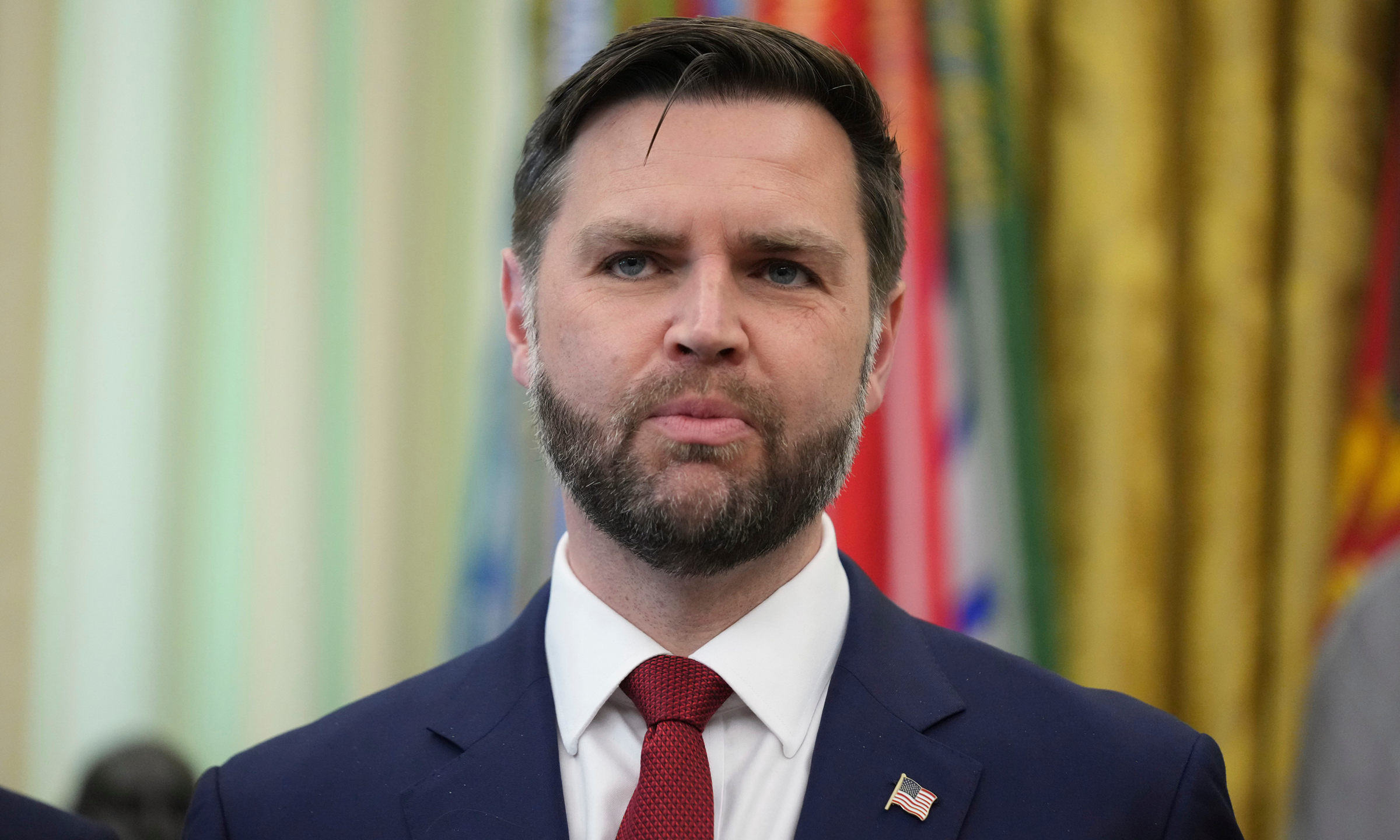 |
US Vice President JD Vance speaks at the White House on 23/4. *Photo: AP*
Secretary Hegseth and General Caine have repeatedly asserted that the US military's weapon stockpiles are abundant, while Iran has sustained significant damage after more than 6 weeks of conflict. President Trump reiterated the Pentagon leaders' positive statements about the conflict, declaring that the losses the US inflicted on Iran were sufficient to be considered a victory. He also claimed that key US weapon stockpiles were "nearly infinite."
According to The Atlantic, some advisors suggest Secretary Hegseth's optimistic descriptions, sometimes coupled with a confrontational attitude towards the press, aim to help President Trump "hear what he wants to hear." Pentagon press briefings often occur at 8h, coinciding with Trump's viewing of Fox News.
"His television experience makes Secretary Hegseth very good at knowing how to talk to Trump, as well as how the US President thinks," a former official said. Sources familiar with the situation added that the information provided by the Pentagon, at best, offers only an "incomplete picture" to President Trump.
Internal US intelligence assessments indicate Iran still retains two-thirds of its air force, most of its missile launch capability, and nearly all of its fast attack boat fleet, which could be used for mine-laying and patrolling the Strait of Hormuz. One source commented this poses a "real threat", at least to efforts to restore stalled maritime trade in the region.
The US military deploys fighter jets, launches missiles to attack Iran on 28/2. *Video: CENTCOM*
US officials and outside advisors acknowledge that the high rate of firing certain key weapons, including air defense ammunition, Tomahawk cruise missiles, and JASSM cruise missiles, has led to severe shortages and a degradation of the US military's future combat capability.
In a report released on 21/4, the Center for Strategic and International Studies (CSIS) estimated that the US military had depleted approximately one-half of its stockpiles of Patriot missiles, THAAD missiles, and many advanced weapons during the conflict with Iran.
In response to The Atlantic's information, Pentagon spokesman Sean Parnell stated that Secretary Hegseth and defense leaders "always provide the US President a full, frank picture." A senior official also said General Caine assessed the effectiveness of military operations "accurately, meticulously, and comprehensively."
A White House official said Vice President Vance "asks many probing questions about strategic planning, just like all members of the US President's national security team."
According to The Atlantic, Vice President Vance also emphasized that Secretary Hegseth "is doing very well." It remains unclear whether this is a new statement from him or if the US magazine is quoting a previous public remark by Vice President Vance.