U.S. forces in the Middle East shot down two Iranian suicide drones that were threatening international maritime traffic in the Strait of Hormuz. "We remain ready and will continue to defend against aggression from Iran," stated U.S. Central Command (CENTCOM), the agency responsible for U.S. military operations in the Middle East, on 6/6.
CENTCOM also released images of two F-35A stealth fighters "patrolling in the Middle East," but did not disclose their exact location or whether they were directly involved in the drone incident. Iranian officials have not yet commented on the event.
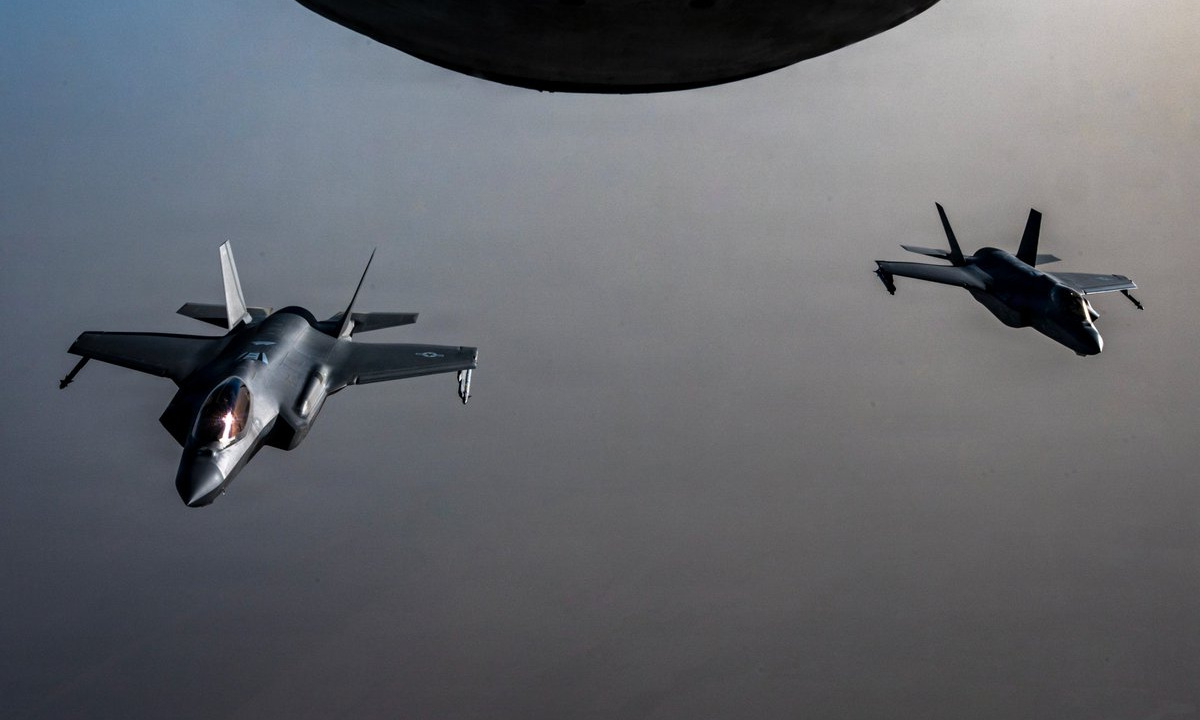 |
A formation of U.S. F-35A aircraft on patrol in the Middle East, in an image released on 6/6. Photo: CENTCOM |
A formation of U.S. F-35A aircraft on patrol in the Middle East, in an image released on 6/6. Photo: CENTCOM
Amidst these tensions, a source familiar with the thinking of U.S. Secretary of the Treasury Scott Bessent told AFP today that Washington intends to use frozen Iranian assets to compensate Gulf nations for future damages caused by Tehran. The source elaborated, "The U.S. Department of the Treasury will use all available tools to allow Iranian assets to be transferred to Gulf allies to support reconstruction, repairing all future damages caused by Iran."
CNN, citing another source, reported that the U.S. also aims to utilize Iranian assets to cover damages already incurred in the Gulf region during six weeks of conflict, not just potential future losses. The U.S. Department of the Treasury has not yet commented on this information.
Moments of U.S. strikes on targets on Qeshm island and in Goruk city on 5/6. Video: CENTCOM
In a diplomatic effort to de-escalate the Middle East conflict, Pakistan's Interior Minister Mohsin Naqvi visited Iran on 6/6. He announced his intention to deliver a "special letter" from Pakistan's army chief Asim Munir to Iran's Supreme Leader Mojtaba Khamenei, alongside a message from Pakistan's Prime Minister Shehbaz Sharif concerning "the current situation." Minister Naqvi, a frequent visitor to Iran, emphasized the importance of this communication, stating, "I think that is a very important message."
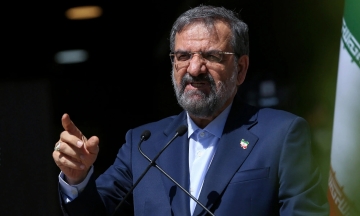
Meanwhile, Mohsen Rezaei, a military advisor to Iran's Supreme Leader, previously told CNN that negotiations with the U.S. are "at a standstill." He urged Washington to unblock approximately USD 24 billion in frozen Tehran assets to break this impasse. Rezaei warned that Tehran would "expand the war beyond the Gulf and take the conflict in a different direction" if Washington resumed hostile actions. However, the Iranian official also noted that the probability of war is "very low."
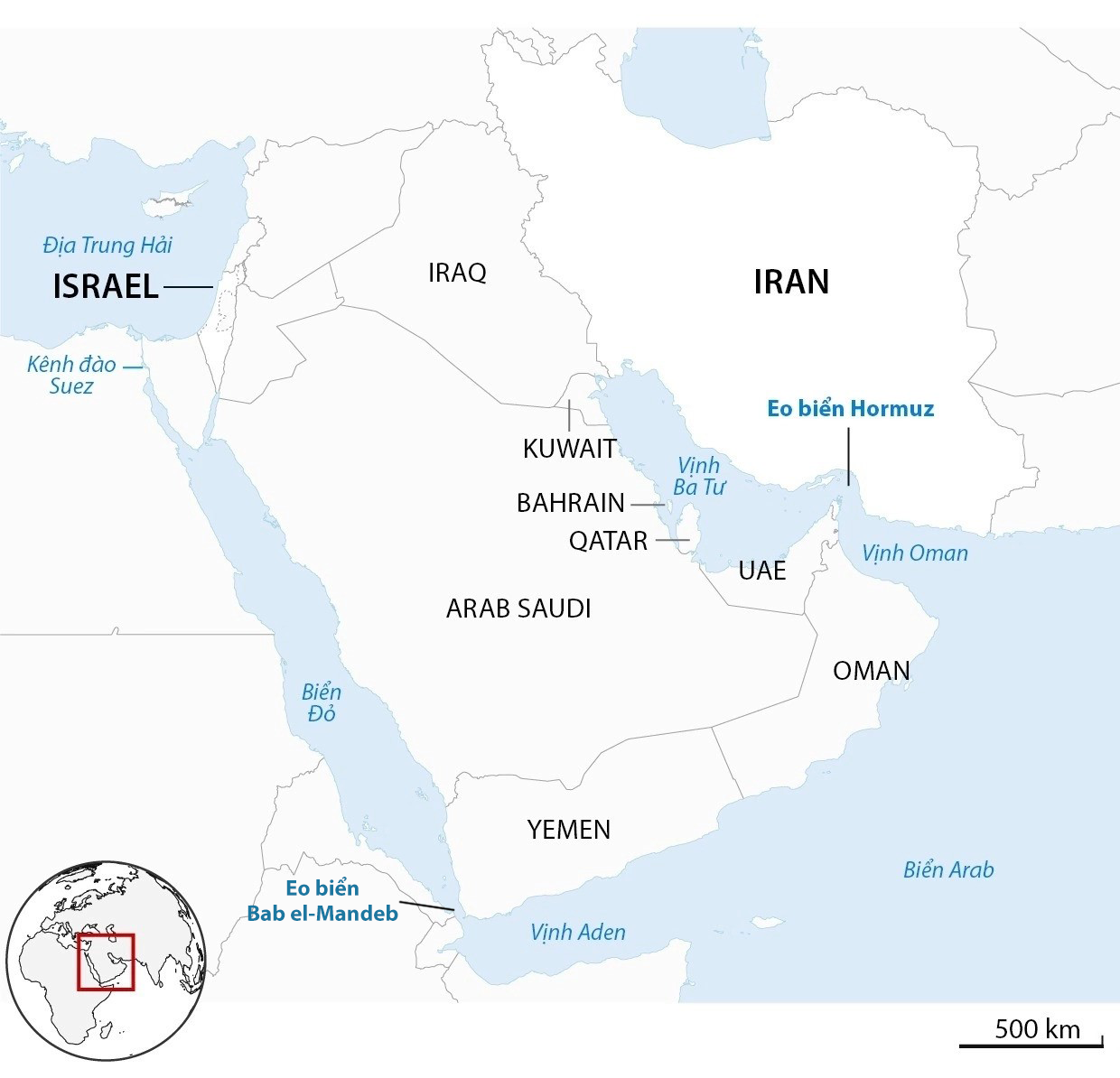 |
Location of the Strait of Hormuz and Iran. Graphic: Guardian |
Location of the Strait of Hormuz and Iran. Graphic: Guardian