Production lines for the BYD Sealion 7, known as the Sealion 07 EV in China, have officially ceased supplying the domestic market. The model has been removed from the company's direct sales application as dealerships work to clear remaining inventory. This shift in production strategy aims to reposition the electric SUV as an export-only product, fulfilling global orders.
The Sealion 7 is built on the e-Platform 3.0 Evo, featuring a cell-to-body battery structure and the first-generation Blade LFP battery system. This hardware configuration is expected to be replaced by newer technologies in the upcoming Sealion 08 line. This strategic adjustment also impacted the Tang L SUV, which concluded its domestic assembly in april.
Domestic market shift
The decision to withdraw the Sealion 7 from China is part of BYD's plan to restructure its Ocean Network product line. Domestic consumers currently favor plug-in hybrid (PHEV) versions, leaving the pure electric variant in a difficult position with sluggish new registrations, ranging from only 100-300 vehicles per month in the first half of 2026.
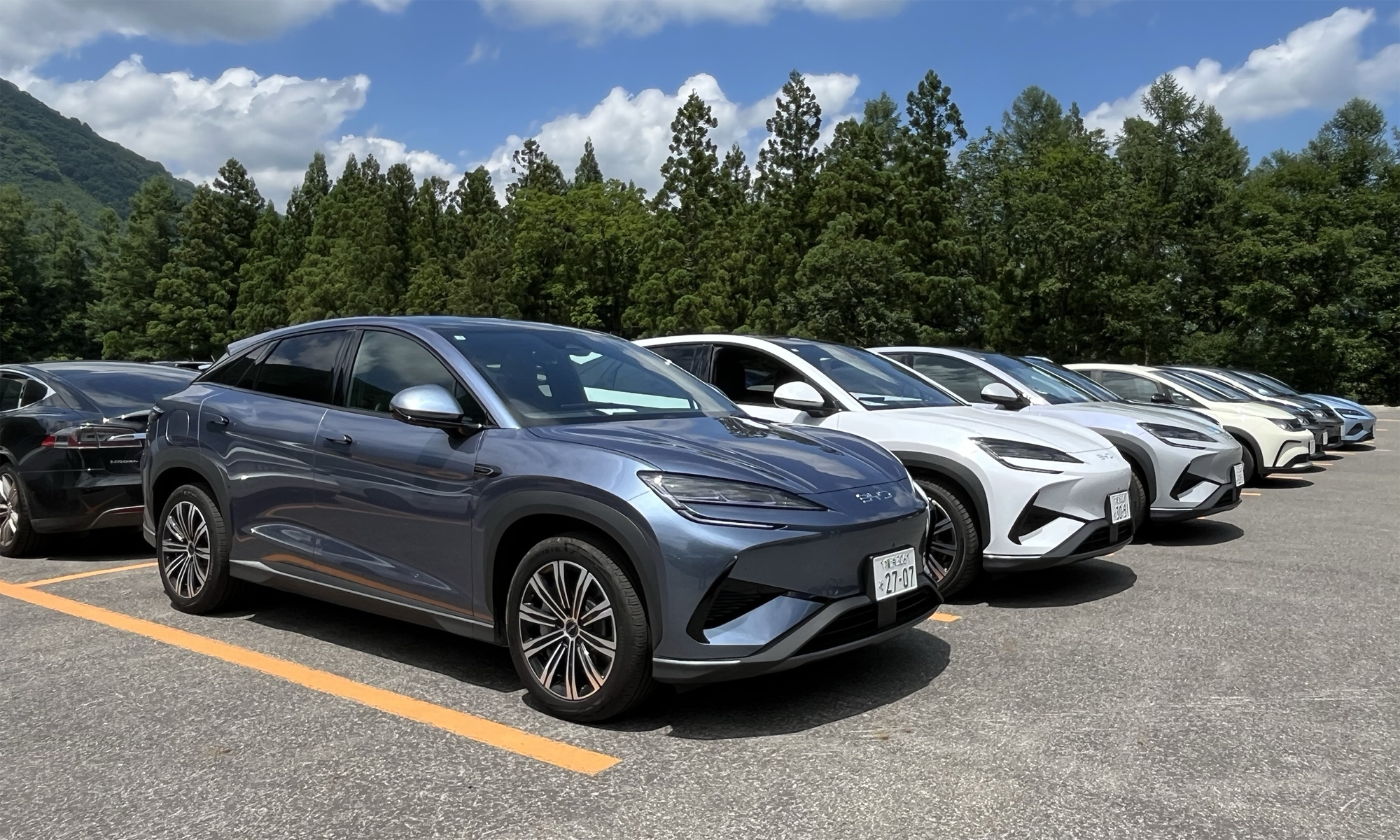 |
BYD Sealion 7 in Japan. Photo: BYD
This change mirrors BYD's previous moves, as the Sealion 6 also ceased domestic sales to focus entirely on export expansion. Similarly, rumors of the Song Plus line being discontinued emerged, but BYD only adjusted its supply allocation. In contrast to the pure electric version, the Sealion 06 hybrid variant achieved impressive sales in China with 18,856 vehicles delivered to customers in may, accounting for 13,1% of the company's market share in april, according to data from China EV DataTracker.
Accelerating in international markets
Despite its waning appeal at home, this electric SUV recorded impressive export figures, with 12,636 vehicles shipped in june. This surge significantly contributed to the group's total exports for the month, reaching 174,897 units. The entire Sealion family garnered 47,624 global orders in june, bringing year-to-date cumulative sales to 178,358 vehicles.
In Australia, the right-hand drive version achieved sales of 4,730 units in june, bringing total deliveries there to over 25,000 vehicles since 2/2025. This model also topped sales charts in Hong Kong in 2025 with 5,680 units. Additionally, BYD recently introduced the Sealion 7 to the South African market to capitalize on emerging right-hand drive markets and optimize local production capacity.
Battery hardware optimization strategy
The shift towards exports helps BYD optimize factory capacity by delivering its established integrated battery structure to international markets, which often lack large-scale domestic battery production chains. This distribution creates a significant price differential advantage, helping the company avoid the fierce price war in China. Models priced around 200,000 yuan (equivalent to 29,427 USD) in China are often sold for 58,900-73,600 USD in European markets.
My Anh (according to CarNewsChina)