While the trend of plug-in hybrid electric vehicle (PHEV) pickup trucks is gaining popularity, Toyota will not be joining this race anytime soon. In the Australian market, traditional diesel engines have long held a dominant position in the pickup segment. However, stringent emission regulations, tax incentives, and growing customer demand for more powerful and smoother urban pickup trucks have prompted rival brands to electrify their dual-cab models.
BYD quickly took the lead in the market with the launch of its Shark 6 model in late 2024. This segment soon welcomed the GWM Cannon Alpha PHEV and Ford Ranger Hybrid, while the JAC Hunter and Nissan Frontier Pro are also expected to arrive within the next 12 months. By the end of May this year, 8,438 plug-in hybrid light commercial vehicles had been delivered to customers in Australia, demonstrating a growing demand for diesel alternatives.
However, consumers should not expect a similar move from Toyota in the near future.
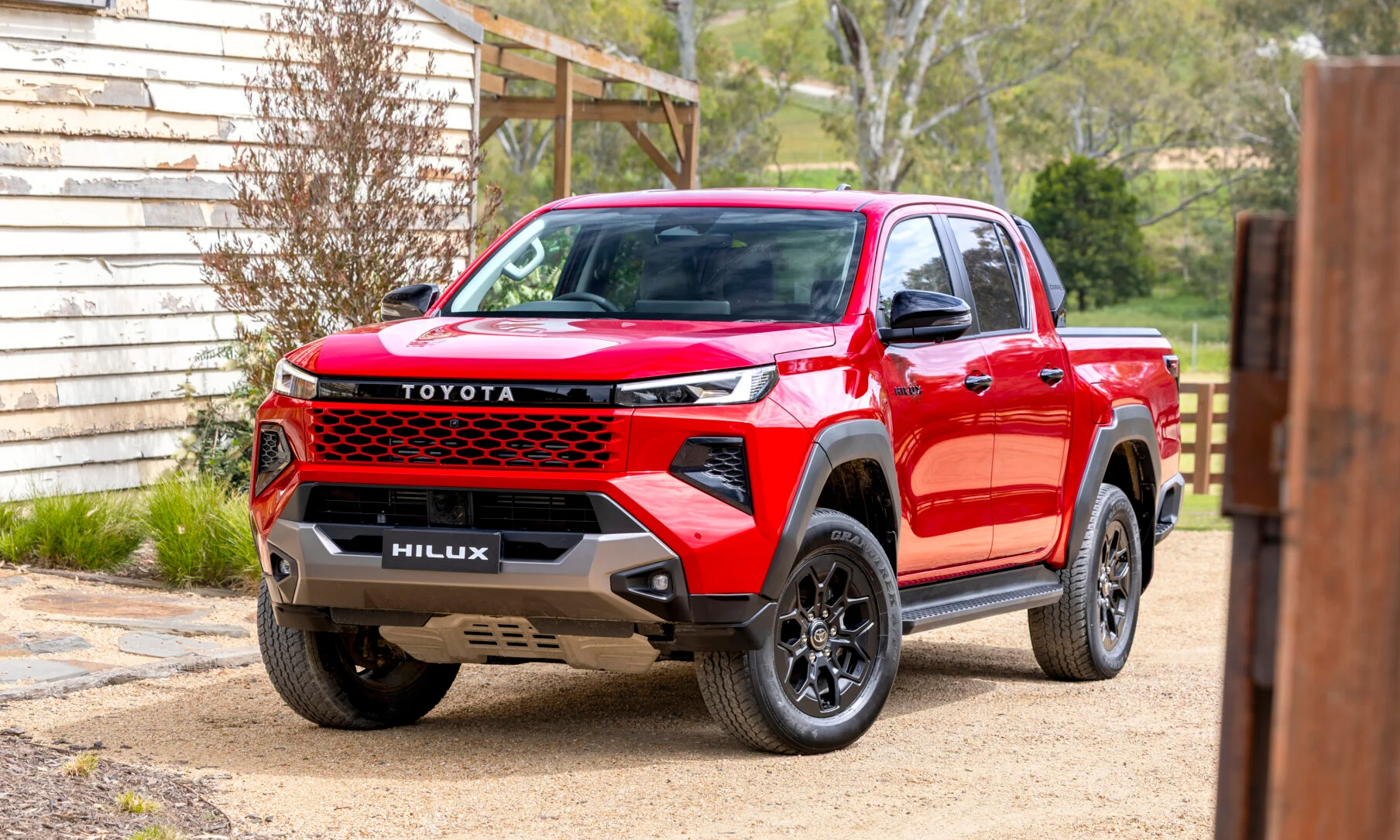 |
Current generation Toyota Hilux pickup in the Australian market. Photo: WhichCar
John Pappas, Vice President of Sales, Marketing, and Dealer Operations at Toyota Australia, told CarExpert: "We are always researching these powertrain solutions; we don't just sit still. But they must meet the actual needs of our customers. We already have configuration options for the Hilux, but through significant investment in research and development, we want to ensure these new powertrains are truly suitable for the market."
Currently, Toyota Australia remains committed to pursuing diesel, battery electric vehicle (BEV), and fuel cell electric vehicle (FCEV) versions for the 9th generation Hilux, with the hydrogen version expected to launch in 2028. Turbo diesel engine versions, offering a towing capacity of up to 3,500 kg and a payload of about one ton, continue to account for the majority of Hilux sales. Meanwhile, BEV and lower-performance hydrogen fuel cell vehicles are primarily aimed at corporate customers and project vehicles.
In contrast, rival brands have begun to promise diesel-equivalent towing capacity for their plug-in hybrid models. Models like the Cannon Alpha PHEV, Ranger Hybrid, Shark 6 Performance, and Hunter all boast a braked towing capacity of up to 3,500 kg, although none have optimized cargo capacity like the single-cab Hilux version.
Ray Munday, Product Planning and Pricing Manager at Toyota Australia, affirmed that the company would not rush to launch a Hilux PHEV merely to compete with rivals.
"We see intense competition in this segment and are seriously studying it. But until the technology is ready, we will not launch a rushed product", Munday explained.
The biggest challenge currently for PHEV technology, or any electrification solution, is increasing vehicle weight, thereby reducing cargo payload and towing capacity, according to Munday. Current systems are not truly optimized to meet Toyota's standards for defining heavy-duty towing for Hilux customers. "Customer expectations for the Toyota brand and the Hilux line are very high, perhaps higher than for other products. We respect that greatly, and this is also a major challenge", Munday said.
Toyota's caution regarding the Hilux PHEV is understandable, as plug-in hybrid technology is still quite new to the Japanese automaker in this market, having only first appeared on the RAV4 PHEV model.
My Anh