From 2025 to early 2026, several Chinese automotive companies recorded profits for the first time. Leapmotor achieved a profit of 78 million USD after a 410 million USD loss the previous year. Nio reported an adjusted profit of 104 million USD in Q4, while Xpeng also reversed its trend with a profit of approximately 55 million USD, after a loss of nearly 190 million USD in the same period. These three companies join the ranks of profitable manufacturers such as BYD, Xiaomi, and Li Auto, reflecting the rapid development of Chinese electric vehicle producers amidst intense competition and a fierce price war in their domestic market.
Analysts suggest that Chinese automotive companies are optimizing their business models by accumulating market data, understanding their strengths and weaknesses, and controlling costs more effectively than competitors. In contrast, in the West, Tesla remains a rare pure-electric vehicle manufacturer that is profitable, but its profits are declining as the company shifts focus to artificial intelligence and robotics. Major corporations like General Motors, Ford, and Stellantis have reported billions of US dollars in losses related to their electric vehicle strategies.
Europe faces a similar situation. However, brands such as BMW, Volkswagen, Mercedes-Benz, Audi, and Volvo continue to invest in electric vehicles, consistently upgrading software, improving range, and enhancing charging speed to maintain competitiveness.
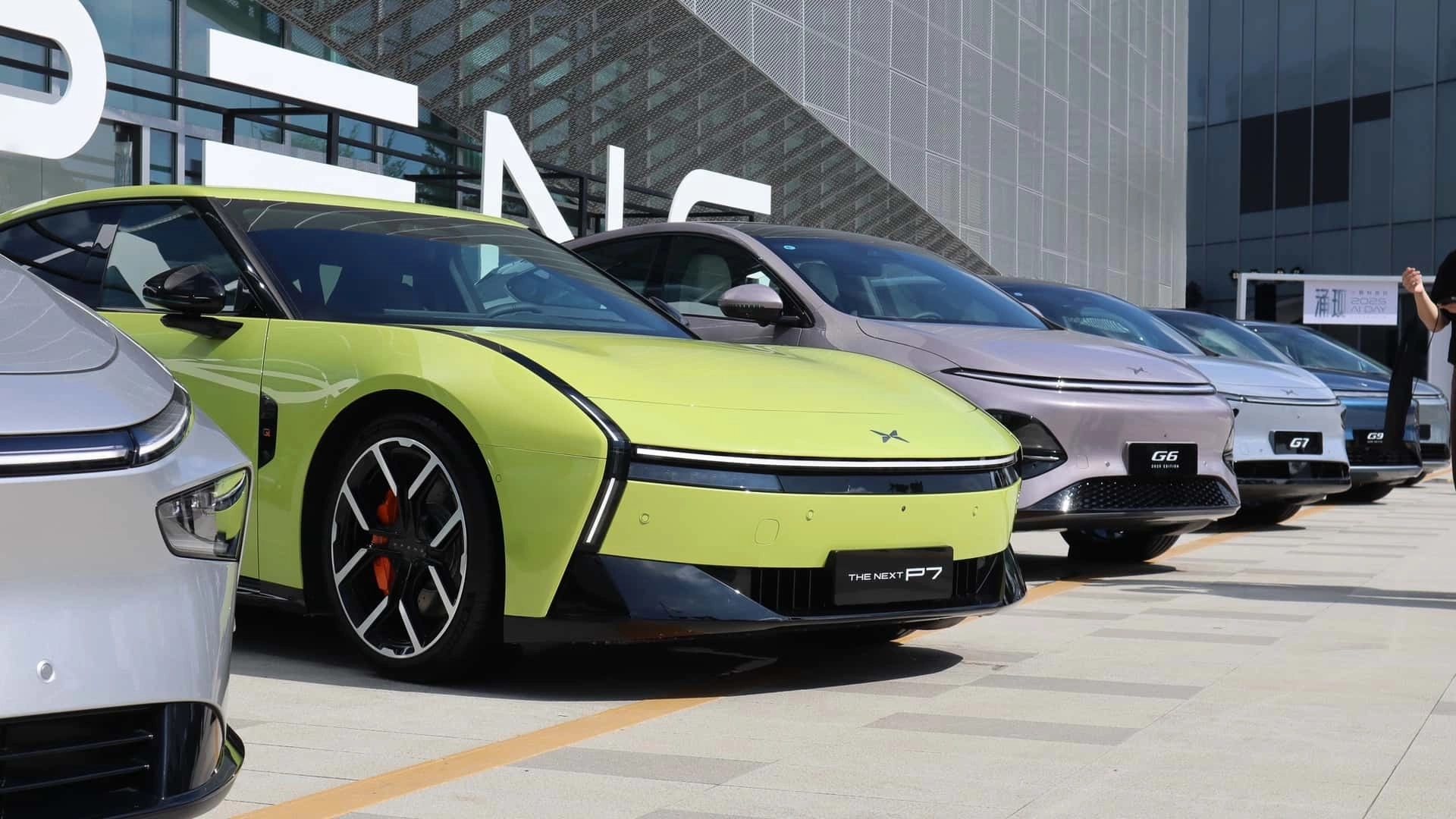 |
Electric vehicle models from Chinese brand Xpeng. Photo: InsideEVS. |
One of China's significant advantages comes from strong government support, totaling approximately 230 billion USD between 2009 and 2023. BYD alone reportedly received at least 3,7 billion USD in subsidies. However, the decisive factor is not solely subsidies but also a high degree of vertical integration. Many companies self-produce most critical components like batteries, electric motors, and software, which helps control costs, especially since batteries are the most expensive component of an electric vehicle.
Furthermore, fierce domestic competition drives continuous innovation. BYD's recent sales decline, for example, creates opportunities for rivals to expand market share. Nio exemplifies this with its multi-brand strategy and a battery swap system of over 3,750 stations nationwide. Leapmotor has also achieved rapid growth through its partnership with Stellantis and expansion into 40 countries.
Another notable case is Xiaomi. This technology group quickly achieved sales of over 380,000 vehicles and profitability in under two years of entering the automotive market, by leveraging its product ecosystem and existing technological capabilities.
Meanwhile, the US market is growing slower, while Chinese automotive companies are accelerating global expansion, leading to increasing competitive pressure. Analysts warn that Western manufacturers risk being left behind in the rapidly changing electric vehicle race if they do not speed up their efforts.
Ho Tan (according to InsideEVs)