Since early april, Japan has implemented a "blue ticket" system for cyclists, allowing police to issue on-the-spot monetary fines for over 100 minor traffic violations. This policy, introduced by the Japan National Police Agency, marks a major shift, as bicycles are now regulated similarly to cars and motorcycles, no longer viewed as low-risk vehicles.
This decision stems from the high number of bicycle-related accidents in Japan over many years. Most accidents result from cyclists violating basic rules. Previously, actions like running red lights or riding in the wrong lane often only resulted in warnings, leading many to develop a complacent attitude towards bicycle use in daily life.
Within Japan's traffic enforcement system, violation levels are distinguished by ticket color. "Yellow tickets" serve as warnings without fines, typically for minor or first-time offenses. "Red tickets" are for serious actions like driving under the influence of alcohol or causing severe accidents, which can lead to criminal prosecution. A notable change is that previously, cyclists mostly received "yellow ticket" warnings. Under the new regulations, many common violations will now be processed with "blue tickets", meaning monetary fines instead of being overlooked.
Common infractions now subject to fines include running red lights, failing to stop at 'stop' signs, riding against traffic, not using lights at night, using a phone while cycling, wearing headphones or holding an umbrella while riding, and using unsafe bicycles such as those with faulty brakes. Cyclists on sidewalks must also yield completely to pedestrians; failure to do so may result in a fine. More dangerous actions, such as cycling under the influence of alcohol or causing serious accidents, can still lead to criminal prosecution.
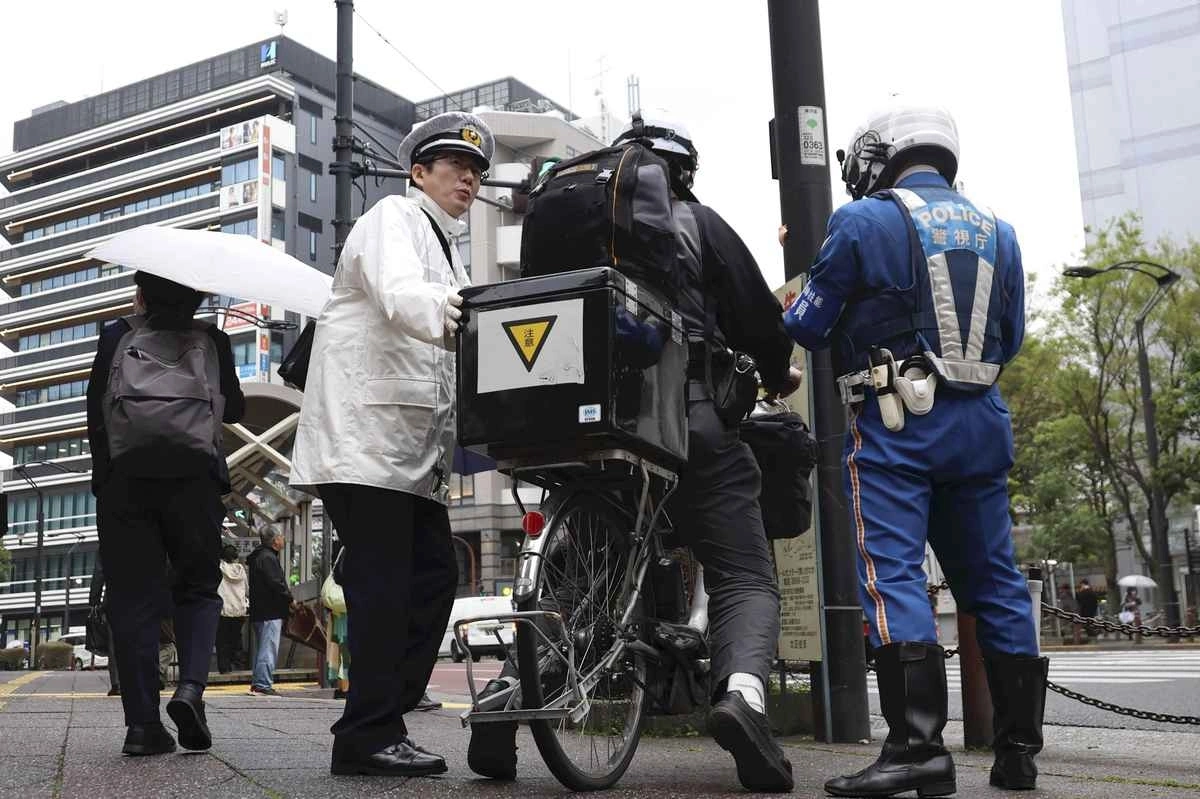 |
Police officers explain the "blue ticket" on-the-spot fine system to a cyclist on a street in Kita district, Tokyo. *The Yomiuri Shimbun* |
Bicycles have long been a common mode of transport in Japan, especially in urban areas where residents frequently use them for commuting to school, work, or for short distances. Their convenience and low cost contribute to their popularity, but also foster a perception of low risk.
According to the Japan National Police Agency, bicycles are involved in about 20% of all traffic accidents, with most occurring due to violations of basic rules like failing to observe at intersections or riding in the wrong lane. Officials hope that imposing monetary fines will enhance adherence to laws and reduce the burden on police, who previously handled numerous repeat violations with little deterrent effect.
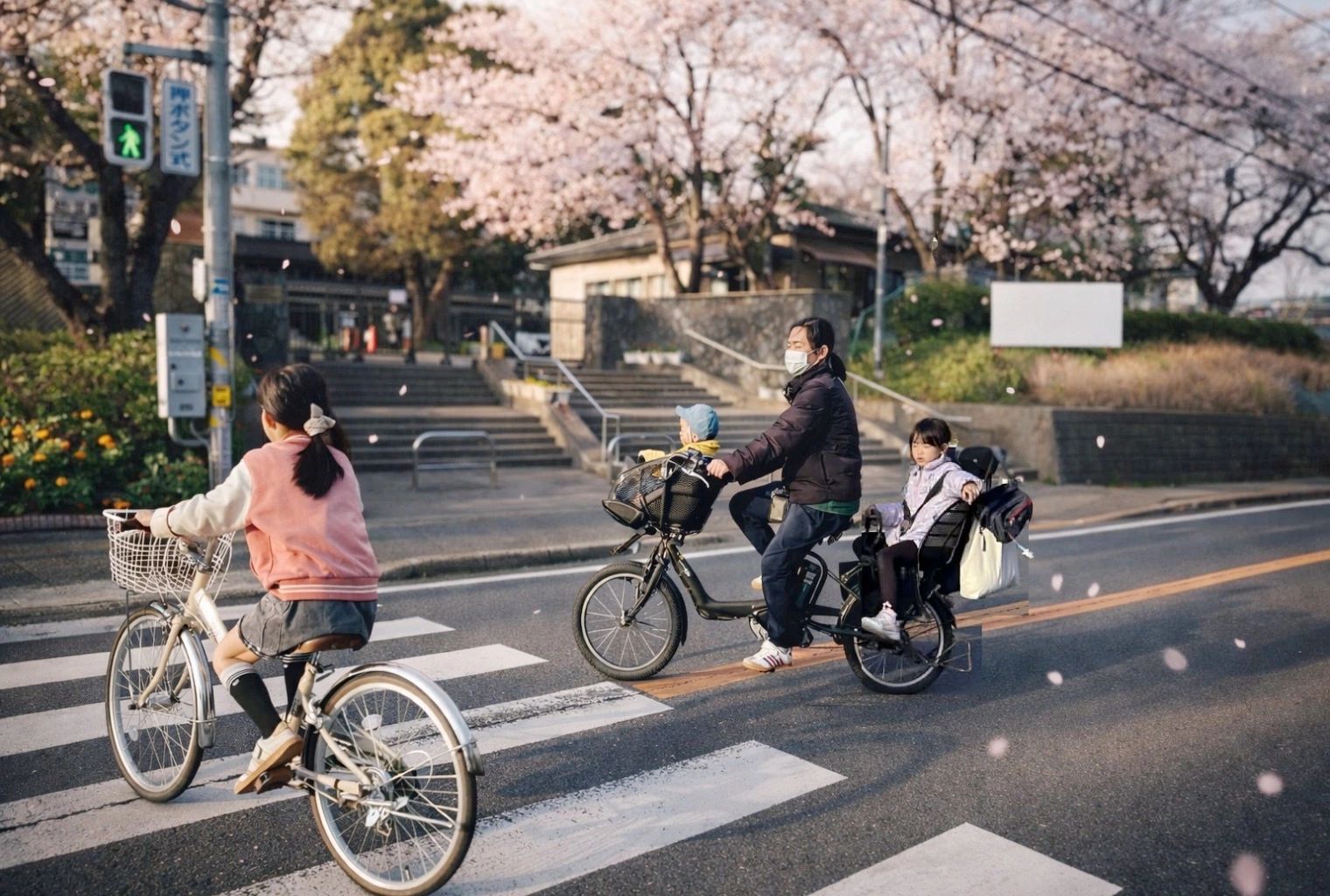 |
Cycling across a street in Chiba. *Minh Cuong* |
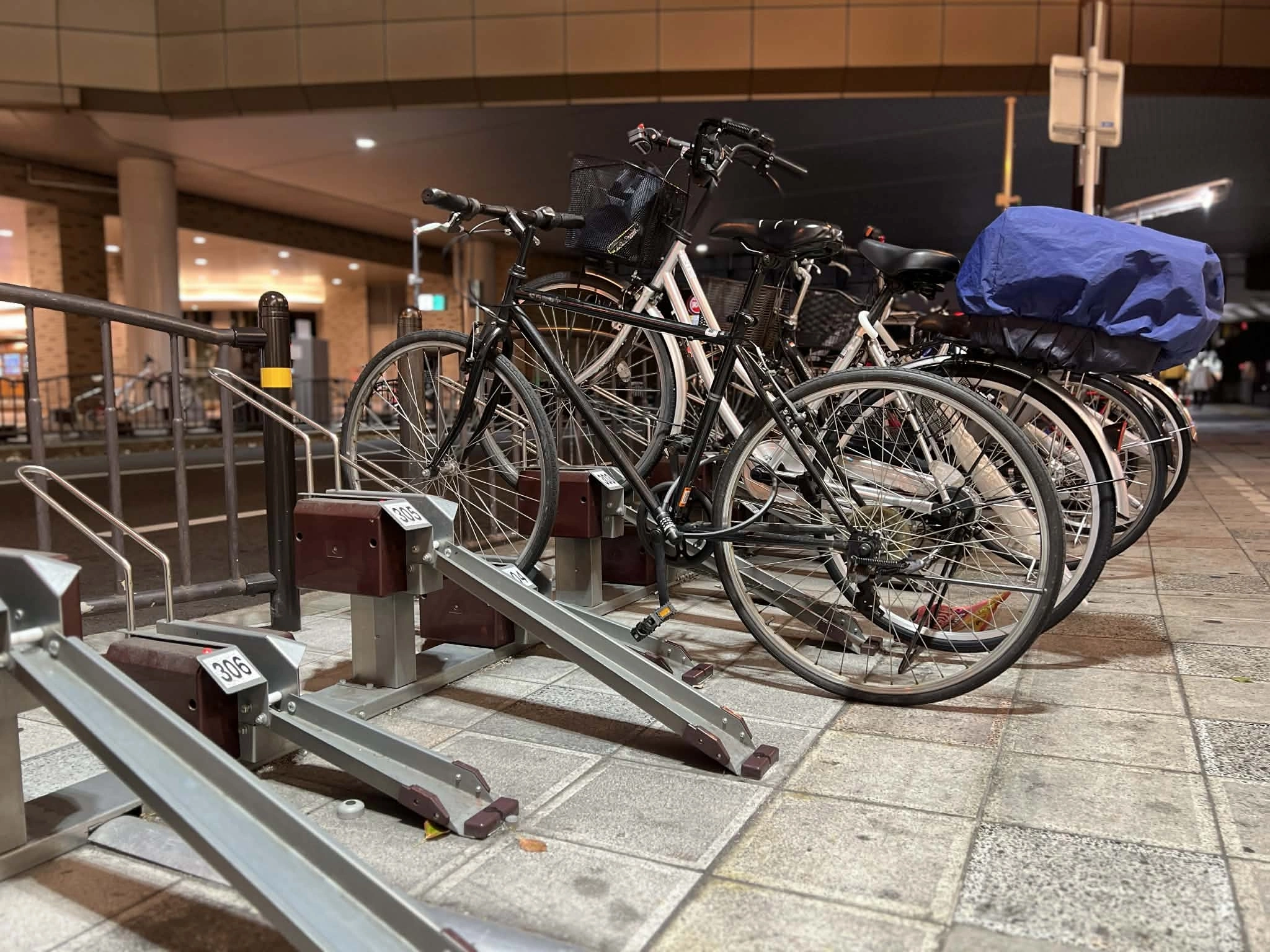 |
Bicycles parked on a sidewalk in Osaka are staggered in height to save space. *Duc Huy* |
Ho Tan (via NHK)