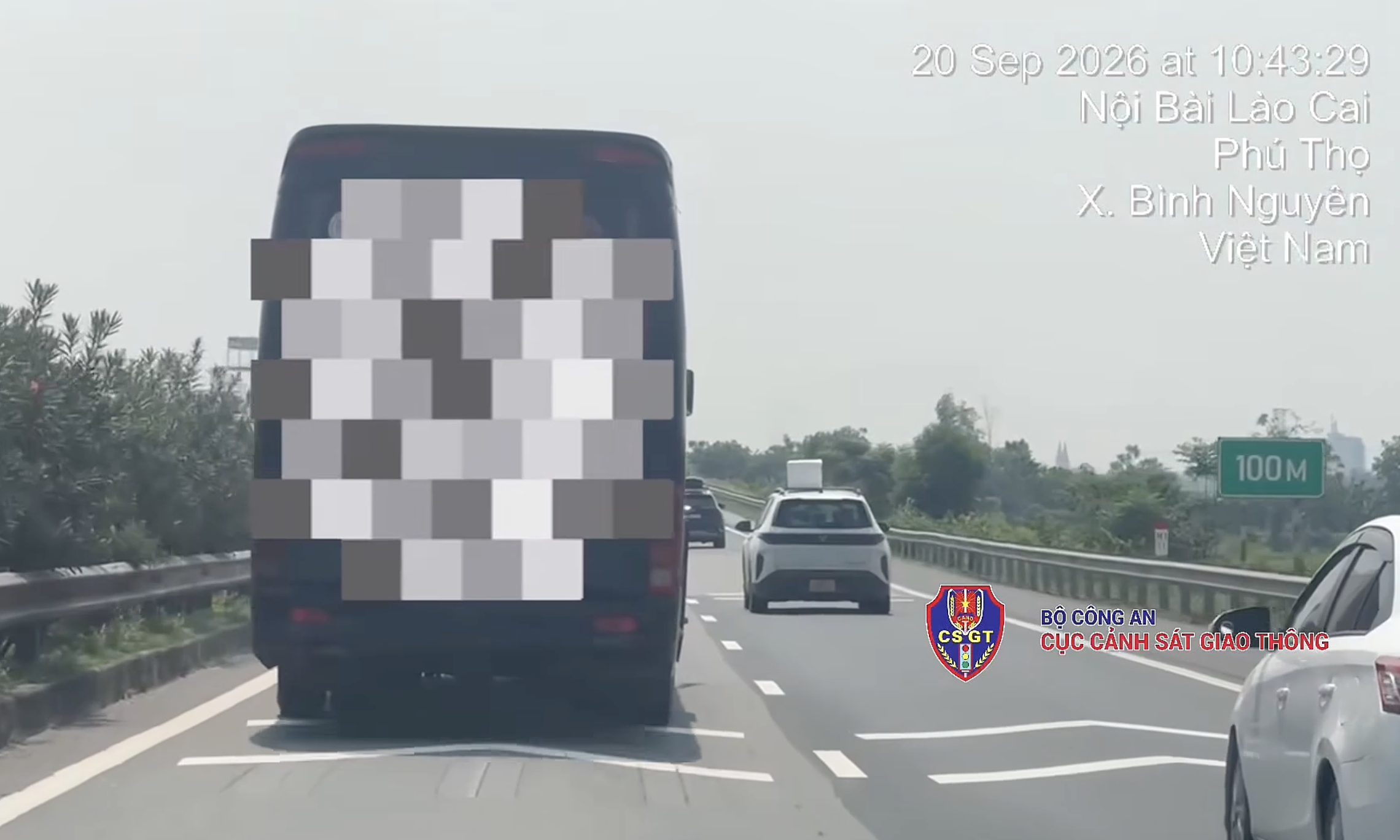
According to the US National Highway Traffic Safety Administration (NHTSA), vehicles impeding traffic flow contribute to aggressive driving. Drivers behind may tailgate, change lanes repeatedly, or speed to overtake the obstructing vehicle.
To mitigate such situations, many countries with high car ownership and developed highway networks, including Germany, the US, and Australia, designate the outermost left lane (or right lane in left-hand drive countries) as a passing lane, not a "fast lane".
Germany
Germany enforces the "keep right" principle (Rechtsfahrgebot) on multi-lane roads. According to German road traffic law, vehicles must drive as far to the right as possible. On highways, the left lane is primarily for overtaking. After completing an overtake, drivers must return to the right lane when it is safe to do so.
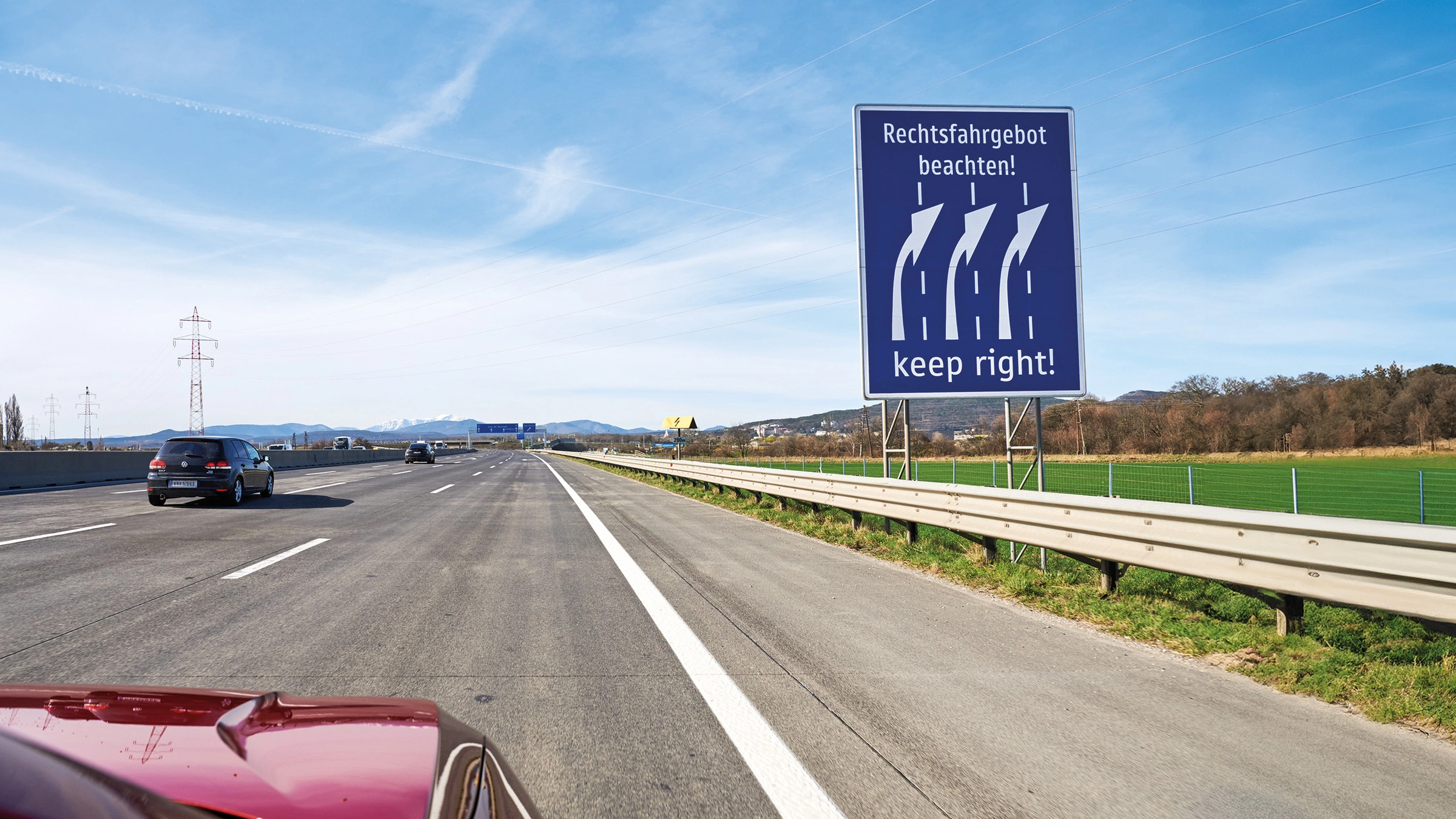 |
A sign on a German highway reminds drivers to follow the "keep right" principle, using the left lane only for overtaking. *Photo: Oeamtc* |
This rule applies even if a vehicle is traveling at the maximum speed limit. In other words, adhering to the speed limit does not justify a driver continuously occupying the left lane if they are not actively overtaking.
According to the German Automobile Association (ADAC), drivers who unnecessarily remain in the left or middle lane can face an 80 EUR fine and one demerit point if they impede other vehicles. However, there are exceptions. On highways with three or more lanes, drivers are not required to immediately return to the right lane if they are about to overtake another vehicle. ADAC guidelines suggest that if preparing to overtake the next vehicle within a short period, drivers may stay in the left lane. Conversely, if they could drive in the right lane for about 20 seconds before the next overtake, they must return to the right lane.
Furthermore, the law includes exceptions for congestion. When traffic is heavy or lanes are moving slowly at similar speeds, drivers are permitted to remain in their current lane or slowly overtake on the right.
US
Although there isn't a single uniform regulation across the entire US, most states enforce the "keep right except to pass" principle. After completing an overtake, drivers must move back to the right lane when it is safe. Many states also prohibit drivers from continuously driving in the left lane if it impedes traffic behind them, stipulating that this lane is solely for passing or turning left, not for regular travel.
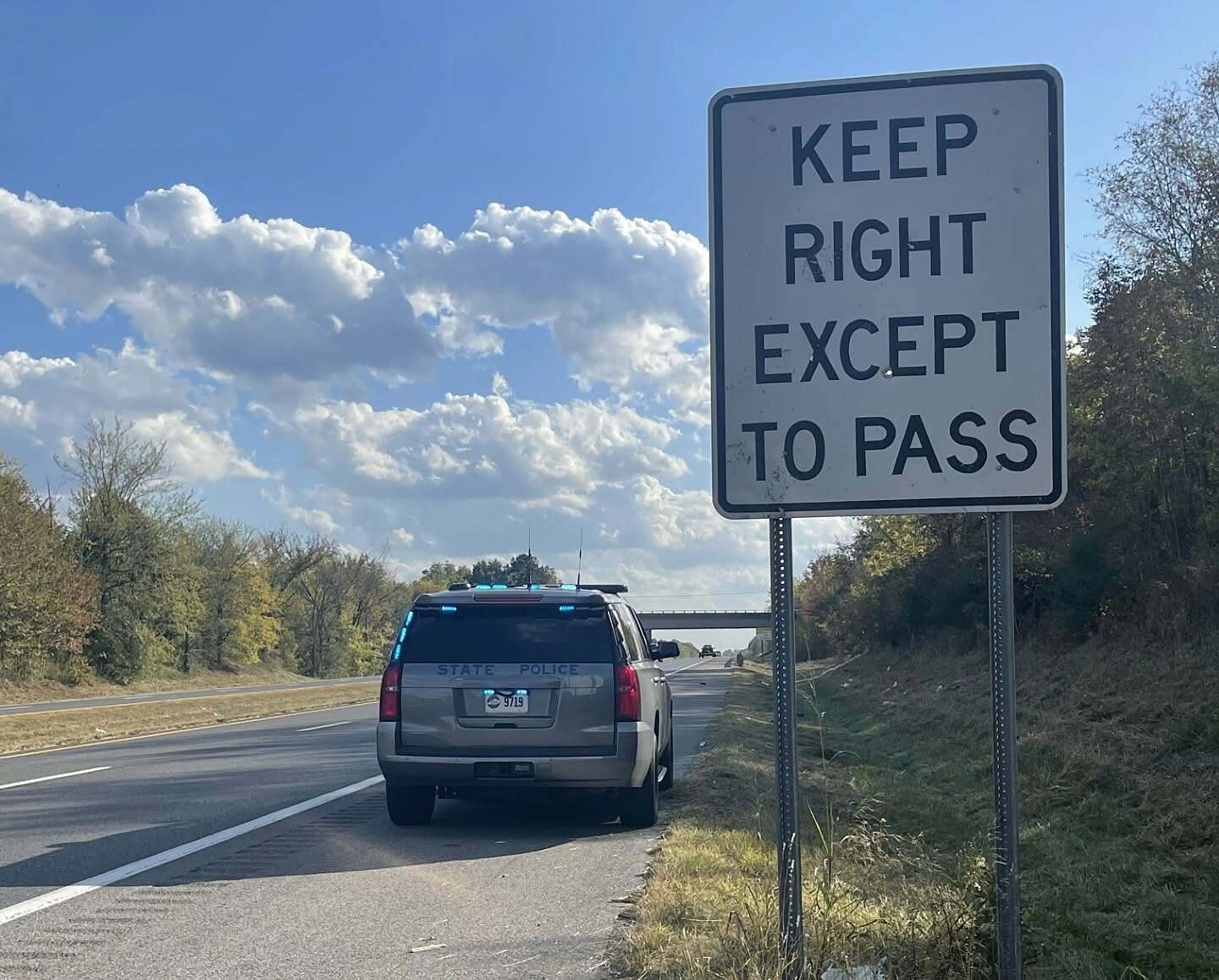 |
A sign on a US highway indicating that the left lane is for passing only. *Photo: Trooper Burgess* |
For example, Washington state prohibits drivers from continuously occupying the left lane on multi-lane roads if it obstructs traffic behind. This regulation does not consider whether the vehicle is traveling at the speed limit, but rather focuses on ensuring smooth traffic flow. Similarly, in Connecticut, the law requires drivers to use the left lane only for passing, preparing to turn left, avoiding obstacles, or making way for merging vehicles. Upon completing the maneuver, the driver must return to the right lane.
Australia
In Australia, vehicles drive on the left side of the road due to left-hand drive. On multi-lane roads with speed limits of 80-90 km/h or higher (depending on the state), or where "Keep Left Unless Overtaking" signs are present, drivers must stay in the left lane. The right lane is only to be used for overtaking, turning right, avoiding obstacles, or in congested traffic.
For instance, Queensland state prohibits drivers from continuously using the right lane on roads with speeds of 90 km/h or higher, except for specific situations like overtaking, turning right, avoiding obstacles, or when left lanes are congested. New South Wales applies similar regulations on roads with speeds of 80 km/h or higher or where "Keep Left Unless Overtaking" signs are displayed.
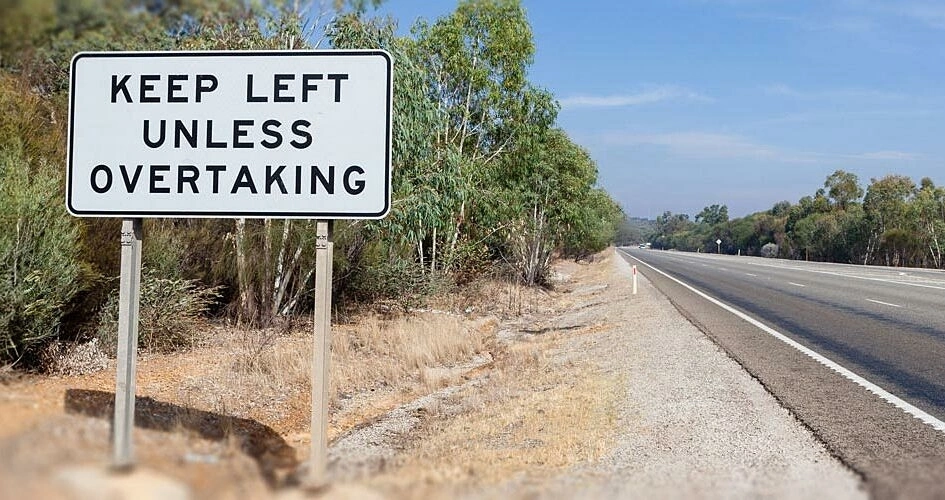 |
A sign on an Australian highway indicating that the right lane is for passing only (left-hand drive). *Photo: mynrma* |
In Western Australia, drivers who fail to keep left as required on multi-lane roads can be fined 50 AUD and incur two demerit points on their driver's license. According to the state's road safety authority, this rule aims to keep the right lane clear for passing vehicles, thereby improving traffic flow and reducing the risk of collisions from lane changes.
Pham Hai