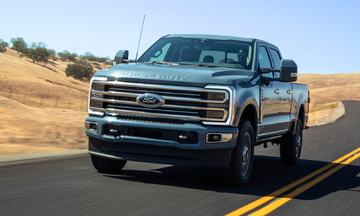
Beyond administrative penalties and license suspension, some US states mandate special license plates for drivers with alcohol violations. This serves as a strong deterrent and allows law enforcement to easily identify and monitor these vehicles.
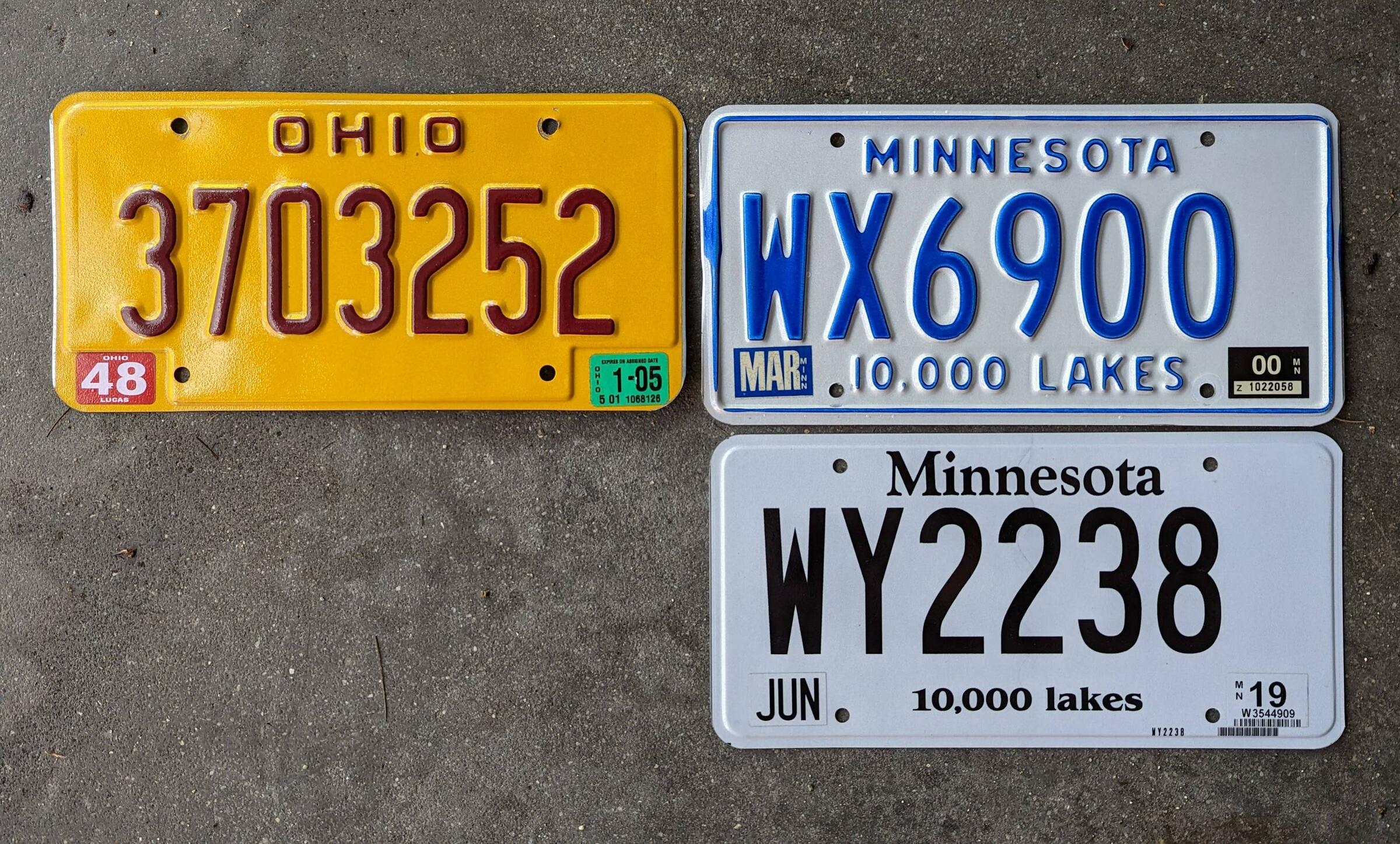 |
License plates for drivers convicted of driving under the influence in Ohio (left) and Minnesota (right). *Photo: pl8ster*
Ohio is one of the few US states that uses a special yellow license plate with red lettering for individuals convicted of driving under the influence, often nicknamed the "party plate". This plate stands out from typical white plates with blue letters. The regulation first appeared in the late 1960s and was significantly expanded in 2004.
The decision to mandate a yellow plate depends on several factors, including the driver's traffic violation history, the blood alcohol content measured at the time of the offense, and whether property damage or injury to others occurred. After reviewing the complete record, a judge decides whether to apply the special plate. If required, the driver must display the plate for a minimum of 6 months, and in some cases, up to 5 years, depending on the court's discretion.
Minnesota also has special license plates for drivers with alcohol violations, starting with the letter W, hence they are called "whiskey plates". Unlike Ohio, these plates do not feature a prominent color change, but their standardized character system allows police to quickly identify vehicles previously involved in such offenses.
Minnesota's regulation targets high-risk drivers, such as those with a blood alcohol content twice the legal limit of 0,08g/100ml of blood, or those driving under the influence with children in the vehicle. Minnesota considers these situations serious and requires the use of special plates as an additional monitoring measure. When mandated to use a W-plate, drivers must display it not only on their own vehicle but also on any other vehicle they intend to use. Therefore, even a car registered to a spouse or child must carry a W-plate if the offending driver uses it.
The use of yellow or W-plates makes vehicles easily identifiable in traffic. Not only police, but the community can recognize that the owner has been convicted of drunk driving. In fact, many individuals with yellow plates report being stopped more frequently by police and experiencing significant pressure when parking in public. Some Ohio judges still support this measure, believing that public shame and scrutiny can reduce recidivism. However, privacy advocacy groups strongly oppose it, arguing it is a form of public shaming that causes lasting harm to offenders and even their family members.
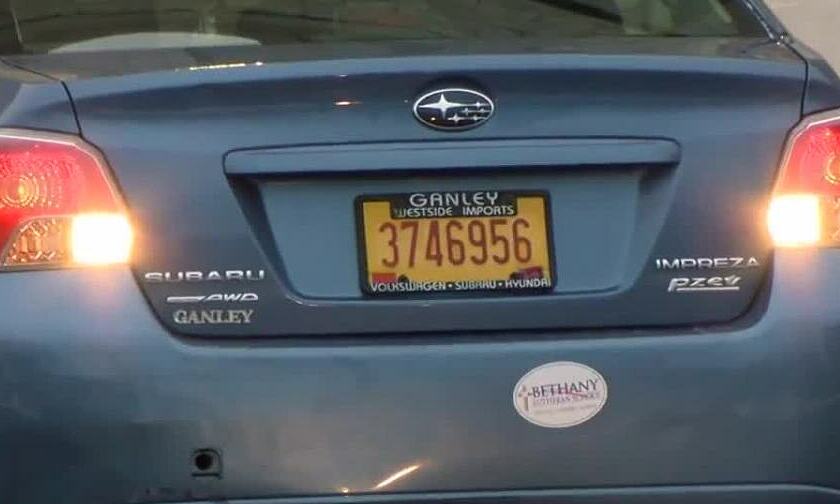 |
Vehicle using a special license plate for a driver with alcohol violations in Ohio. *Photo: TMJ4*
Consequently, Ohio stopped issuing yellow plates in 2021. However, drivers who received yellow plates before that date must continue to use them until their mandated period expires. Minnesota, conversely, still maintains its W-plate regulation. Nevertheless, drivers in Minnesota can now opt to install an ignition interlock device, which requires a breath alcohol test before the vehicle can start, as an alternative to using these special plates.
Ho Tan