South Korean police are considering criminal liability for e-scooter rental companies following a severe accident in October involving an unlicensed teenager in Incheon. This incident has intensified public outrage against the service, which has faced criticism for years due to accidents and sidewalk conflicts.
Police confirmed they are investigating whether rental platforms facilitated the unlicensed operation of e-scooters in the Songdo accident on 18/10. The incident involved two junior high school students who collided with a woman walking with her young daughter. According to police reports, the woman stepped in front of the e-scooter to protect her child, was thrown backward, and sustained severe head injuries. The victim remains hospitalized in critical condition.
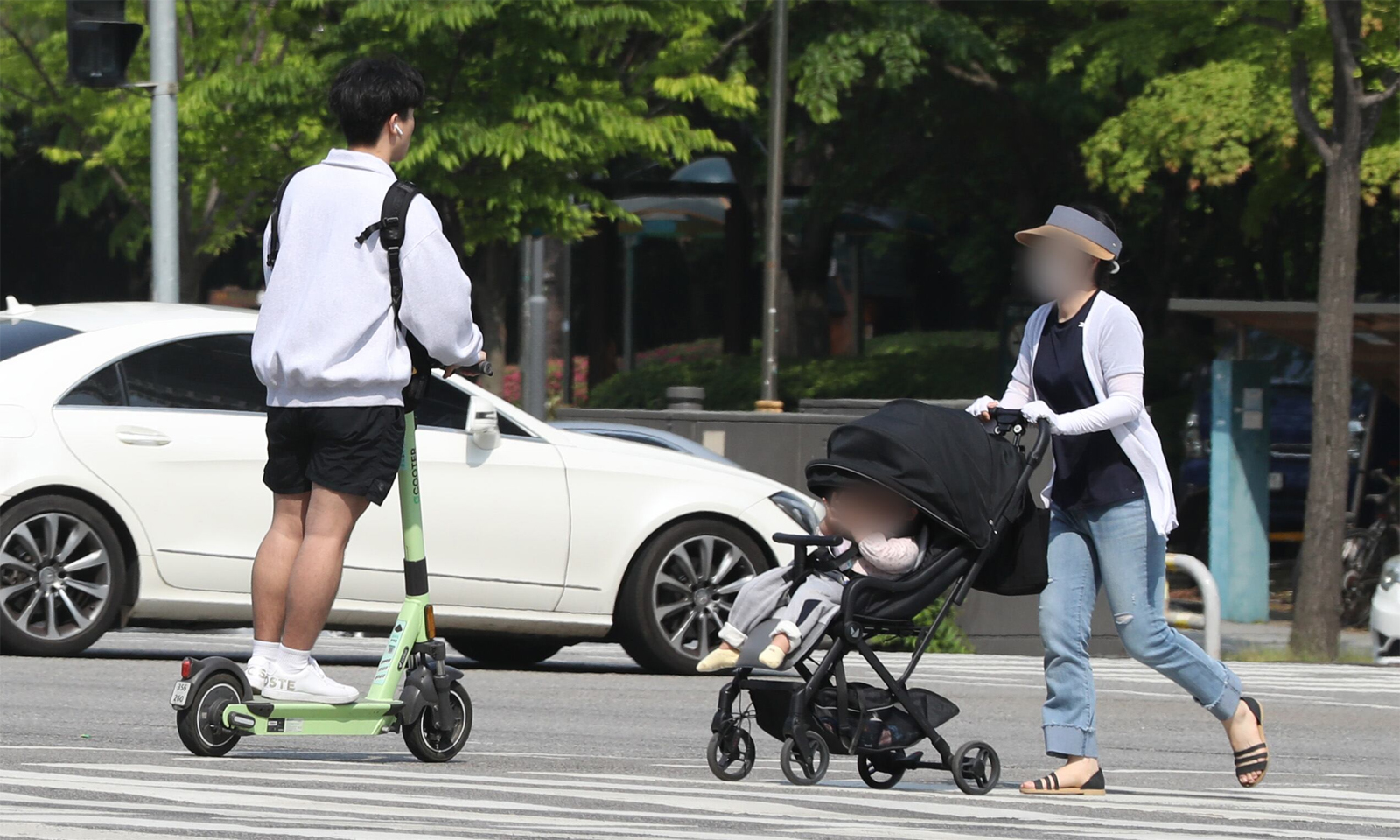 |
An e-scooter rider without a helmet on a street in Suwon, Gyeonggi province. This violation carries a fine of 20,000 won (USD 14). Chosun
The investigation focuses on whether e-scooter rental companies allowed minors to unlock vehicles without a valid driver's license. Under South Korean law, e-scooter operators must possess a type two moped license, which is only issued to individuals aged 16 or older.
The National Investigation Office has instructed Incheon police officers to examine potential "aiding and abetting" charges against the rental companies involved, although investigators have not yet summoned company officials.
A local media survey on 16/11 revealed that six major rental platforms still permit users to start rides without license verification. Some apps display warnings but allow users to bypass them, while others offer incentives such as discount coupons for optional verification or provide no license prompts at all.
This inconsistency is central to legal scrutiny, as current regulations mandate that companies prevent unauthorized use, not merely warn against it.
Public dissatisfaction has grown over the years as e-scooters have evolved from a future transportation trend into a frequent source of collisions and civil disputes. Police data from 2024 indicates that over one-half of unlicensed personal mobility device traffic violations involve teenagers. Similar data shows hit-and-run incidents involving these devices also include a comparable proportion of minors.
Cities also contend with the added burden of e-scooters abandoned in pedestrian areas and public transit corridors. Seoul city government data reveals that tens of thousands of such e-scooters are removed annually in Seoul alone since 2021.
The crackdown on teenage safety violations coincides with a decline in South Korea's shared e-scooter industry. According to data analytics firm IGAWorks, the total number of monthly active users across 10 major e-scooter platforms in October decreased to approximately 1.24 million. This represents a 14.5% drop compared to October 2024 and a steady decline from a peak of nearly 1.74 million vehicles in 2022.
By late 2024, Swing, once the nation's second-largest operator, completely exited the e-scooter market, shifting its focus to electric bicycles and ride-hailing services.
My Anh (via Korea Herald)