Child safety seats are now considered essential equipment in automobiles, but their journey to becoming a part of traffic laws in many countries spanned over half a century. From simple seats designed to elevate a child's view, child car seats gradually evolved into safety devices with stringent technical standards. This evolution occurred alongside a process where countries progressively tightened laws and implemented mandatory requirements in stages.
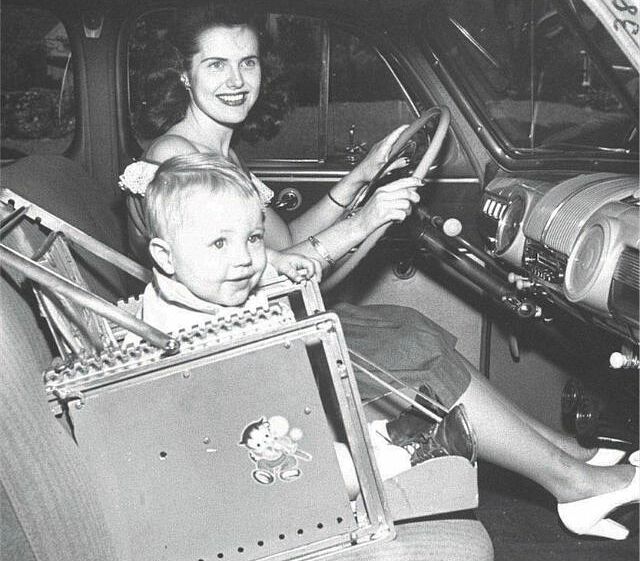 |
Early child seats were not primarily for child protection. Photo: Rarehistoricalphotos |
Child car seats first appeared in the 1930s in the United States and Europe. In their initial phase, the main purpose of these seats was to elevate children, making it easier for parents to observe them in the car, rather than focusing on safety. It was not until 1962 that the first safety-oriented child seat designs were developed. British journalist Jean Ames created a child seat model for the rear seat, featuring a Y-shaped harness, very similar to current models.
Around the same time, inventor Leonard Rivkin in the United States designed a seat with a metal frame intended to protect children during collisions. Despite these innovations, the number of parents using child car seats remained very low.
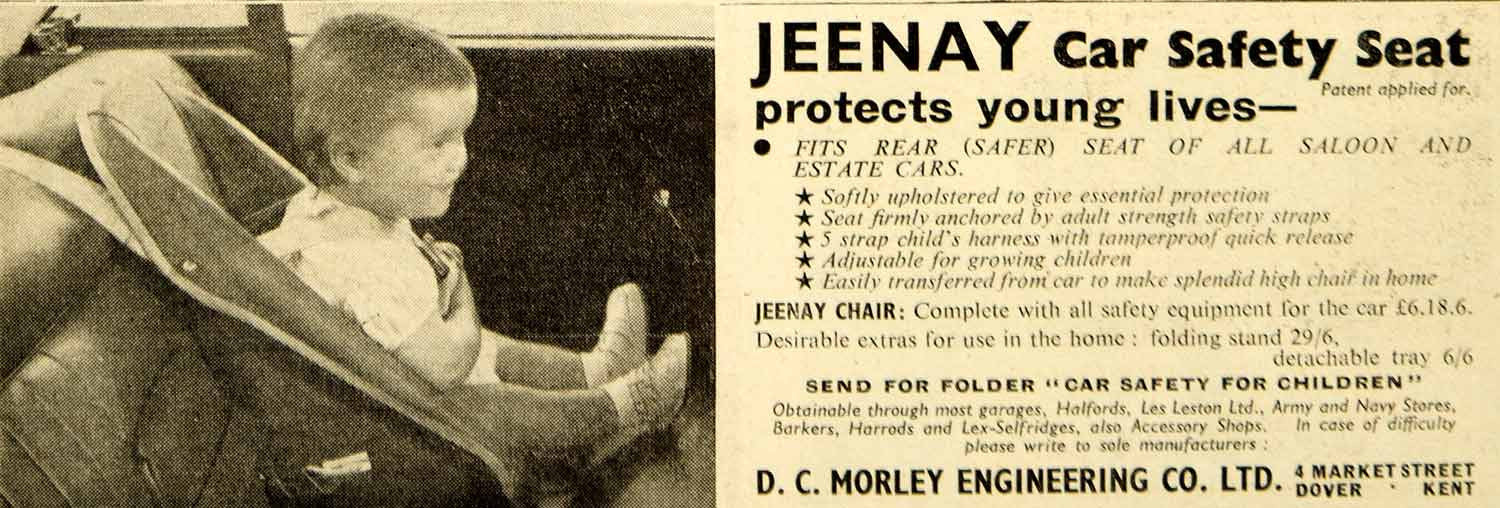 |
An advertisement for the Jeenay child seat, designed by Jean Ames, for rear seats with a Y-shaped safety belt. Photo: Periodpaper |
Why did the United States and Australia lead the way in mandating child car seats?
From the 1960s to the 1970s, the number of automobiles in the United States increased rapidly, leading to a corresponding rise in child fatalities from crashes. In 1971, the National Highway Traffic Safety Administration (NHTSA) first issued federal standard FMVSS 213 for child safety seats, but their use was not yet mandatory.
By the late 1970s, numerous studies indicated that adult seatbelts could not adequately protect children, while child car seats reduced the risk of death by 60-70%. Consequently, states began enacting laws requiring the use of child car seats. Tennessee became the first state to adopt such a law in 1978, and by the mid-1980s, nearly all US states mandated child car seats.
Notably, when Tennessee became the first US state to mandate child car seats, initial implementation faced significant obstacles. Although the law required children under four years old to be secured in approved devices, surveys in the first few months showed that most parents did not comply. One study recorded that four months after the law's enactment, over 80% of children in two major cities of the state were still not secured in seats with seatbelts. Furthermore, the proportion of children held by adults even increased, as many parents believed this was safe enough. Beyond limited awareness, the cost of purchasing seats and the incompatibility of many older vehicles with child car seat installation also contributed to the low compliance rate.
Additionally, during the initial phase, enforcement primarily involved cautioning parents rather than issuing fines, which resulted in a slower-than-expected change in behavior. However, after a period of public communication, education, and penalties, parental compliance gradually increased.
Beyond the United States, Australia was also among the first nations to implement child car seat requirements. From the late 1970s, some states began to introduce requirements for securing children in automobiles. In 1979, Queensland became the first to introduce a "child restraint" law, mandating that children under eight years old be secured in car seats using approved devices. By the 1980s, child car seat regulations became more widespread across the states, though details varied. From 1988, some states further tightened regulations by requiring children under one year old to be secured in appropriate devices.
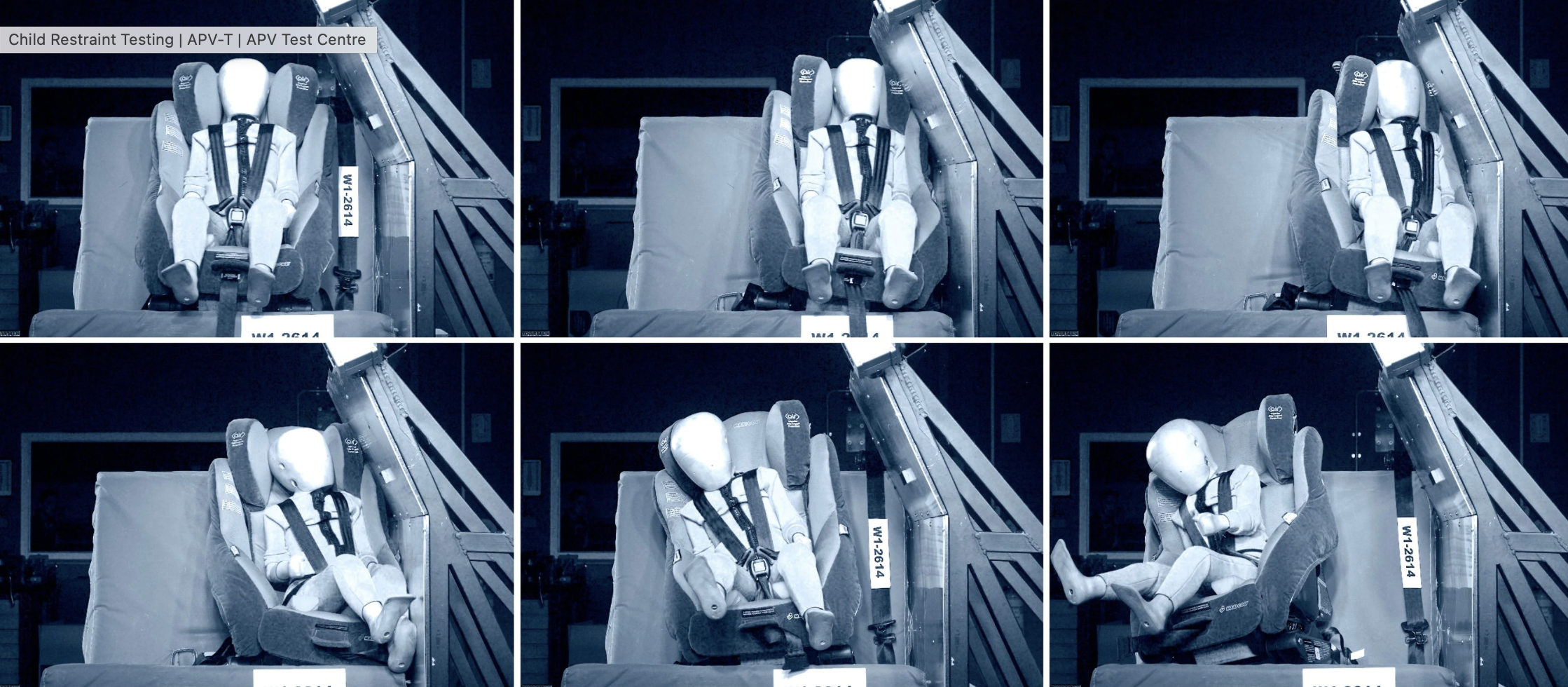 |
Side-impact crash testing with a child car seat in Australia. Photo: Apvtestcentre |
Australia also developed its own set of standards, AS/NZS 1754, which is considered one of the world's most stringent standards for the construction and crash testing of child car seats. By 2009, many states amended their laws to specify regulations clearly by age group. Specifically, children under six months must use rear-facing seats; children from six months to under four years old can use either rear-facing or forward-facing seats with integrated harnesses; and children from four to seven years old must use appropriate seats or booster seats with proper harnesses.
Europe began applying child car seat laws in the 1980s
Following the United States and Australia, Europe was the next region to establish an official regulatory framework for child safety seats. In the early 1980s, the United Nations (UN) Economic Commission for Europe (ECE) issued standard ECE R44, laying the groundwork for child car seat use in the region. European countries then required child car seats to be classified by weight and undergo front-impact testing.
By 2006, many European Union (EU) member states implemented requirements for children under 135 cm or under 12 years old to use child car seats or booster seats. Although each country had different height thresholds, this regulation marked a significant tightening of rules in the region.
Year after year, Europe continued to enhance safety standards for child car seats. Most notably, the transition from R44 to R129 (i-Size) standards began in 2013 and spanned a decade. The R129 standard introduced side-impact testing, classified seats by height, and encouraged the use of ISOFIX to reduce installation errors.
Due to the time needed to adjust technology, manufacturing, and vehicle design, Europe allowed R44 and R129 to coexist before gradually tightening regulations. By september 2023, the EU stopped approving new R44-compliant seat models, and one year later, only R129-compliant seats were permitted for sale. This extended timeline helped manufacturers manage inventory, carmakers integrate ISOFIX anchor points, and users become familiar with the new standards.
Ho Tan