On 18/3, V-Green announced an investment of 10,000 billion dong to deploy 99 super charging stations along national and provincial roads nationwide this year. Each station can serve 100 electric vehicles simultaneously.
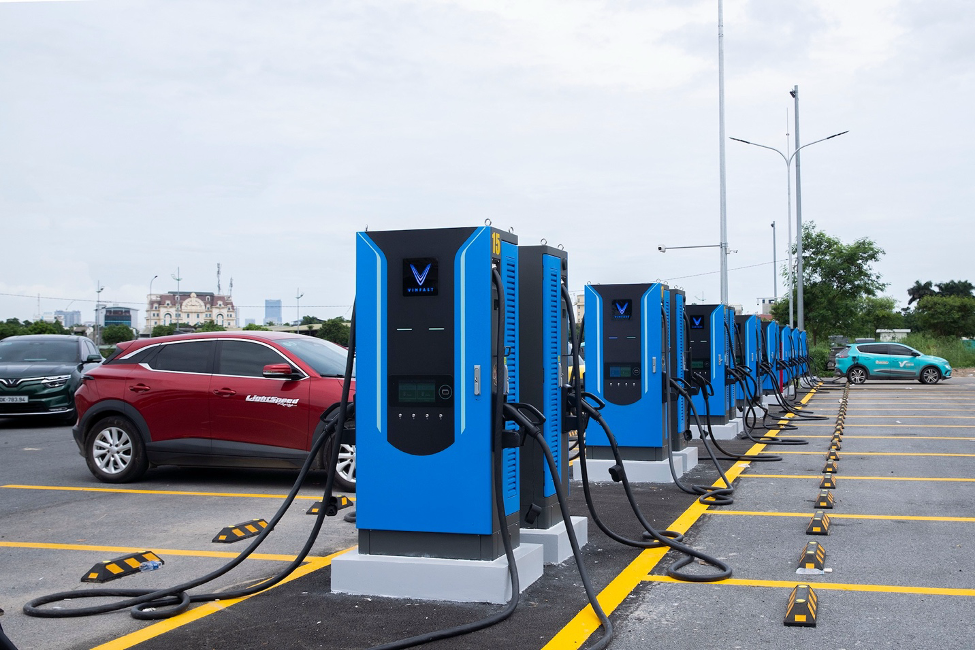 |
A 150 kW charging pole at an electric vehicle charging station. Photo: Tuan Vu
Experts consider this a highly practical step, addressing two key concerns for electric vehicle users: charging locations and charging speed. Doctor Le Duc Hieu, Head of the Automotive Engineering Department at the University of Industry, stated that the addition of these 99 super charging stations will significantly impact electric vehicle users. "This network will make drivers feel more secure when traveling, especially on long routes, as recharging will be faster and more convenient," he said.
Automotive expert Nguyen Manh Thang noted that with a charging station capacity of 150 kWh, electric vehicle users can charge their vehicles in 15 minutes to continue their journey. This also unlocks potential for the passenger and freight transport sectors, minimizing disruptions due to charging time.
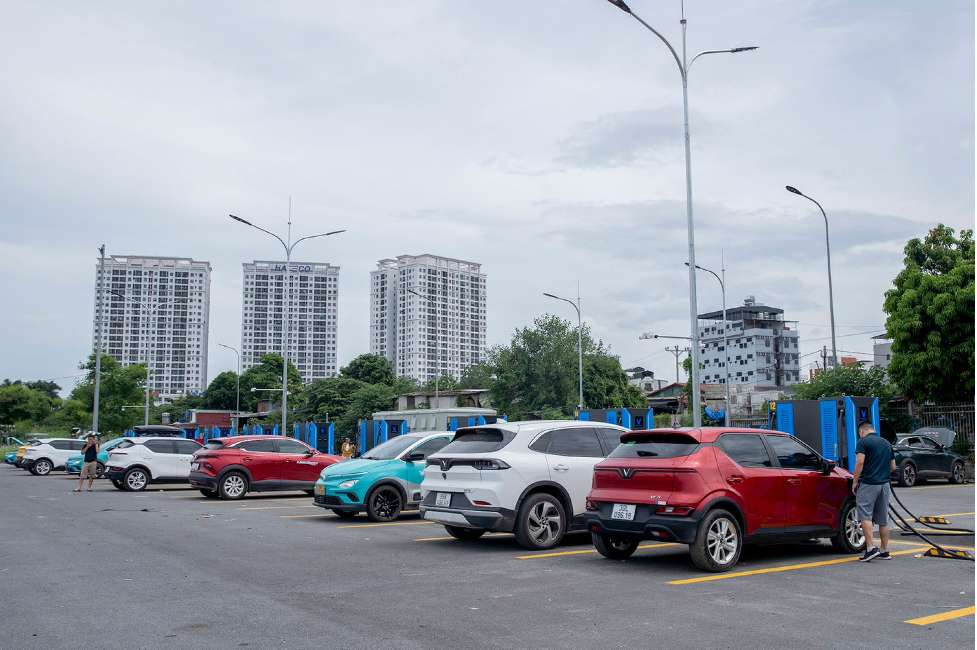 |
VinFast electric vehicle models at a city charging station. Photo: Tuan Vu
Beyond convenience, the clean energy charging station model is also highly regarded for its sustainability. A V-Green representative stated that this charging infrastructure utilizes energy from wind and solar power, stored in VinFast-developed BESS battery energy storage systems. According to Doctor Le Duc Hieu, this model will prevent the system from being entirely dependent on the national grid, contributing to energy security.
"V-Green's charging stations, which use renewable energy input and have independent on-site energy supply, will not impact the national power grid," he analyzed. "The synergy between the 150,000 charging ports nationwide and this super charging station system will create a more complete energy network for electrified transportation."
The company plans to strategically place the electric vehicle charging infrastructure in urban areas, commercial centers, residential zones, and along national highways and expressways. This will offer users convenient access to charging and enable them to plan their travel routes effectively. From this perspective, Doctor Le Duc Hieu believes that this convenience will help electric vehicles replace traditional gasoline and diesel cars.
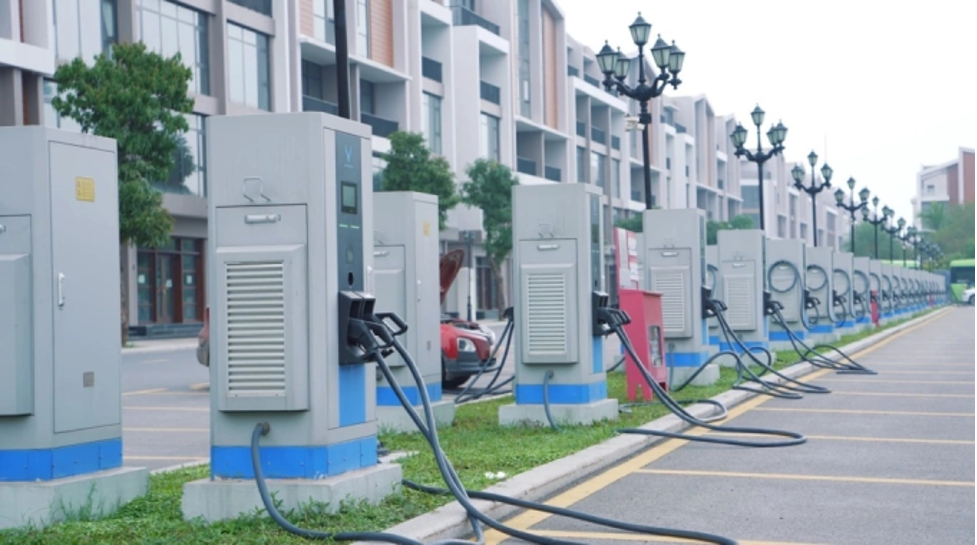 |
Electric charging pole system developed by V-Green. Photo: Tuan Vu
Last year, VinFast reported sales of 175,099 electric vehicles of various types in the Vietnam market, nearly doubling the previous year's figures and surpassing sales of foreign car brands. Models such as the VF 3, VF 5, VF 6, as well as service vehicles like Limo Green and Herio Green, all achieved top sales in the market. This reflects the ongoing shift towards electric vehicles across many segments.
From a long-term perspective, Mr. Hieu asserted that this trend is inevitable as Vietnam aims for net-zero emissions by 2050, with green energy infrastructure forming a solid foundation for the market.
"As green infrastructure becomes more widespread, within the context of a general greening trend, this transition is inevitable. Following the roadmap from now until 2050, the trend of using electric vehicles and green energy will develop even more strongly," stated the Head of the Automotive Engineering Department at the University of Industry.
Quang Anh