Global electric vehicle sales remain substantial, but growth trends are uneven across markets. Latest data from Benchmark Mineral Intelligence reveals that four million electric vehicles were sold worldwide in Quarter I of 2026, a 3% decrease compared to the previous year's corresponding period.
In Quarter I, march saw a sales surge with 1,75 million vehicles sold—a 66% increase from february and 3% higher than the same period in 2025. Here are the Quarter I results:
| Market | Electric vehicle sales | Percentage change |
| Global | 4 million vehicles | -3% |
| China | 1,9 million vehicles | -21% |
| Europe | 1,2 million vehicles | +27% |
| North America | 0,32 million vehicles | -27% |
| Rest of the world | 0,6 million vehicles | +79% |
Europe carries the market
While not achieving the largest sales volume, the continent drives electric vehicle growth. The region experienced its strongest sales month ever in march, surpassing the half-million unit mark for the first time.
Sales increased by 72% compared to february and 37% year-over-year from 2025, driven by subsidies and rising gasoline prices due to conflicts in the Middle East. Both battery electric vehicles (BEV) and plug-in hybrid electric vehicles (PHEV) achieved record sales.
Several countries recorded notable results. The United Kingdom saw growth due to a license plate change in march (the UK changes the numbers displayed on plates in march and september; vehicles registered from march to august will have the number 26), combined with higher fuel costs, leading to record monthly sales and a 31% increase compared to 2025. Austria, Belgium, Finland, France, Italy, Portugal, and Spain also reported record electric vehicle sales.
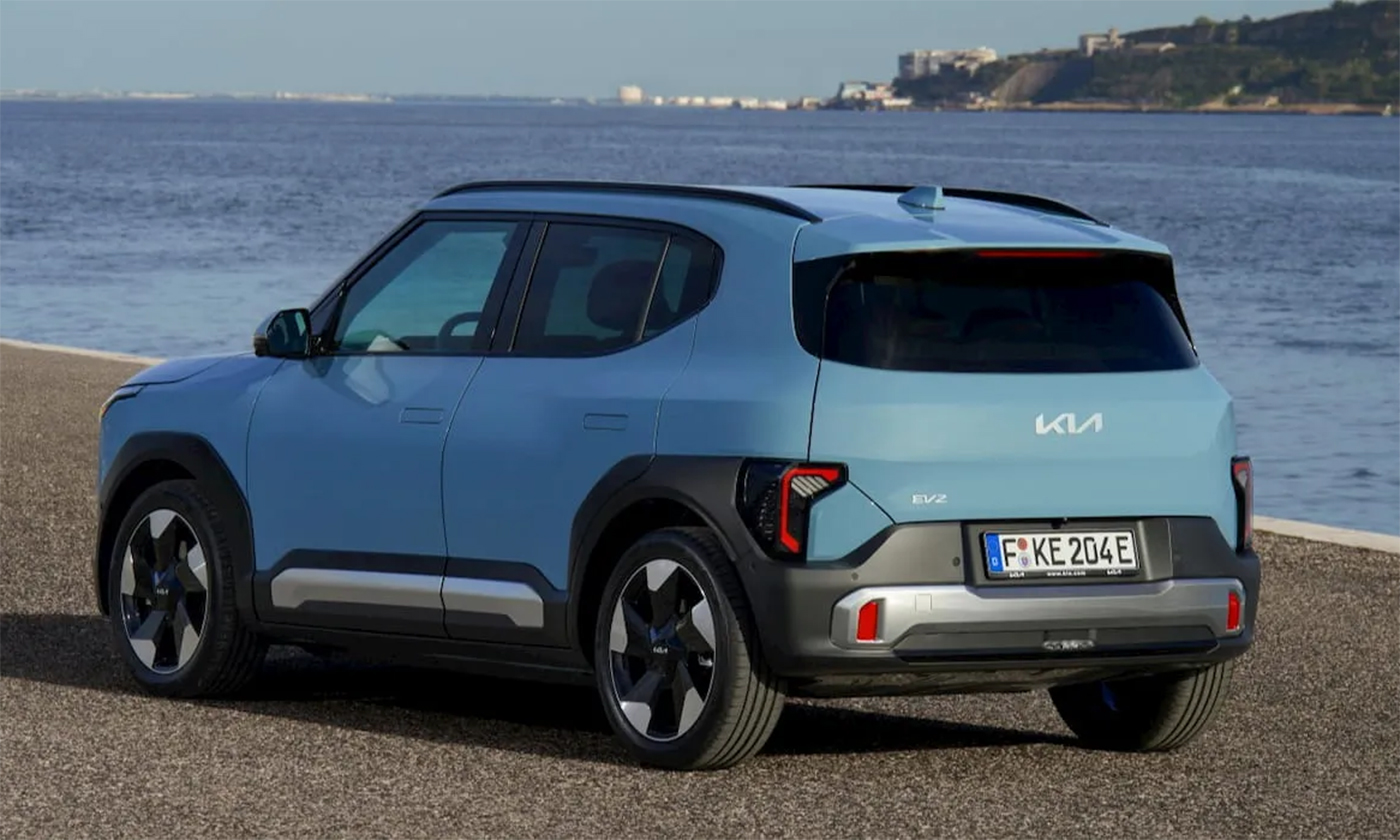 |
The Kia EV2 electric vehicle in the UK market. Photo: Kia |
Rising gasoline prices clearly shape purchasing behavior. In France, price increases, even with price caps from fuel suppliers, caused panic buying and supply disruptions at gas stations. This boosted electric vehicle sales by 69% compared to 2025, far exceeding the 36% growth recorded in the first two months of 2026.
Chinese automakers are also gaining market share in Europe. In Italy, Leapmotor accounted for approximately 30% of electric vehicle sales in Quarter I, and including other Chinese brands, the total market share reached 40%.
China recovers but declines
In march, China also saw a strong recovery, with electric vehicle sales nearly doubling from february after a decline during the Lunar New Year holiday.
Despite this, the world's largest electric vehicle market still saw a 21% decrease. Policy changes continue to pressure domestic demand.
Chinese automakers rely more on exports to offset weaker domestic demand. However, a problem exists: overseas inventory levels are increasing, indicating that international sales are not keeping pace with export volumes.
North America cools down
The North American market had a difficult start this year. Electric vehicle sales decreased by 27% in Quarter I compared to the same period in 2025, with both the US and Canada experiencing significant declines.
However, march showed some signs of improvement. Gasoline prices also rose in the US, where more than 100.000 electric vehicles were sold—the highest monthly total since federal tax credits ended in Quarter III of 2025.
Automakers are also scaling back. Honda recently canceled the development of its Series 0 electric vehicle line, and Afeela models from its joint venture with Sony were also discontinued.
Rest of the world
Outside the main markets, growth is accelerating. New Zealand stands out with battery electric vehicle registrations surging 263% year-over-year in march. This pushed the country's 2026 growth rate to over 100% compared to 2025.
Australia also recorded strong growth, with electric vehicle sales increasing by 89% year-over-year in march. This growth rate was actually slower than earlier in the year, when it reached 111%, but it was still sufficient to set a new monthly record—more than 2.000 units higher than the previous peak.
Gasoline prices also play a role. Since the Iran war began, gasoline prices increased by more than 20% in some parts of Oceania, raising concerns about fuel supply and prompting many buyers to switch to electric vehicles.
Minh Vu (according to Electrek)