In the US, liability insurance is a mandatory requirement for drivers in most states. This type of insurance is provided by private companies, with non-fixed premiums that are adjusted based on factors such as place of residence, driving experience, and vehicle usage conditions. Among these, one of the most significant factors is driver behavior. When a driver causes an accident or violates traffic laws, premiums typically increase due to the higher assessed risk.
Insurance fees based on individual risk assessment
The car insurance system in the US operates on the principle of individual risk assessment. Each driver has a unique profile, built from factors such as age, driving experience, credit score, accident history, traffic violations, and vehicle usage context. The National Association of Insurance Commissioners states that these factors are the primary basis for determining insurance premiums.
When a driver causes an accident, especially if determined to be at fault, this profile is adjusted to reflect higher risk. Insurance premiums can therefore increase significantly and remain elevated for several years. This creates a form of extended cost, as financial consequences appear not only immediately after the accident but also continue during subsequent renewal periods.
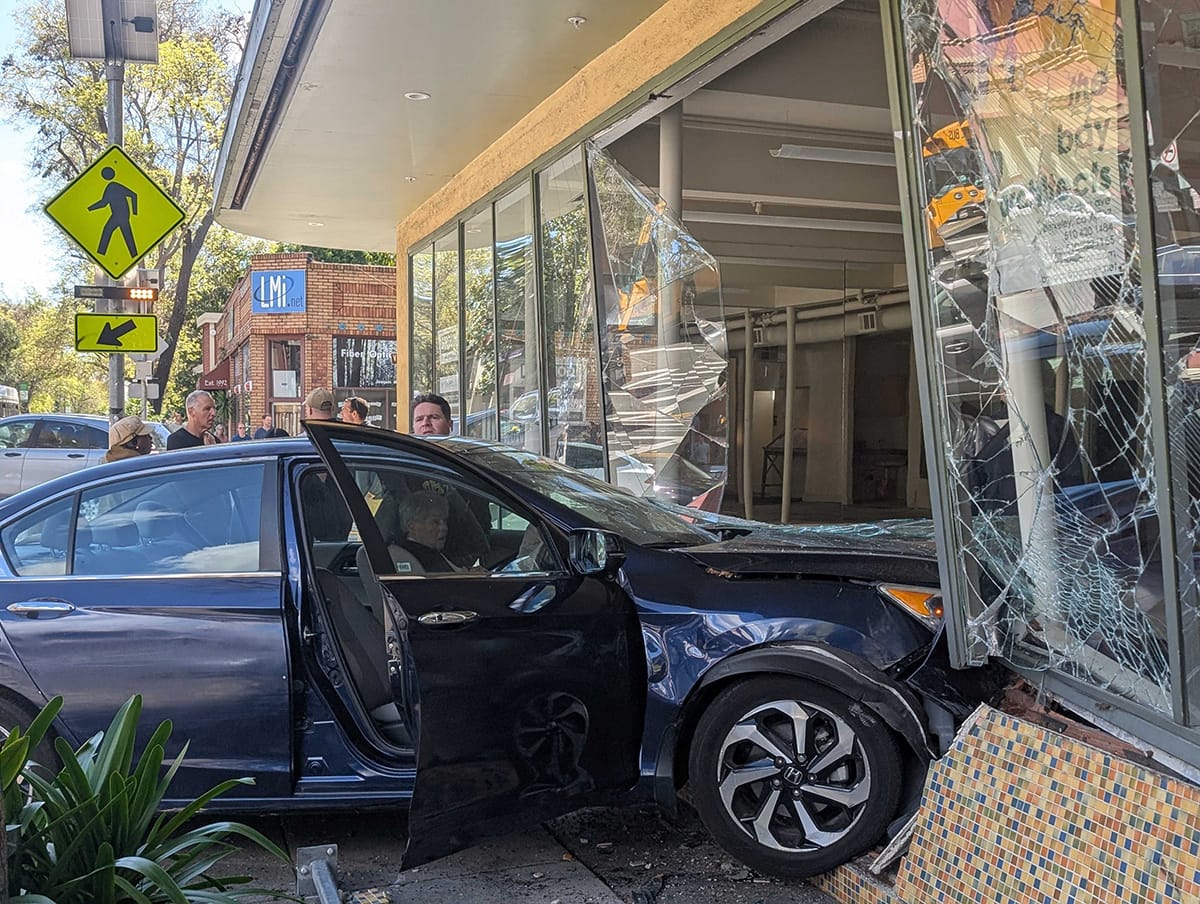 |
An automobile accident in Virginia, 3/2025. *Scanner Insider*
After each accident or violation, driver information is updated from various sources, including police reports, traffic violation records, and claims history. This data is stored and shared through systems such as LexisNexis, allowing insurance companies to access it when recalculating fees at renewal.
From this data, companies use statistical models and past data to estimate the likelihood of accidents and the average cost of an incident. This approach quantifies a driver's risk using probability and historical data. If an individual has previously caused an accident, the system considers this an indication of a higher risk of recurrence, thereby adjusting the premium accordingly.
In this way, drivers are not penalized in a legal sense, but rather re-evaluated based on their risk level. The new premium reflects the costs the insurance company expects to bear in the future, rather than solely based on the incident that has already occurred.
Deterrent and incentive mechanism
This mechanism simultaneously creates a form of economic deterrence. When drivers know that one mistake causing an accident can cost them extra money for many years, they tend to drive more cautiously. However, the effectiveness of this approach is not uniform. For some individuals, particularly those with high incomes or who are accustomed to dangerous driving behavior, the premium increase may not be enough to change their habits. Serious violations like driving under the influence still require stronger legal measures.
Conversely, drivers who avoid violations and maintain safe driving habits will see their premiums decrease over time. According to the Insurance Information Institute, many insurance companies offer discount programs for individuals with no claims for several years.
For example, one common way to reduce insurance premiums in the US is to take defensive driving courses. These training programs help drivers improve their situational awareness and reduce accident risk. Many insurance companies consider the completion of such a course as a signal of lower risk, thus applying preferential rates. Insurance industry studies suggest common discounts range from 5% to 10%, depending on the company and state. This reduction typically lasts for several years after completing the course, providing an incentive for drivers to proactively improve their driving behavior.
 |
Drivers practice a safe driving course in the US. *Bobbyoresports*
Additionally, some insurance companies in the US also apply "pay how you drive" (PHYD) models, which base fees on actual driving behavior. Through phone applications or in-car devices, the system can record factors such as speed, number of hard brakes, acceleration, time of day when driving, or distance traveled. This data is used to assess a driver's safety level, thereby adjusting insurance premiums more flexibly. Cautious drivers who commit fewer violations or drive less can receive significant discounts, while risky behaviors such as frequent speeding or hard braking can lead to higher premiums.
Ho Tan