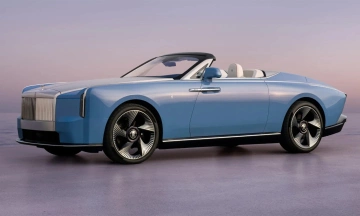
Since 2003, this mechanism has been a standard feature, enabling the figurine to retract into the hood, acting as a safeguard against theft or vandalism.
The figurine is mounted on a spring-loaded shaft connected to a high-torque electric motor. Sensors detect unauthorized contact, pulling, or sudden force. Upon detection, the motor immediately activates, retracting the emblem into the car's body to prevent theft.
The emblem automatically retracts when the car is locked or the engine is turned off. It also functions as a safety feature, designed to protect pedestrians in a collision and comply with safety regulations. Drivers can also control the mechanism from the cabin via a button, raising or lowering the Spirit of Ecstasy emblem as desired.
The mechanism is compatible with various versions of the emblem, which are typically crafted from polished stainless steel, gold-plated material, or illuminated crystal.
The Spirit of Ecstasy was originally inspired by Eleanor Thornton, a woman known for her captivating beauty, intelligence, and wit. She maintained a secret 10-year relationship with her employer, John Walter Edward-Scott-Montagu.
Montagu commissioned his friend, sculptor Charles Robinson Sykes, to create a special emblem for his personal Rolls Royce Silver Ghost. Sykes chose Eleanor Thornton as his model, naming his creation "Whisper." The small figurine depicts a young woman leaning forward, her drapery flowing in the wind, with an index finger placed on her lips.
Following Montagu's example, Rolls-Royce executives asked Charles Sykes to create an emblem that would grace all Rolls-Royce Silver Ghost models. In February 1911, the Spirit of Ecstasy debuted, also known as the Silver Lady or Flying Lady.
My Anh