Starting 1/7, Vietnam will begin emission inspections for motorcycles and mopeds currently operating in Hanoi and Ho Chi Minh City, according to Decision No. 13/2026. From 1/7/2028, this regulation will expand to other centrally-run cities, including Hai Phong, Hue, Da Nang, and Can Tho. By 1/7/2030, inspections will apply in 28 provinces and cities nationwide, with potential for earlier implementation depending on local conditions.
Against this backdrop, international experience shows countries with large motorcycle populations adopt diverse inspection models to balance environmental protection with social costs. Instead of widespread inspections from the outset, many nations exempt vehicles from inspection in their initial years of use, maintaining strict control from the manufacturing stage and only conducting periodic checks once vehicles begin to show signs of deterioration.
How do countries regulate motorcycle inspection exemptions?
In Japan, a nation known for its stringent inspection system, motorcycles are regulated based on engine displacement. Vehicles over 250 cc must undergo the "Shaken" inspection system, with the first inspection after three years of use, and then biennially. Conversely, motorcycles under 250 cc, which constitute the majority of the market, are not subject to periodic inspections. The Japanese government controls emissions through strict technical standards imposed on manufacturers, according to the Japan Automobile Inspection and Registration Association.
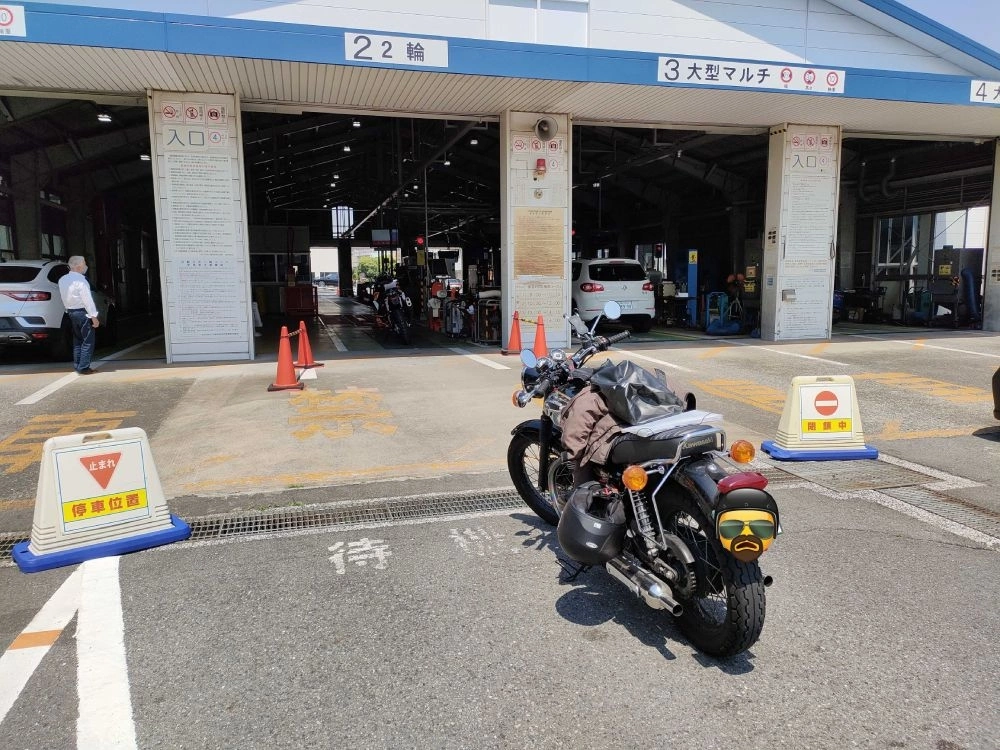 |
Motorcycles preparing for emission inspection in Japan. Photo: Joanmira |
Motorcycles preparing for emission inspection in Japan. Photo: Joanmira
In Thailand, where motorcycles are the primary mode of transportation, the government grants an exemption from inspection for the first 5 years. After this period, vehicles must undergo annual inspections when renewing registration. The inspection process is carried out at licensed private inspection centers or state administrative agencies. The inspection covers: toxic gas emission levels, engine condition, basic safety, and vehicle operational capability. Only vehicles meeting these standards are issued certificates to continue operating, according to the Department of Land Transport of Thailand.
Following Thailand, Indonesia presents another notable example of emission control management in a country with one of the world's largest motorcycle populations. Nationwide, the country does not enforce mandatory periodic emission inspections for private motorcycles. Instead, vehicles must undergo a direct inspection every 5 years during registration renewal, primarily to verify chassis and engine numbers and confirm the vehicle's legality.
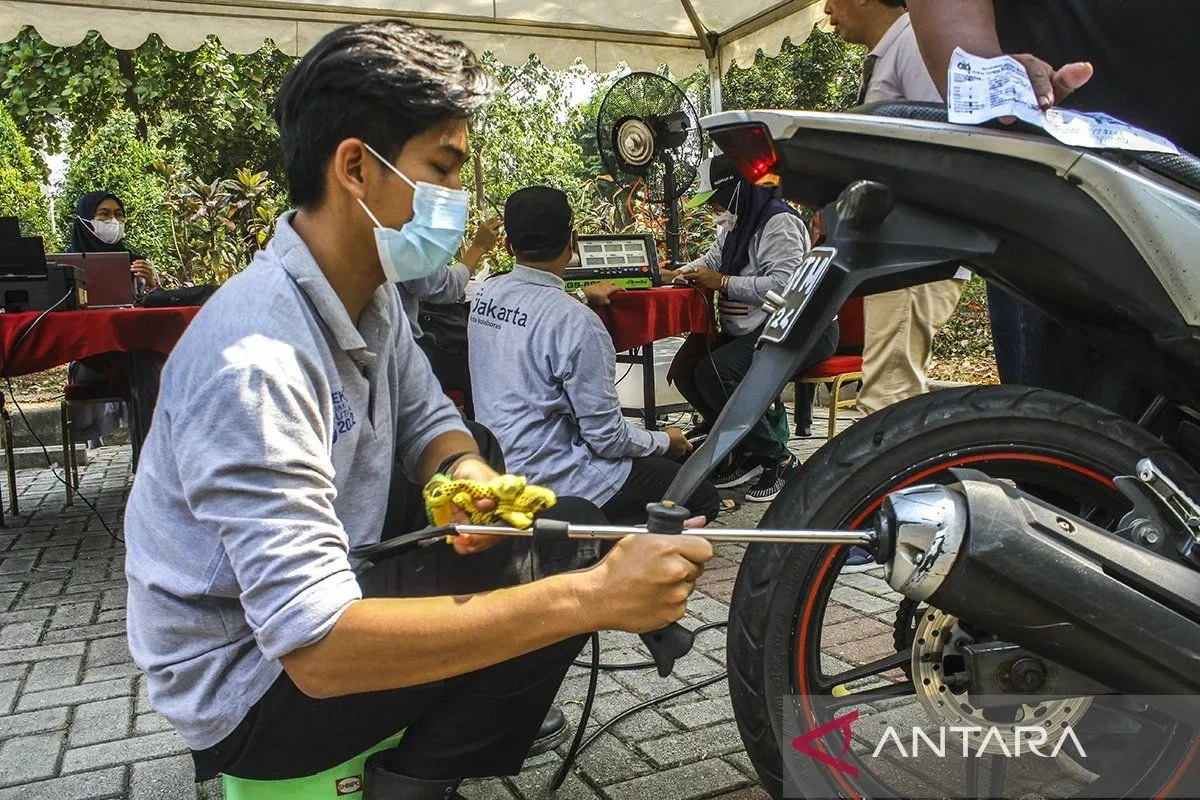 |
A technician conducts an emission inspection on a motorcycle in Ancol, Jakarta, on 12/9/2023. Photo: Antaranews |
A technician conducts an emission inspection on a motorcycle in Ancol, Jakarta, on 12/9/2023. Photo: Antaranews
However, in the capital city of Jakarta, which frequently grapples with severe air pollution, local authorities have implemented a mandatory emission inspection program. This policy mandates periodic emission inspections for both motorcycles and automobiles over three years old, with penalties for non-compliant vehicles. For example, fines can reach 250.000 rupiah (approximately 15 USD) for motorcycles, along with additional measures such as increased parking fees.
Why are motorcycles exempted from inspection before the 3-5 year mark?
According to technical experts, during the initial years of use, a motorcycle's engine and emission control systems operate close to their original manufacturer-designed state. Components such as fuel injectors, carburetors, oxygen sensors, and catalytic converters function stably, ensuring efficient fuel combustion and minimizing the release of toxic gases into the environment. Furthermore, new vehicles typically meet stringent emission standards like Euro 3, Euro 4, or equivalent, making inspections during this period ineffective for environmental emission control, while also incurring costs and administrative procedures.
However, after approximately 3-5 years of use, the technical performance of vehicles begins to decline due to natural wear and tear. Catalytic converters gradually lose their ability to convert toxic gases such as carbon monoxide (CO) and hydrocarbons (HC), fuel injection and ignition systems can become misaligned, and spark plugs, air filters, and fuel injectors accumulate deposits, leading to less efficient combustion and increased fuel consumption. In congested traffic and hot, humid climates, the deterioration rate of these components accelerates, resulting in a significant increase in emissions.
Beyond technical factors, vehicle usage behavior also contributes to increased pollution. After a few years, vehicles are often less regularly maintained or even have their structures modified or use non-standard parts, leading to higher emissions compared to properly maintained vehicles. Therefore, the 3-5 year mark is chosen by many countries as the timing for the first inspection to help regulatory bodies identify polluting vehicles early, while balancing environmental effectiveness, social costs, and the capacity of the inspection system.
Pham Hai