Jose Muñoz, CEO of Hyundai, announced that the Korean brand will soon surpass some of the largest vehicle manufacturers in local content within the market. This achievement is attributed to continuous multi-billion dollar investments in the US, including an additional $500 million allocated to production facilities in Alabama.
The South Korean automaker reinforced its commitment to US manufacturing in August by unveiling a $26 billion investment plan to increase localization. Central to Hyundai's US operations is the large HMGMA plant in Georgia, projected to achieve an annual capacity of 700,000-800,000 vehicles by 2028.
Beyond the aforementioned investments, Muñoz revealed that Hyundai will spend an additional "half a billion USD" on its Alabama plants. Speaking at a recent conference, the Hyundai executive stated that this capital will facilitate the expansion of new-generation engine production and hybrid powertrains.
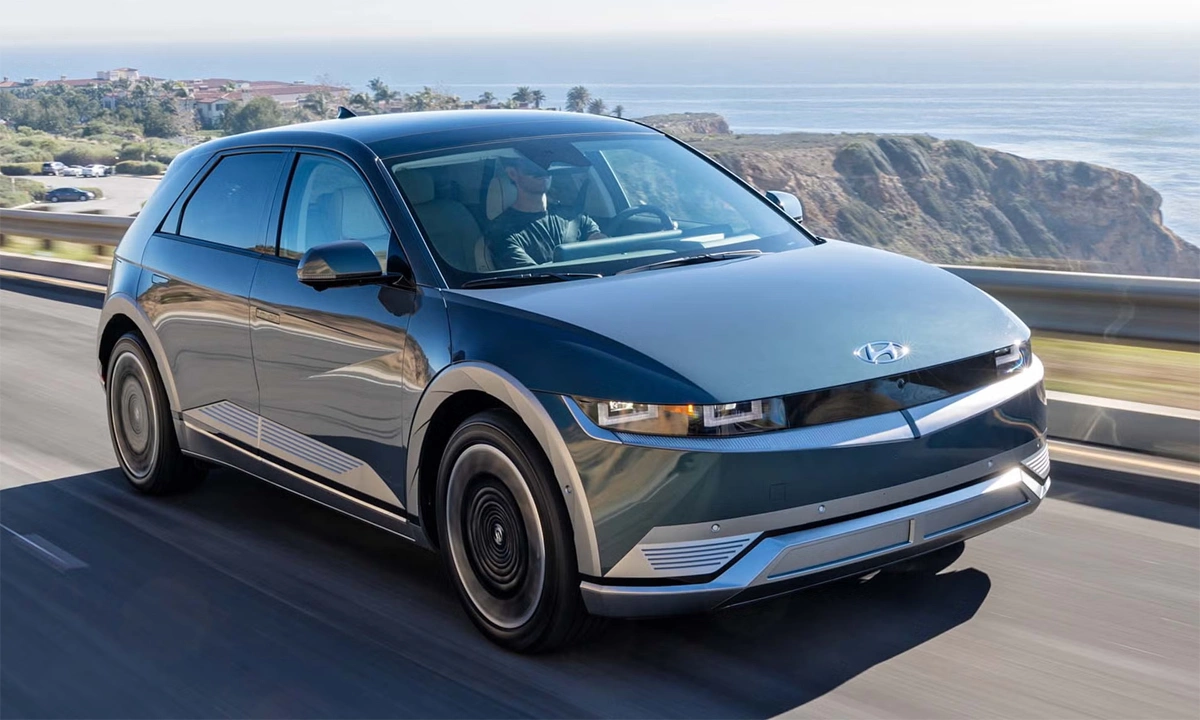 |
Hyundai Ioniq 5 electric vehicles are manufactured at the plant in Ellabell, Georgia. *MotorTrend*
Specifically, Hyundai will assemble the Tucson hybrid and the popular Santa Fe SUV directly in Alabama. This investment, combined with plans to launch 58 new or updated models in North America by 2030, and to self-produce 80% of vehicles sold there, positions Hyundai to be "more American than many domestic car brands," Muñoz asserted.
Hyundai's target is to achieve an 80% localization rate in North America, up from the current highest level of 60%. Currently, the Tesla Model 3 Performance holds the number one position among models with the highest localization rate in the US, reaching 87,5%.
Hyundai's American Dream
Hyundai's ambition extends further. The company's leadership shared a goal for the next decade: to fully integrate the brand and have it recognized as a symbol of the "American Dream."
"I hope consumers will recognize Hyundai for superior quality, safety, and high reliability, but above all, be welcomed as part of the 'American Dream'," Muñoz shared. This statement is considered bold for a brand originating outside US territory.
To compete effectively and gain favor with American consumers, similar to major players like General Motors and Ford, Hyundai must ensure the commercial success of its upcoming product lines.
A strategic highlight is the mid-size body-on-frame pickup truck, anticipated to launch before 2030. This model is designed to directly challenge rivals such as: Ford Ranger, Toyota Tacoma, Chevrolet Colorado and GMC Canyon.
Hyundai is also developing a rugged off-road SUV based on the same platform, with design inspiration drawn from the angular Boulder concept. This new SUV is positioned to be a direct competitor to legendary off-road vehicles like the Jeep Wrangler and Ford Bronco.
By My Anh (Source: Carscoops)