The White House is considering easing regulations to broaden the sale of dyed diesel, a tax-exempt fuel primarily intended for agricultural production. This move aims to curb surging fuel prices driven by supply disruptions from the U.S.-Iran conflict, Ukrainian attacks on Russian oil refineries, and dwindling global inventories. However, analysts warn this policy is unlikely to tackle the core issue of supply shortages, which are pushing prices to record levels.
Diesel prices in the U.S. hit a record 6,53 USD/gallon last week, according to the U.S. Energy Information Administration (EIA). Reduced supply from the Middle East and refinery disruptions fueled this surge. Facing pressure to lower fuel costs before the November midterm elections, the administration of President Donald Trump is exploring options including expanding dyed diesel sales. The U.S. is also considering an export ban on diesel for refiners and has urged the European Union (EU) to release emergency reserves to stabilize market prices.
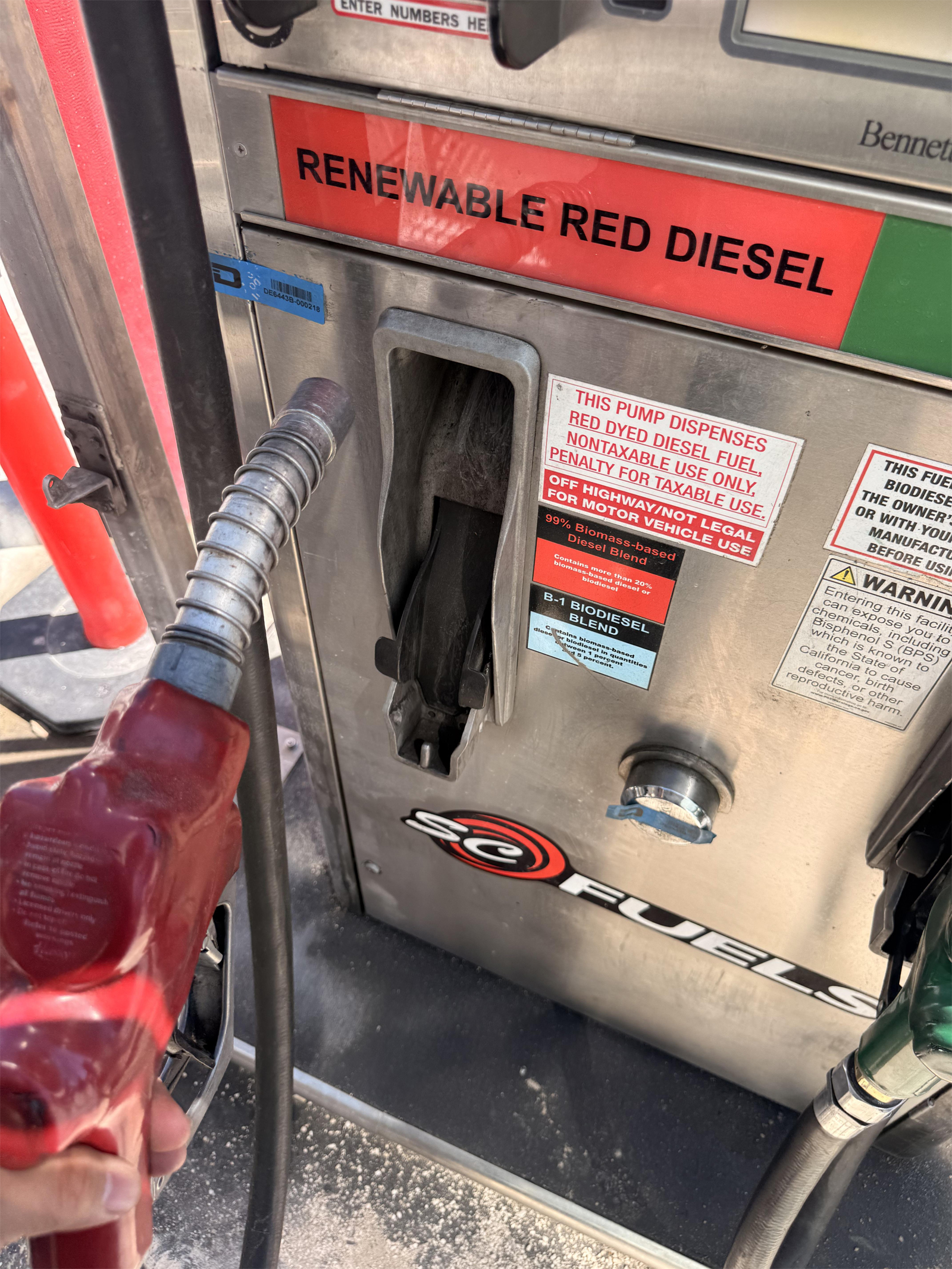 |
A fuel pump selling dyed diesel in the U.S. *Photo: Reddit*
Dyed diesel is essentially standard diesel but is exempt from road fuel taxes. This fuel is designated for off-road equipment and vehicles, such as farm machinery or construction equipment, and thus avoids taxes applied to commercial diesel used on public roads. Chemically, it is nearly identical to standard diesel; the red dye simply indicates that road taxes have not been paid. Using red-dyed fuel in vehicles on public roads is illegal, incurring heavy penalties for tax evasion, not due to any difference in fuel quality. Amid rising fuel prices, some U.S. states, including Texas, have relaxed restrictions on this fuel.
Diesel for road transport in the U.S. is subject to both federal and state excise taxes. Federally, the tax is 24,3 cents/gallon, plus a 0,1 cent underground storage tank fee, totaling approximately 4% of the 6 USD per gallon diesel price. State-level diesel taxes average about 35,5 cents/gallon, representing approximately 5% of the current retail price.
Off-road diesel comprises about 30% of total U.S. distillate product consumption, or roughly 18,2 billion gallons annually, according to Jim Mitchell, an analyst at Wood Mackenzie consulting firm. Federal data shows the U.S. transportation sector consumes nearly 123 million gallons of diesel daily, amounting to about 45 billion gallons annually. This represents approximately 75% of the total national distillate demand, which is close to 60 billion gallons per year.
Energy experts remain skeptical about the effectiveness of these measures. Tom Kloza, chief energy advisor at Gulf Oil, noted, "Red-dyed diesel helps users avoid federal and state excise taxes, but it does not change the total amount of diesel produced for the domestic market". Gregg Ibendahl, a professor of agricultural economics at Kansas State University, echoed this sentiment, stating, "The actual impact will be less than expected. The policy version the administration can implement without Congressional approval will not help lower prices at gas stations. However, this is still a safer option than an export ban – primarily because it causes less disruption". Preben Sørli, an analyst at Rystad Energy, further explained that while expanding access to tax-exempt diesel may support some beneficiaries, it will not alter wholesale market prices. Refiners will continue to sell at market rates, and the primary effect will be a reduction in federal tax revenue, rather than an improvement in supply or fundamental market factors.
My Anh (according to Reuters)