Motul Vietnam introduced an upgraded version of its Tekma lubricant line, specifically designed for trucks, buses, tractor units, and other diesel-powered vehicles.
The company's updated portfolio now comprises five Tekma products: Mega-X, Mega-X LS, Supra, Supra EP, and Supra EL. Motul stated it has refined product formulas, standardized names, and redesigned packaging to help users easily differentiate lubricants based on their specific needs.
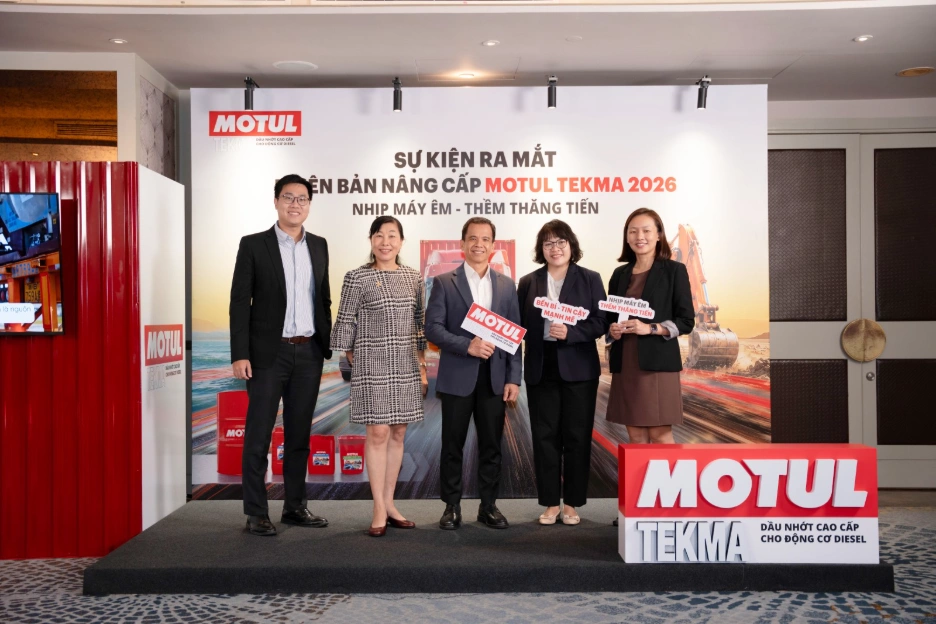 |
Representatives of Motul Vietnam at the product launch ceremony. *Photo: Motul* |
Five lubricant lines for diesel engines
The synthetic lubricant technology group includes two products: Tekma Mega-X and Tekma Mega-X LS. Tekma Mega-X meets API CI-4/SL and ACEA E7 standards, engineered for turbocharged diesel engines, vehicles with exhaust after-treatment systems, or those requiring extended oil drain intervals.
Tekma Mega-X LS, meeting API CK-4 and ACEA E7/E11, utilizes a low-SAPS formula with reduced sulfated ash, phosphorus, and sulfur content. Motul states this oil is ideal for new-generation diesel engines equipped with diesel particulate filters (DPF) and selective catalytic reduction (SCR) systems, encompassing heavy trucks, tractor units, buses, and diesel equipment manufactured from 2017 onwards.
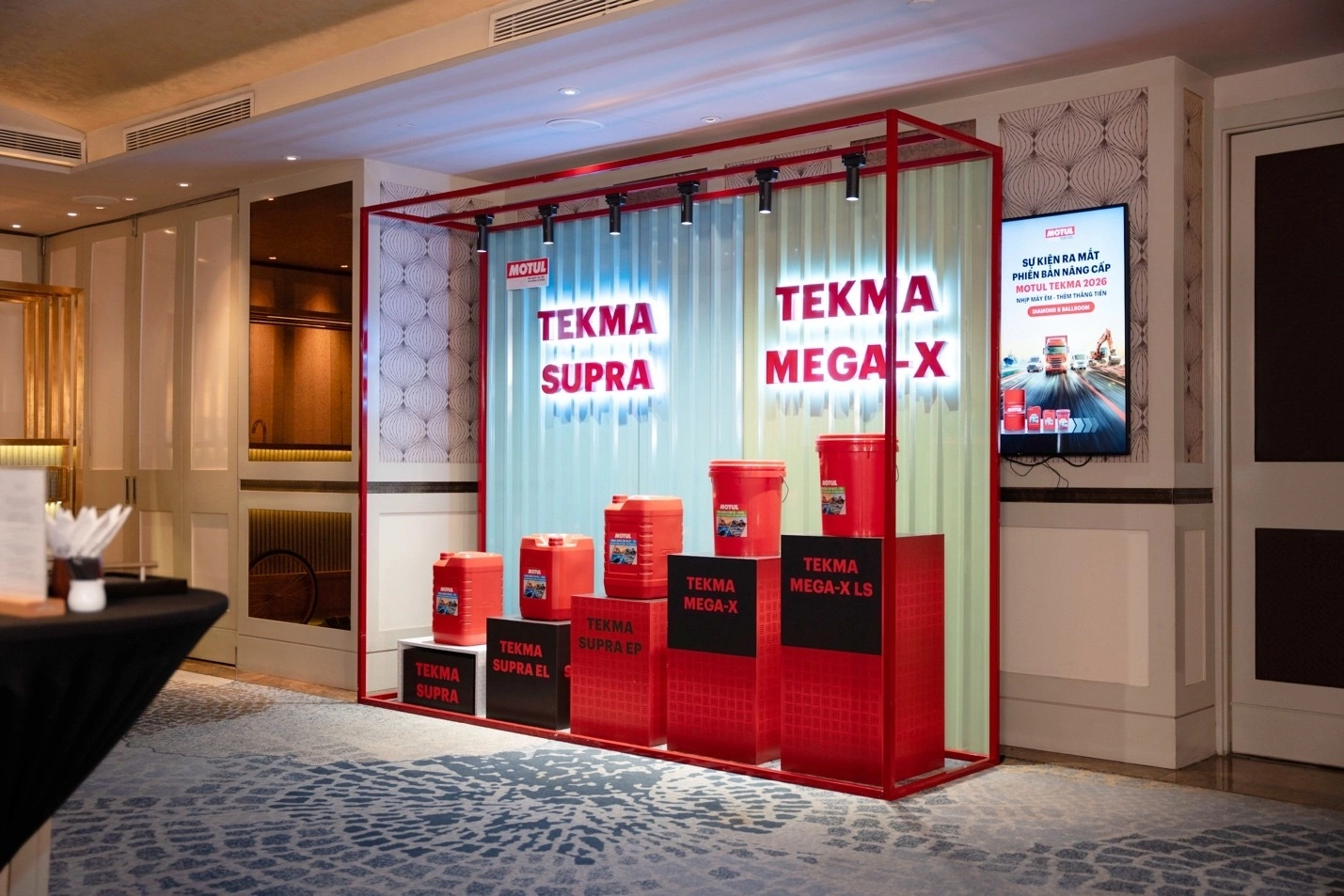 |
Motul Tekma lubricant product range at the event. *Photo: Motul* |
Motul's published test results show Mega-X LS delivers 23% greater sludge control than the ACEA E7 limit and 33% superior oxidation resistance compared to the ACEA E11 limit. In wear resistance, testing revealed performance 95% higher than the API CK-4 limit and 57% higher than MB 228.31.
The three remaining products utilize mineral oil technology. Tekma Supra, meeting API CF-4, is designed for trucks and construction equipment with non-turbocharged diesel engines.
Tekma Supra EP, meeting API CI-4, targets turbocharged diesel engines. Supra EL, compliant with API CI-4/SL and ACEA E7, is suitable for frequently operating vehicles with turbocharged engines and certain exhaust after-treatment systems.
Beyond formula adjustments, Motul has standardized its naming conventions and packaging design. Green labels now identify synthetic technology products, while blue labels denote mineral technology lubricants. Key information like product name, viscosity grade, and technical standards have also been reorganized on the packaging for clarity.
Addressing long-haul transportation needs
According to Cao Hoai Nhan, B2B Sales Director at Motul Vietnam, the Tekma product line upgrade aligns with the company's global development strategy, tailored to meet specific demands of the Vietnamese market.
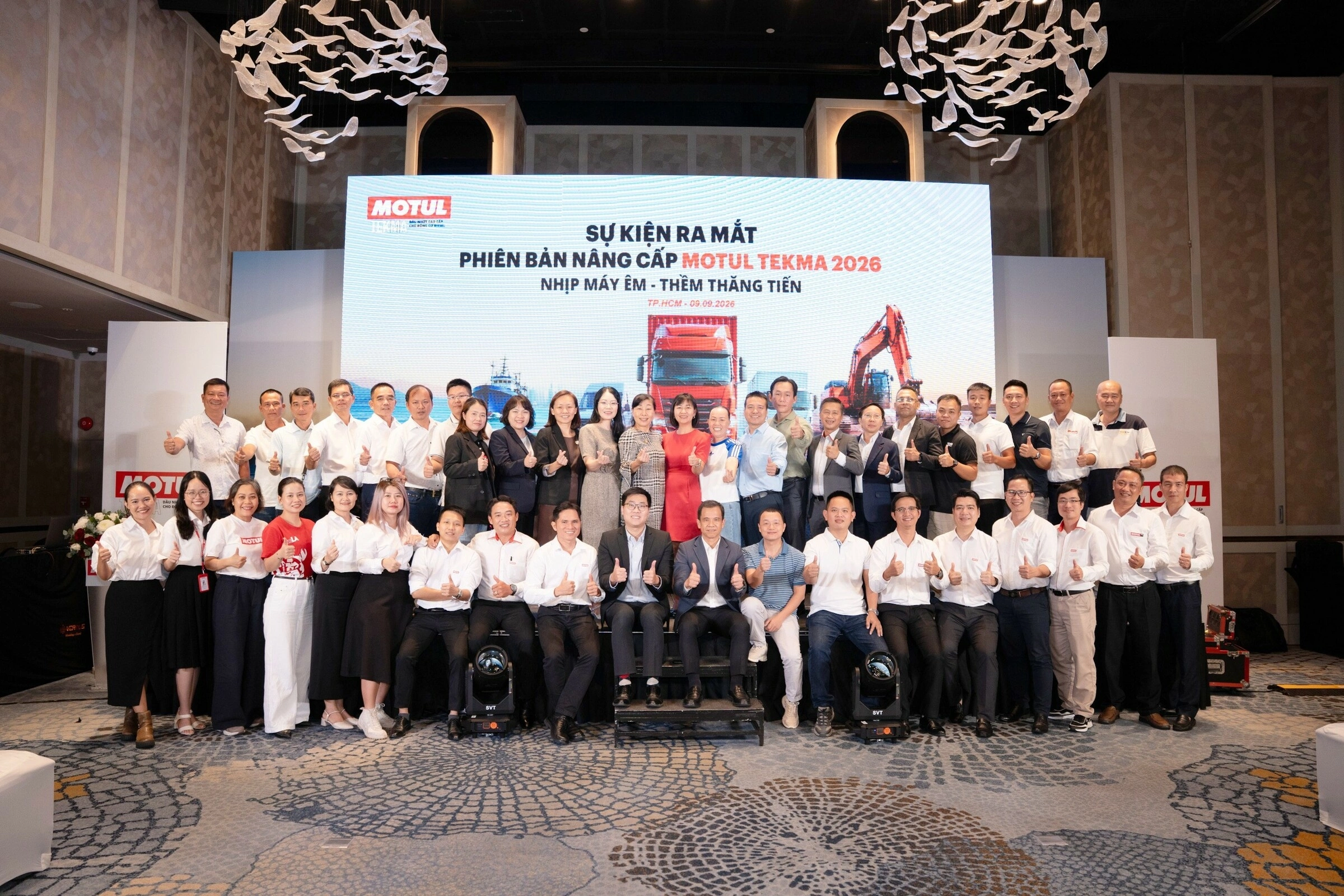 |
Representatives of Motul Vietnam and partners at the event. *Photo: Motul* |
Citing data from Mordor Intelligence, Motul's documents indicate that transportation routes exceeding 500 km are expected to comprise about 71,5% of the total transportation distance in 2025. This segment is projected to grow by an average of 6,75% annually between 2026 and 2031. Currently, diesel engine lubricants for trucks and commercial vehicles account for approximately 27% of Vietnam's total lubricant demand, with the segment projected to expand by 18% by 2030 compared to 2025.
Motul emphasized that increasing vehicle operational intensity necessitates lubricants that not only provide lubrication but also offer superior sludge control, wear resistance, and maintain stability during continuous engine operation.
"This optimized product range provides customers with more suitable choices for each vehicle and operating condition", Nhan stated, "thereby protecting engines, enhancing operational efficiency, and optimizing maintenance costs".
Quang Anh
Motul, a French-headquartered lubricant brand with over 172 years of global presence, specializes in the research, development, and production of engine lubricants. Its offerings cater to: two-wheelers, automobiles, heavy trucks, industrial equipment, and technical support services.
Motul Tekma is the brand's specialized lubricant line designed for heavy-duty diesel engines, including: trucks, buses, construction machinery, and agricultural machinery.