Continuous sales growth in recent years has positioned Vietnam among the top 4 largest automotive markets in Southeast Asia. This significant momentum helps the automotive industry expand its scale and attract an increasing number of new car brands seeking business opportunities.
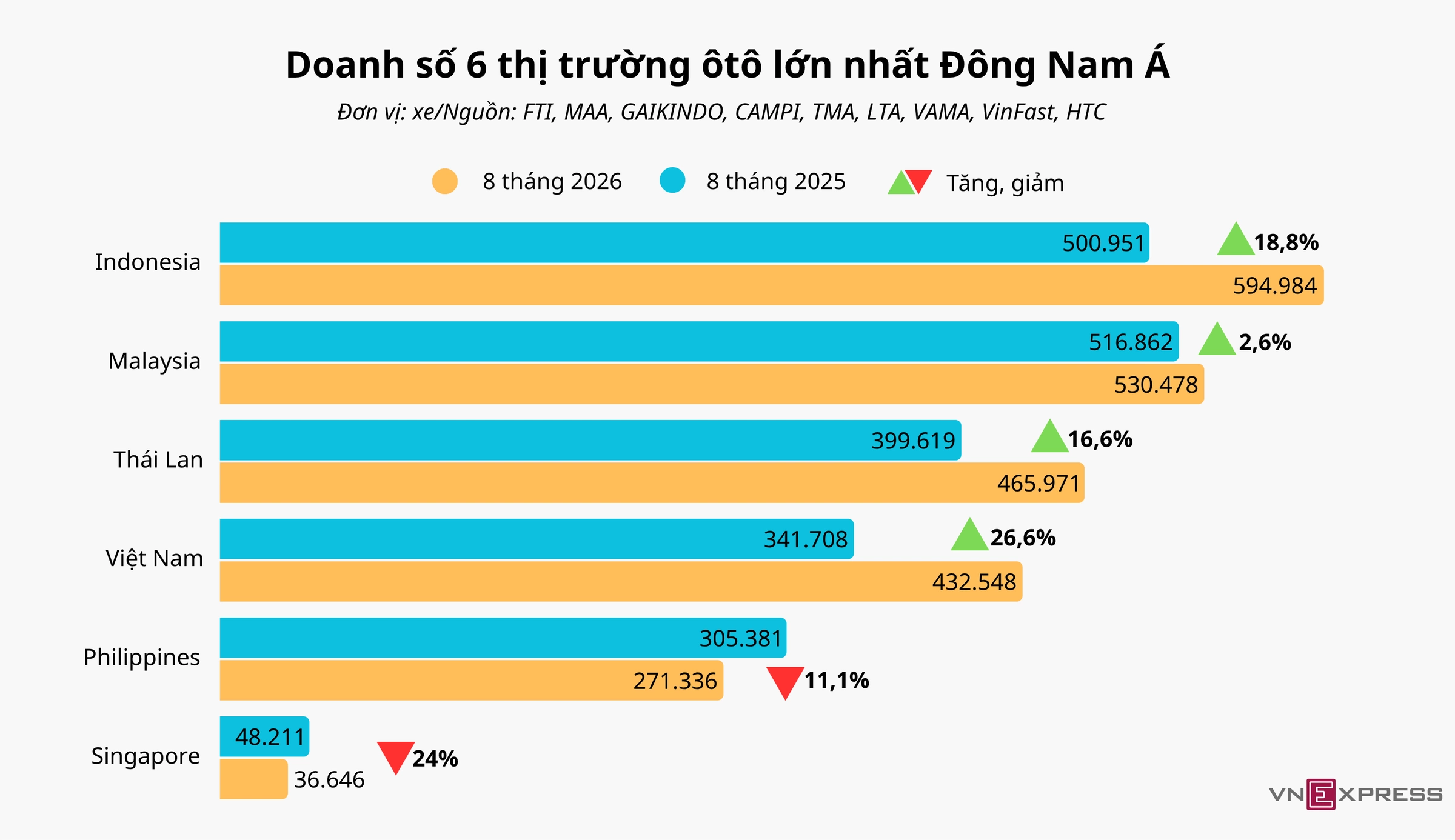
In the first 8 months of 2026, Vietnam's automotive industry sold 432,548 vehicles, a nearly 26,6% increase compared to the same period in 2025. This represents the highest growth rate among the region's 6 largest markets: Indonesia, Malaysia, Thailand, Vietnam, the Philippines, and Singapore.
 |
A Destinator model on the road in Vietnam. Photo: Pham Trung. |
The sale of over 432,000 vehicles also marks a record for Vietnam's automotive market (for the first 8 months of a calendar year) since its inception. The primary driver of this market growth is VinFast. The company's sales increased by more than 71%, over two times the industry's overall growth rate.
Indonesia remains the largest market in the region by new vehicle sales volume, with nearly 600,000 vehicles sold. Its automotive industry saw a growth rate of approximately 18,8% compared to the first half of 2025.
Since 2024, Malaysia has surpassed Thailand to become the region's second-largest automotive market by new vehicle sales. While its growth in the first 8 months of 2026 was the slowest among the 6 markets, Malaysia's automotive industry position remains unchanged. The Malaysian Automotive Association (MAA) projects that new vehicle sales in Malaysia could reach approximately 800,000 units in 2026.
Thailand's automotive market has gradually recovered over the past 8 months, growing by 16,6%, approximately double the increase for the entire year of 2025. The main impetus for vehicle sales is the rising demand for electrified vehicles.
The gap between the Thai and Vietnamese markets is narrowing. In 2020, new vehicle sales in the "land of golden temples" (Thailand) were approximately 380,000 units higher than in Vietnam. 6 years later, in 2025, the difference narrowed to about 17,000 vehicles. In the first 8 months of 2026, the sales difference between the two countries was approximately more than 33,000 vehicles.
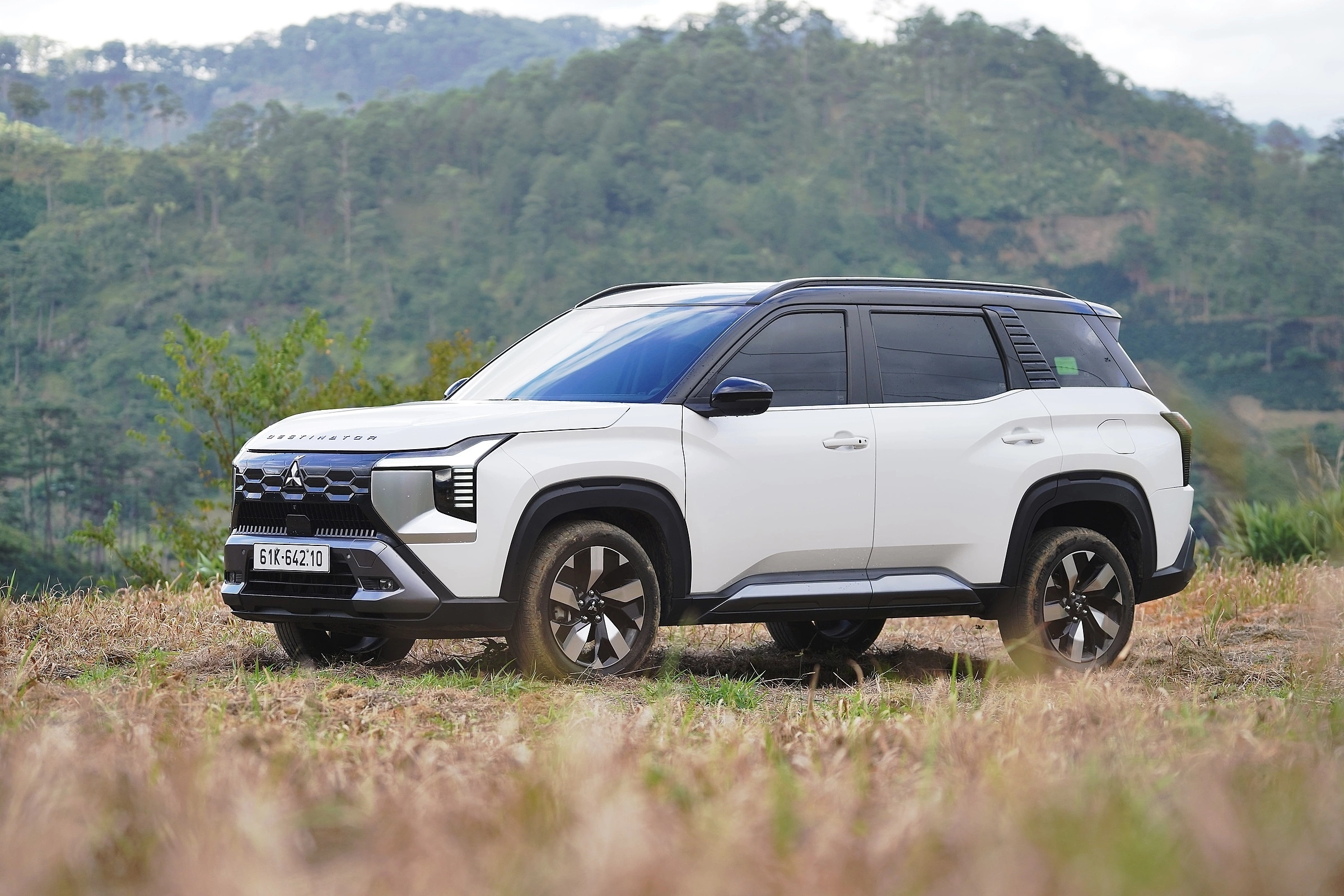 |
A Destinator model on the road in Vietnam. Photo: Pham Trung.
The Philippines and Singapore are the two markets in the top 6 that experienced a decline in sales. According to the ASEAN Automotive Sector Center of multinational service company PwC, the reason for the decrease in the Philippines is the high fuel prices in the first half of 2026, which impacted consumer demand for vehicles. Additionally, recent floods over the past two months disrupted many business activities, including automotive sales.
In Singapore, the volume of new vehicle sales is much more modest compared to other countries in the top 6. The number of new vehicle registrations depends on the government's quota for issuing Certificates of Entitlement (COE) to citizens. To drive a car, customers must first obtain a COE, and the state controls the number of new vehicle registrations using this certificate to match the country's small land area. New vehicle sales in Singapore fluctuate depending on the period and do not purely follow the supply-demand model seen in other regional markets.
Each COE in Singapore is valid for 10 years, aiming to control the number of cars on the road at approximately one million units. The island nation has about 6,1 million residents, and it takes less than an hour to drive from one end to the other. The COE auction mechanism makes Singapore the most expensive country in the world to buy a car. At times, the COE price can exceed the car's price itself.
Thanh Nhan