In the remote, mountainous region of Kabad Baran, the capital of Agusan del Norte province in northeastern Mindanao, a unique mode of transport is essential for daily life. Here, where roads and infrastructure remain underdeveloped, the habal-habal, a modified motorcycle, serves as a vital link for communities whose way of life has remained largely unchanged for generations. These vehicles are indispensable, especially where cars and buses cannot pass.
Jimmy, 67, embodies the spirit of the habal-habal driver. For the past 35 years, he has connected Kabad Baran with the mountain town of Puing Bato, a daily routine made possible by his trusty habal-habal. Also known as a skylab or motorcycle taxi, the habal-habal is specifically modified to carry more passengers and goods than a standard motorcycle. Its nickname, "skylab", comes from its design, which resembles the Skylab space station that orbited Earth in the 1970s.
Habal-habal typically feature sidecars or extended seats on both sides, often using T-shaped crossbars. In Kabad Baran, drivers like Jimmy further extend their motorcycles or add wooden platforms, often called wings, allowing them to carry more than 10 people at once. These vehicles can be open or covered, adapting to different weather conditions and cargo needs.
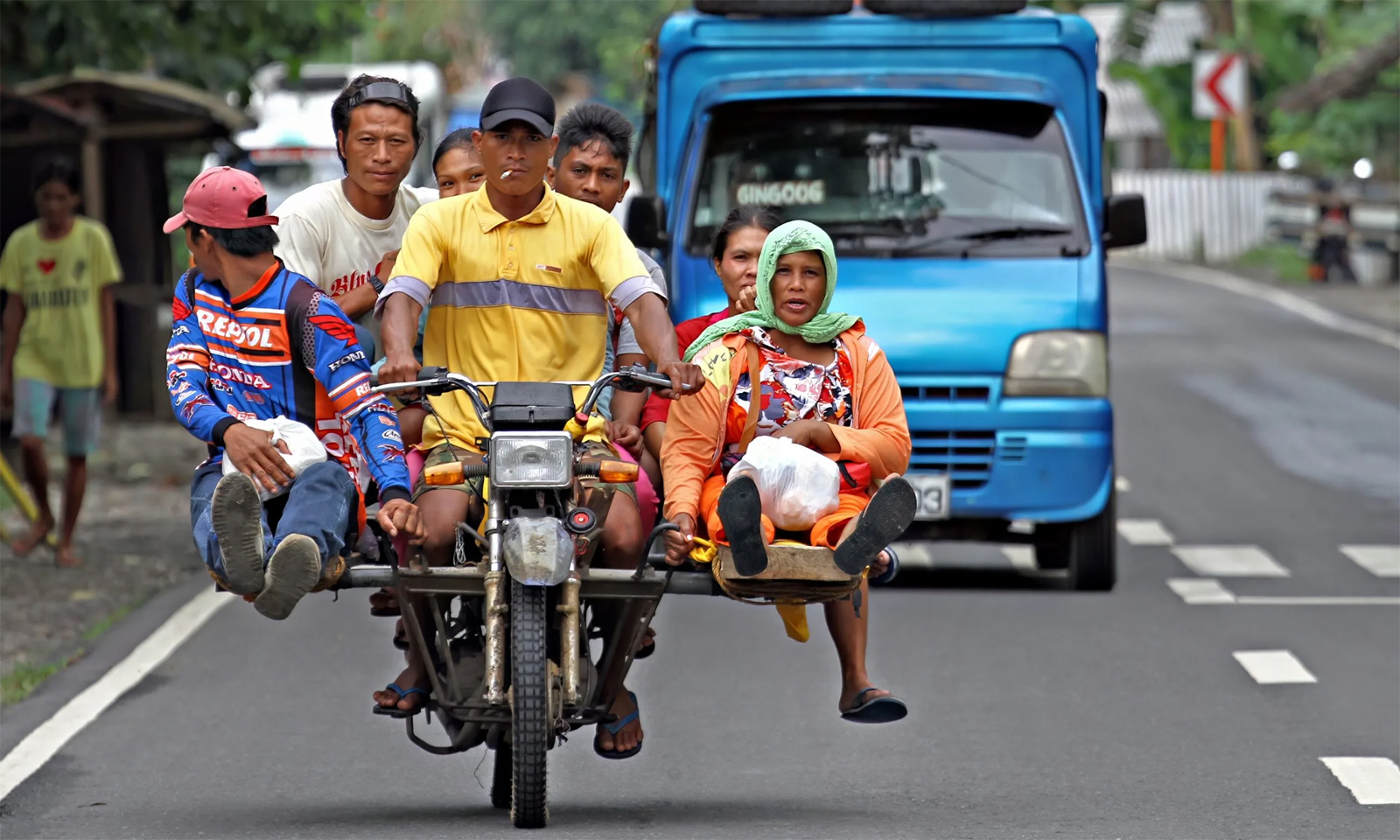 |
To this day, the habal-habal remains an essential vehicle for remote and geographically isolated communities in the Philippines. *Photo: Rappler*
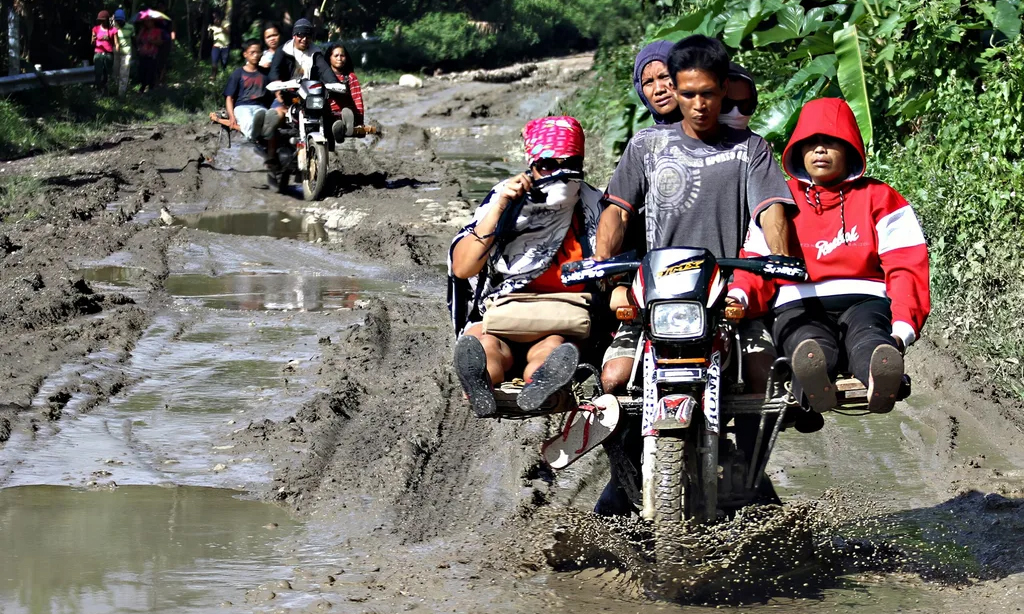 |
Two habal-habal carrying passengers navigate a muddy road in Agusan del Norte.
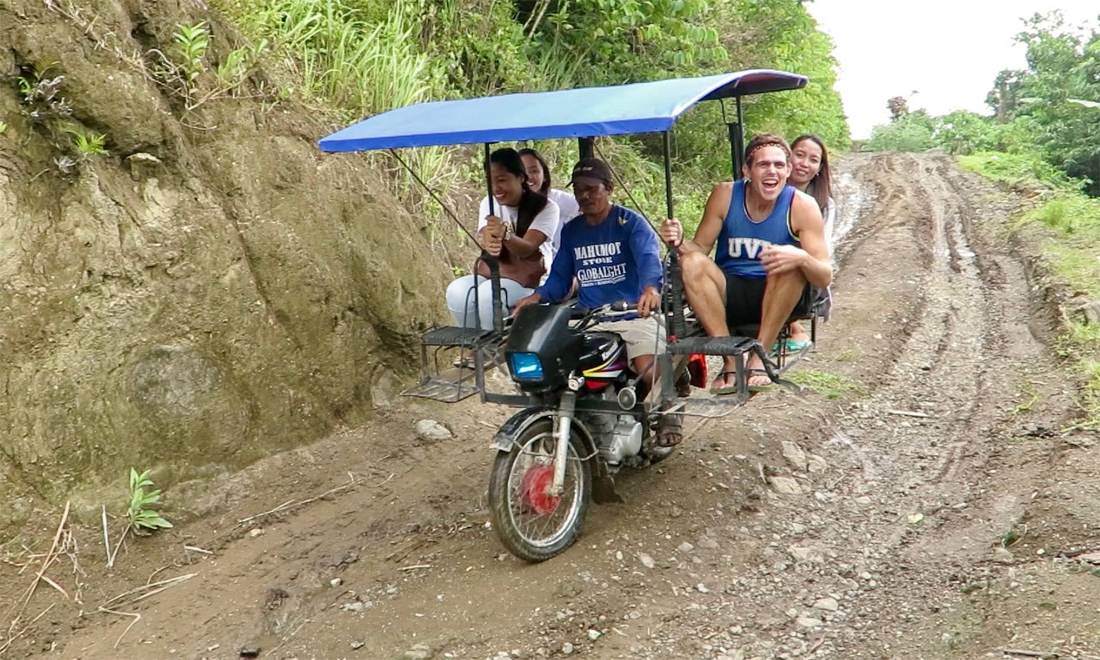 |
The motorcycles can be covered or uncovered.
Operating a habal-habal on these challenging dirt roads demands skill and vigilance. Maintaining balance is crucial for both the driver and passengers, a synchronized process that becomes second nature to town residents. Inexperienced drivers often lose control, leading to accidents. Therefore, safely delivering passengers requires a skilled hand and a sharp mind.
Behind every habal-habal is a skilled mechanic. Danilo, 23, has been a master habal-habal modifier for over seven years. The habal-habal he designs are unique in the region. While five is the common official passenger limit for habal-habal in other cities, Kabad Baran's modified versions push this boundary significantly. A typical habal-habal costs about 1,000 USD, with more elaborate modifications raising prices to over 2,000 USD.
Despite the vital service they provide, habal-habal drivers face increasing competition and dwindling earnings. Jimmy, who once earned around 24 USD daily, now struggles to make more than 12 USD on most days, sometimes returning home empty-handed. Just a few years ago, there were only about 10 habal-habal drivers; today, that number exceeds 50, intensifying the competition.
It will take many more years for Kabad Baran to develop the infrastructure needed to render this mode of transport less effective. Until then, the habal-habal will continue to traverse dusty, rough, and muddy roads, faithfully serving its community as it has for decades.
My Anh (Go Asia)