Porsche has unveiled the 2026 Cayenne Electric, a battery-powered SUV set to become the brand's most powerful production vehicle. This new electric iteration builds on the experience gained from the smaller Macan EV, marking a significant step for a model that has been a sales powerhouse for Porsche for 23 years, with its third generation remaining the German brand's bestseller.
The Cayenne Electric is not merely an electrified version of the familiar Cayenne. These new electric models utilize a distinct platform, an extended version of the PPE architecture found in the Macan Electric. This platform is stretched by 130 mm, resulting in a 3,020 mm wheelbase, which also surpasses the gasoline Cayenne's wheelbase by the same margin, greatly increasing rear legroom for passengers.
The electric Cayenne will launch with two versions: the Cayenne Electric and the Cayenne Turbo Electric, both featuring all-wheel drive. The Cayenne Turbo Electric, priced at 163,000 USD, boasts a two-motor powertrain generating 844 horsepower in normal driving. A "push-to-pass" button on the steering wheel can activate an additional 173 horsepower for 10 seconds. When launch control is engaged, drivers can unleash up to 850 kW, equivalent to 1,139 horsepower and 1,500 Nm of torque.
Porsche states that this model, its most powerful production car, can accelerate from 0-97 km/h in a mere 2,4 seconds. This is notably faster than the 3,1 seconds of the quickest internal combustion Cayenne Turbo GT. It can also complete a 402 m sprint from a standstill in 9,9 seconds, reaching a top speed of 260 km/h.
The standard Cayenne Electric, priced at 109,000 USD, offers 402 horsepower in normal driving, increasing to 435 horsepower with launch control. Coupled with 834 Nm of torque, this version accelerates from 0-97 km/h in 4,5 seconds and achieves a top speed of 230 km/h.
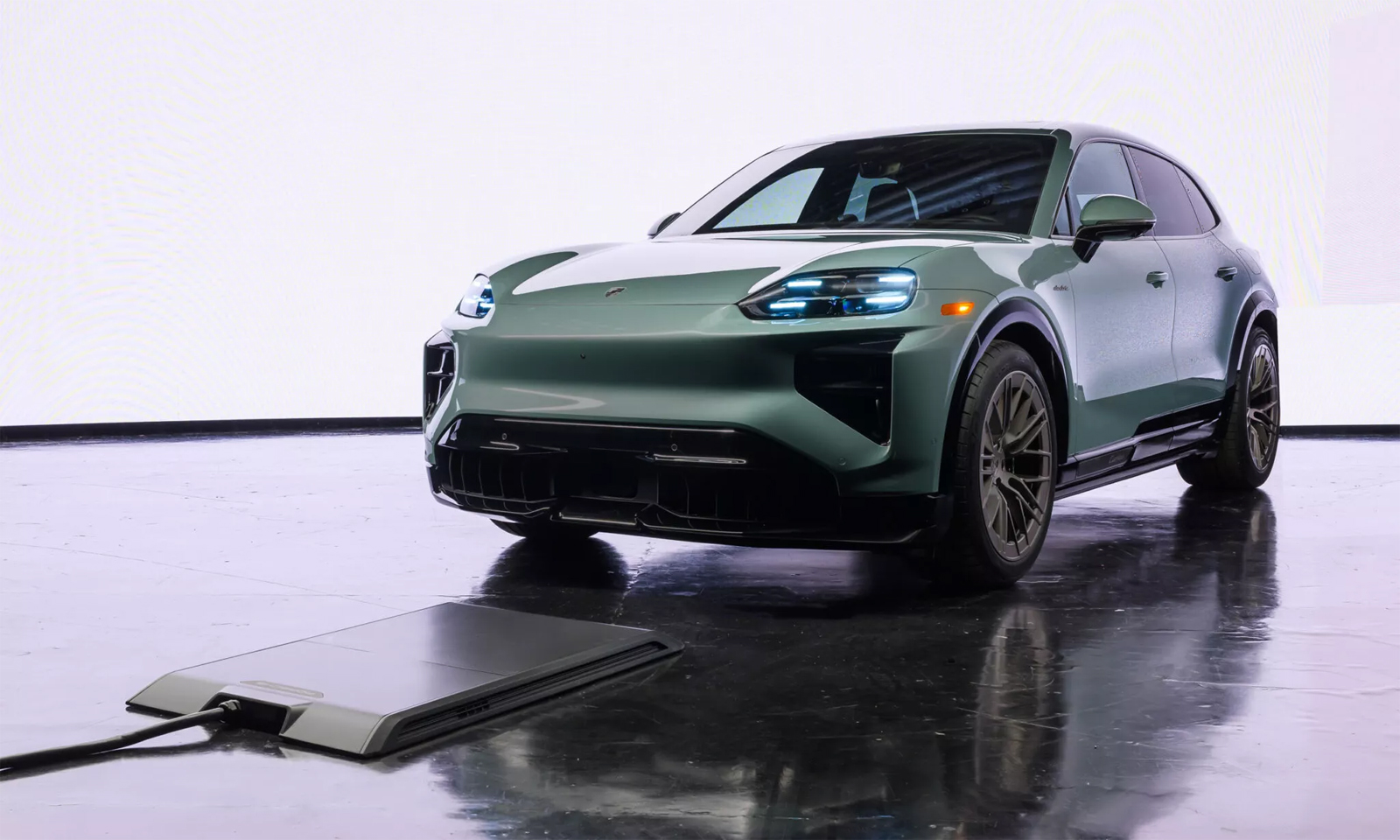 |
Porsche Cayenne Electric will feature an optional smartphone-style wireless charging pad. *Photo: Porsche*
Both versions incorporate significant energy recovery capabilities, with the braking system able to feed up to 600 kW back into the battery. Porsche claims that approximately 97% of typical braking scenarios do not require the use of physical brakes, though carbon PCCB brake discs remain an option for customers.
Standard equipment includes adaptive air suspension with Porsche active suspension management. The Turbo version further adds a torque-vectoring rear differential. Both variants can be optioned with rear-axle steering and Porsche Active Ride, which utilizes active anti-roll bars, similar to the Taycan.
A new 113 kWh battery powers both models, a 13 kWh increase over the Macan Electric's battery pack. Thanks to an 800 V architecture and an enhanced cooling system, the Cayenne Electric can charge at up to 400 kW under ideal conditions, allowing a 10-80% charge in less than 16 minutes.
Porsche is also introducing an optional inductive charging system, making it the first automaker to offer this electric vehicle technology in the US. Drivers can simply park the SUV in a garage, and it will automatically charge at up to 11 kW without needing to plug in.
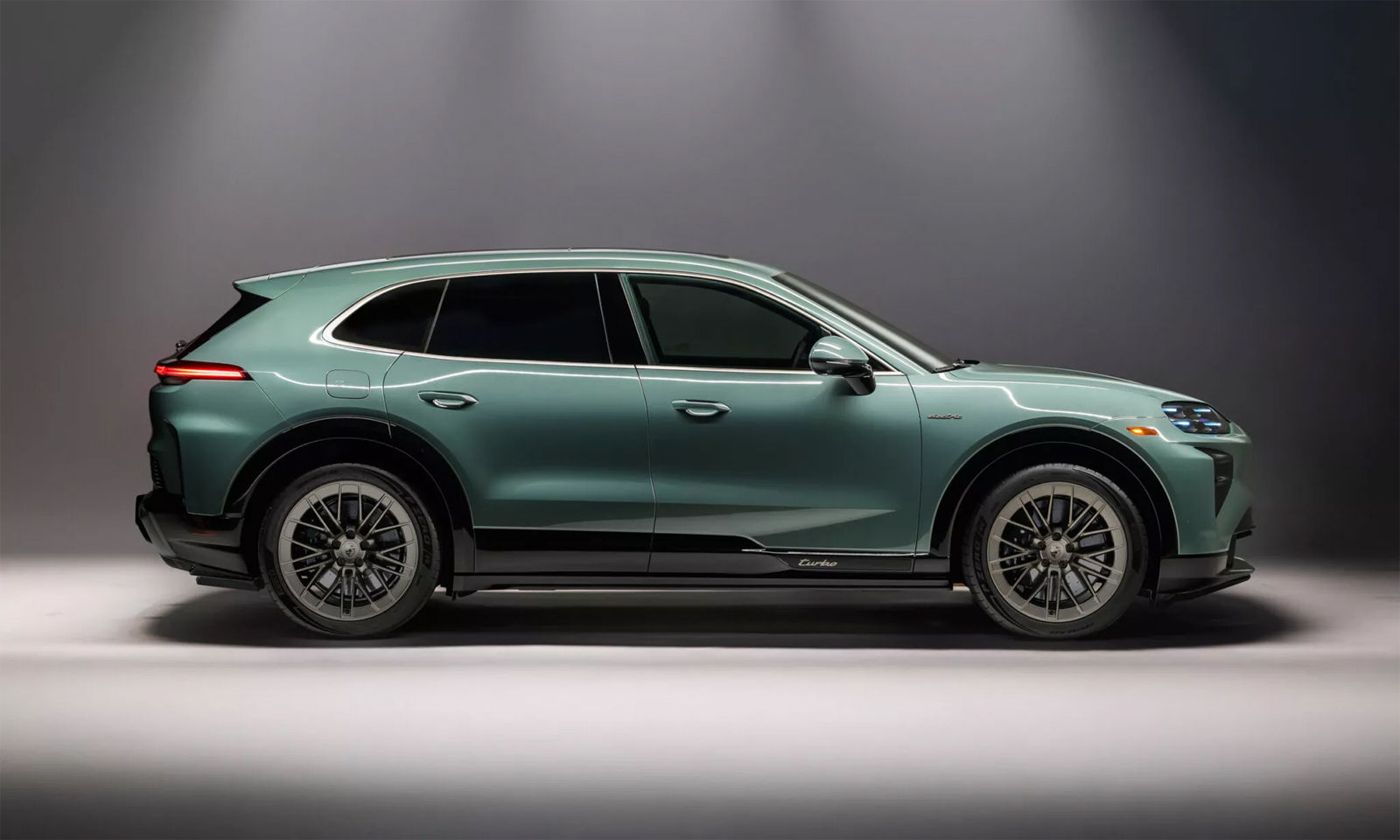 |
The PPE architecture, used on the Macan Electric, is extended by 130 mm to achieve a 3,020 mm wheelbase.
The Cayenne Electric's refreshed design incorporates several elements from the Macan EV, including a lower hood, slimmer headlights, sharper body lines, and frameless windows. The rear features 3D effect lights and an illuminated Porsche script, adding a distinctive touch at night. Turbo Electric versions are further distinguished by contrast details in a Turbonite color.
With a drag coefficient of 0,25, the Cayenne Electric stands as one of the sleekest SUVs in its segment. It features hidden aerodynamic spoilers, a smart roof spoiler, and aerodynamic wings that contribute to smoother gliding and extended range. Porsche notes that this system continuously adapts to changing speeds and loads, increasing grip when needed and reducing drag when not. Additionally, an Off-Road design package offers different front and rear bumpers to improve approach and departure angles.
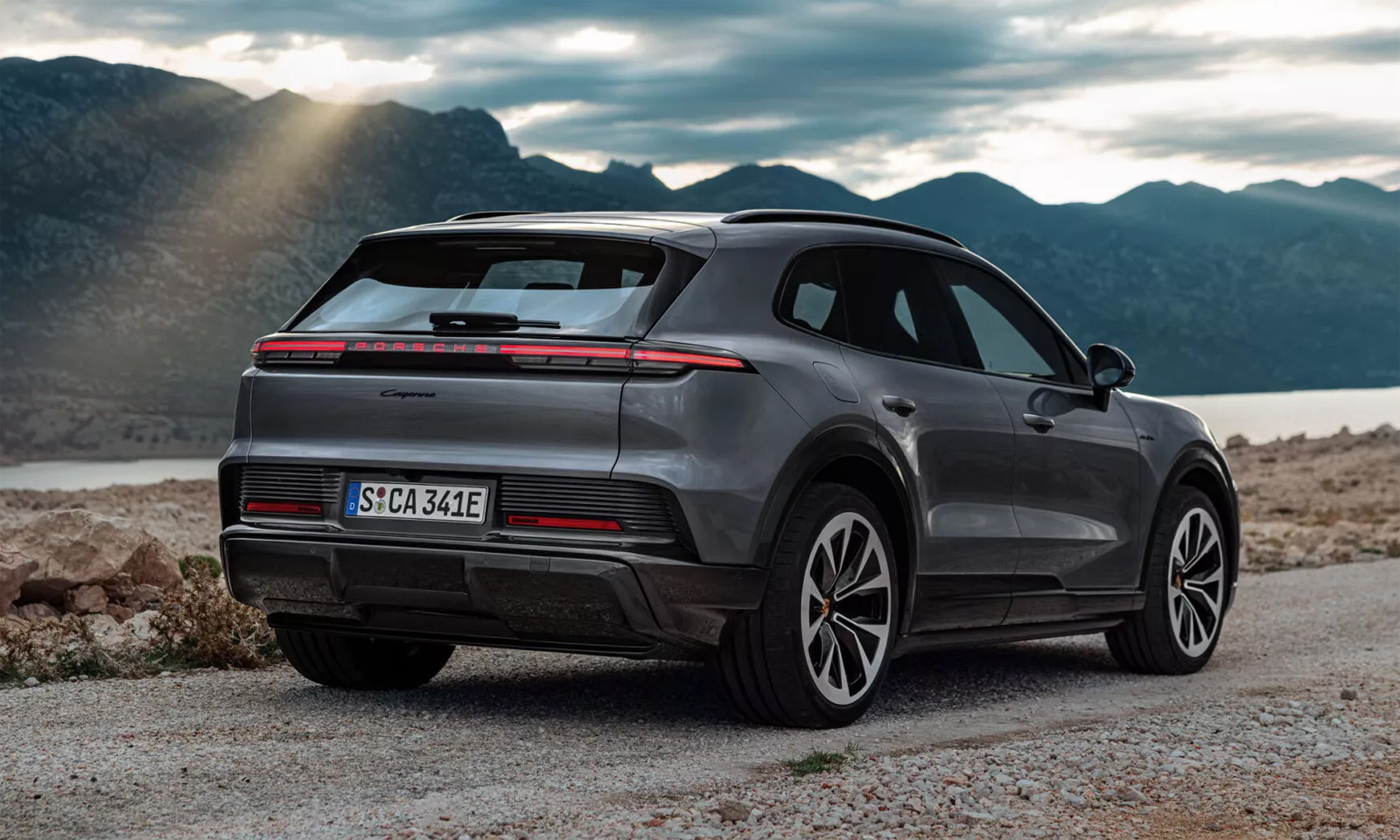 |
The rear features 3D effect lights and an illuminated Porsche script, adding a distinctive touch at night.
Inside the cabin, rear passengers benefit from enhanced legroom and power-adjustable heated seats. The panoramic sunroof utilizes liquid crystal technology to adjust its opacity. The dashboard is dominated by two large OLED screens for the instrument cluster and infotainment, with an optional 14,9-inch passenger display also available.
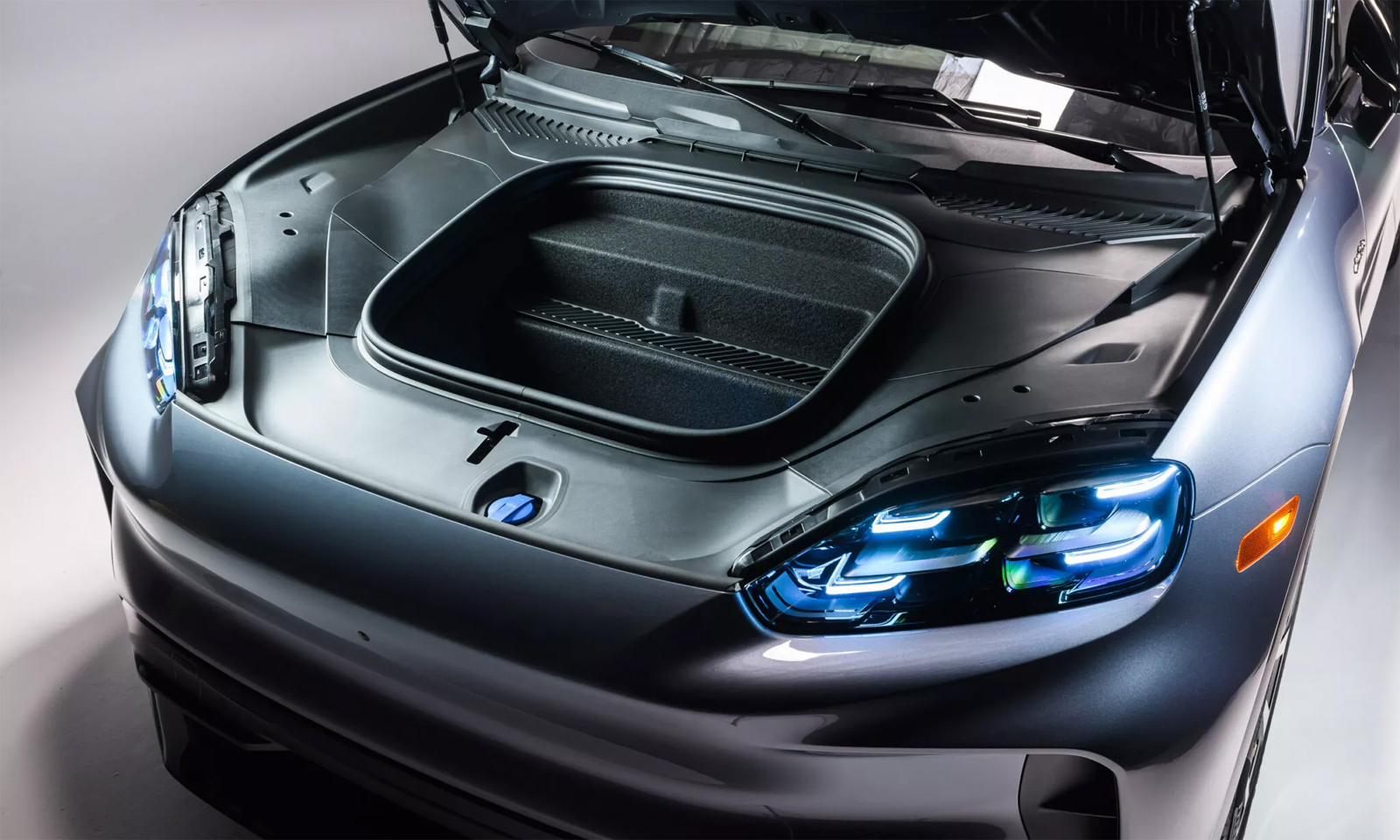 |
The frunk (front trunk) has a 90-liter capacity. Rear storage space is 552 liters with the rear seats up and 1,588 liters with the rear seats folded.
Further interior technology includes an 87-inch head-up display with augmented reality guidance, a new AI-powered Voice Pilot, and an upgraded app system featuring integrated streaming and gaming. Despite the abundance of screens, Porsche has retained physical buttons for essential functions like climate control and volume.
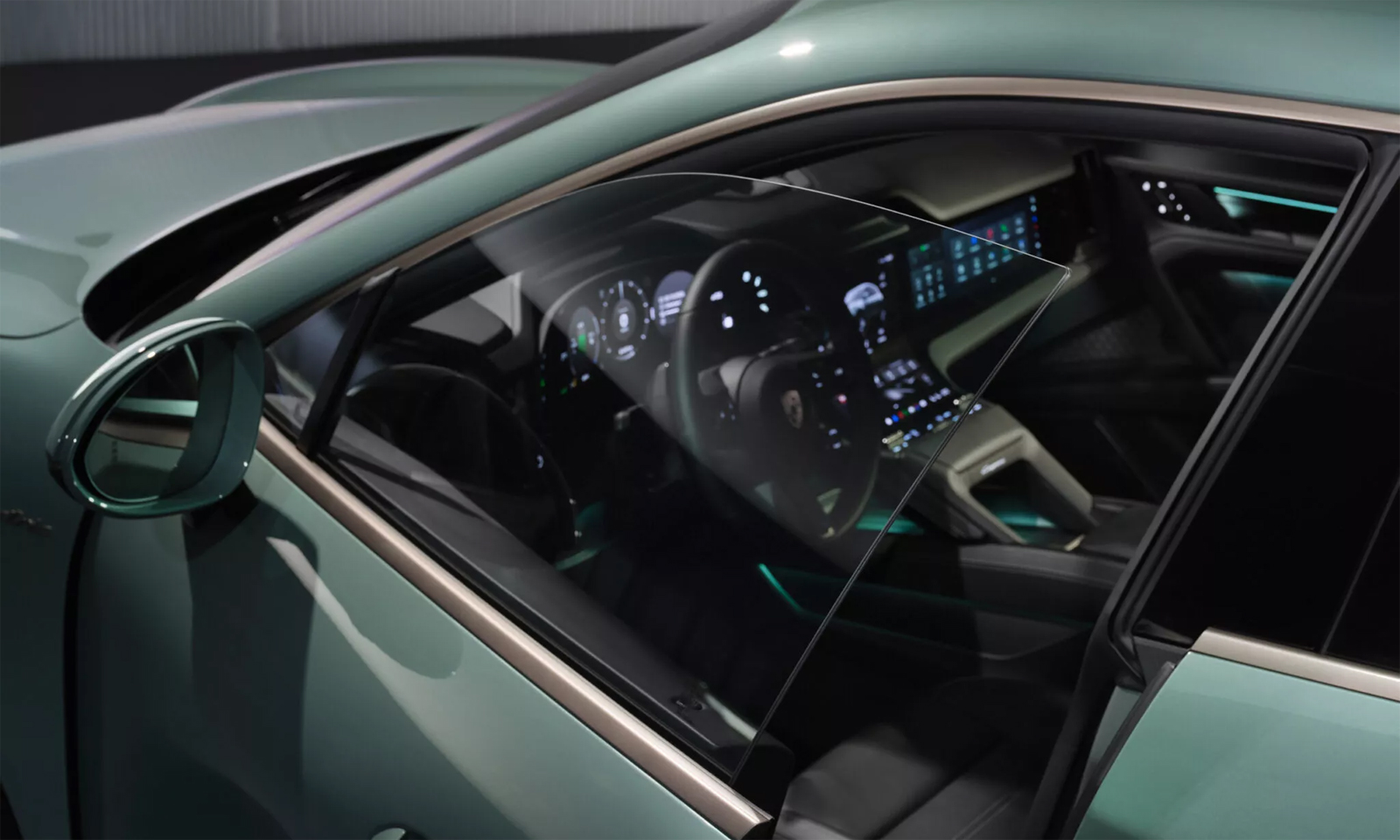 |
Frameless windows.
Deliveries of the 2026 Cayenne Electric are scheduled to begin in the US in late summer 2026. Porsche has confirmed that the internal combustion engine and plug-in hybrid versions of the Cayenne will continue to be offered into the 2030s, ensuring a diverse range of options for customers.
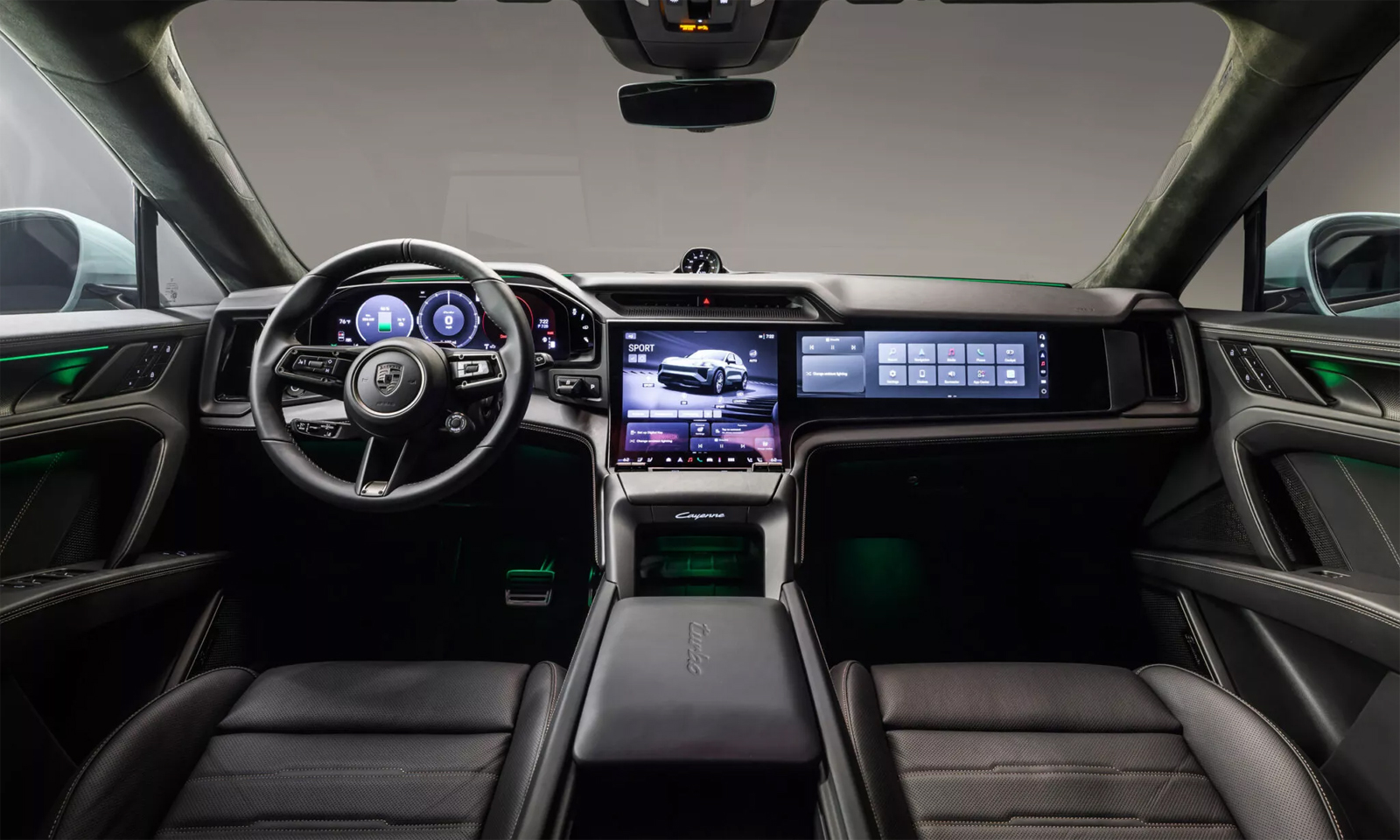 |
Two large OLED screens serve the instrument cluster and infotainment. A 14,9-inch passenger display is optional.
By My Anh (via Carscoops)