The US electric vehicle manufacturer aims to fully transition to components produced outside China within the next one or two years, according to the Wall Street Journal (WSJ). Tesla has intensified its sourcing from North America for its US factories over the past two years, driven by tariff threats.
This strategic shift reflects a broader trend among companies re-evaluating their reliance on China. Fluctuating tariffs imposed by US President Donald Trump, coupled with industry concerns over potential rare earth supply bottlenecks and chip shortages, have prompted businesses to reconsider China's role as a critical source of parts and raw materials.
Beyond Tesla, General Motors (GM) is also reportedly pursuing a similar strategy for its supply chain. Reuters reported on 12/11/2024 that GM's leadership has directed suppliers to seek alternative raw materials and components outside China, with the ultimate goal of completely relocating its supply chain.
GM has set a 2027 deadline for some suppliers to terminate their supply relationships with China. The company first issued this directive to suppliers in late 2024, intensifying the effort this spring as the US-China trade war escalated.
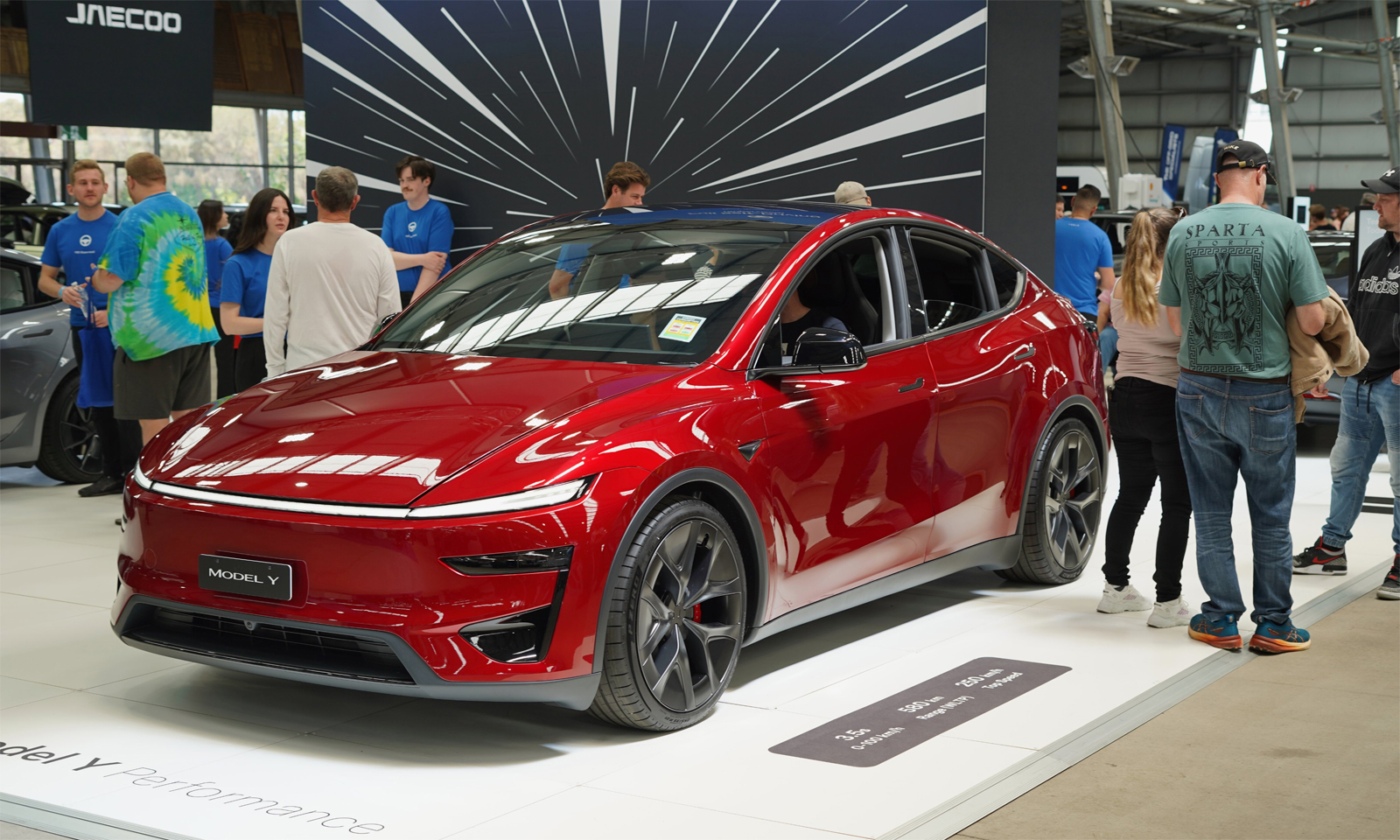 |
A Tesla Model Y electric vehicle at the Everything Electric Melbourne exhibition, 14-16/11/2024. *Photo: TeslaAUNZ* |
Despite these efforts to diversify, Tesla maintains a significant presence in China. A 26/11/2024 report from Shanghai Securities News indicated that Tesla has signed contracts with over 400 tier-one local suppliers in China, with more than 60 integrated into its global supply chain system.
In related news, data from the China Passenger Car Association (CPCA) earlier this month showed a 9,9% decrease in Tesla's China-made electric vehicle sales in October (compared to the same period last year), falling to 61.497 units. This reversed a 2,8% increase observed in September. Production of the Model 3 and Model Y from the Shanghai factory, including exports, also saw a 32,3% drop compared to September.