For over a year, the Japanese automaker has been grappling with an issue affecting its twin-turbocharged 3.4-liter V6 engine (code V35A-FTS), which powers models such as the Tundra, Lexus LX600, and GX. Due to a manufacturing error, metal shavings were not entirely cleaned from inside the engine block. Over time, these fragments can lead to severe engine damage.
The problem has impacted over 250,000 Toyota and Lexus vehicles. However, according to Pickup Truck + SUV Talk, the company is not opting for mass engine replacements. Instead, dealerships have been instructed to use a "hammer test" to identify which vehicles require an engine swap. This process is more technically complex than simply tapping the engine block and listening.
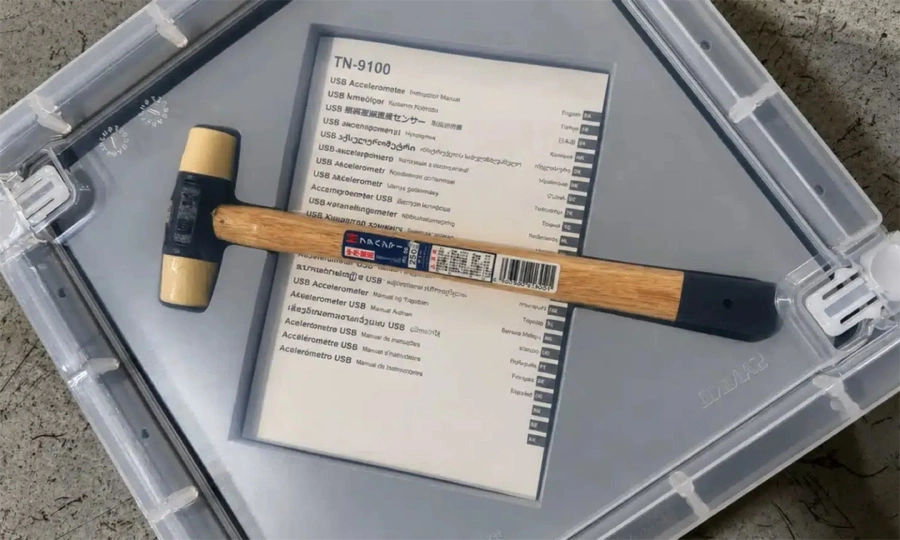 |
Toyota's V35A crankshaft bearing inspection kit includes a small plastic hammer and an accelerometer used during the test. Photo: Pickup Truck + SUV Talk |
To perform the test, technicians must completely drain and replace all fluids, then start the V6 engine to reach its standard operating temperature. Next, they remove all drive belts, rotate the crankshaft to a fixed position, and attach a specialized accelerometer to the front crankshaft pulley bolt.
After preparation, the technician uses a 250-gram plastic-headed hammer to tap the crankshaft pulley at the 3 o'clock position. Specialized software controls the tapping force, requiring the technician to perform the action precisely three times. The accelerometer records the vibration frequencies from the taps and sends the data to a cloud computing system. There, the data is compared against frequency patterns from standard and faulty engines to determine if the vehicle needs a new engine.
Toyota explains that residual metal shavings can embed themselves in the crankshaft bearings, especially the number one bearing. If this occurs, the resonance frequency of the bearing changes from its normal state.
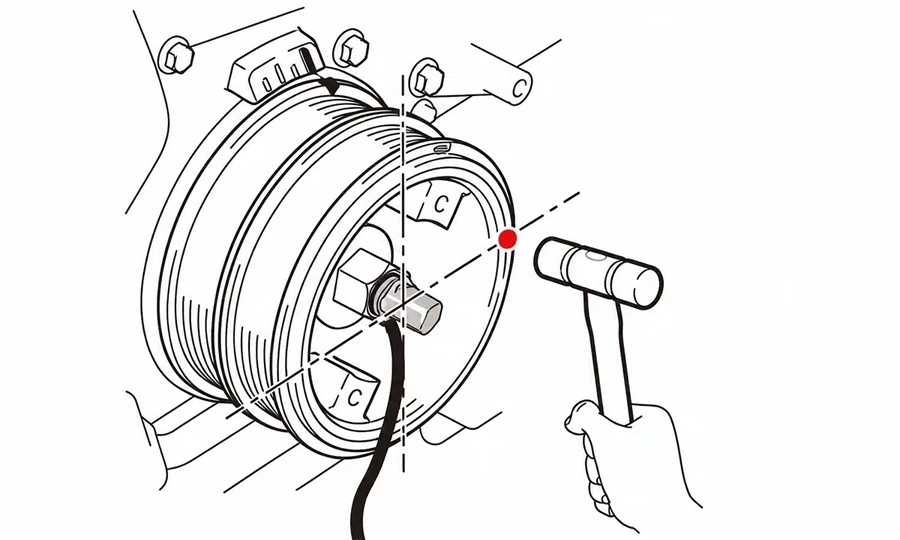 |
Technicians tap the crankshaft pulley at the 3 o'clock position to perform the inspection. Photo: Pickup Truck + SUV Talk |
This principle is similar to the operation of a U-shaped tuning fork. High-quality tuning forks are crafted to extremely precise standards to ensure they produce the correct frequency. The tap of a small plastic hammer on a metal pulley may not create a pleasant melody, but the vibrations provide measurable and highly predictive data. For engineers and in medicine, this serves as an effective diagnostic tool.
This procedure helps Toyota avoid replacing entire engines in all affected vehicles, saving millions of US dollars. Theoretically, the test can effectively detect current issues. However, this method cannot predict future engine wear and has yet to fully reassure many vehicle owners.
My Anh (via Drive)