Xiaomi, a Chinese technology company, has introduced a new electric vehicle battery in its domestic market, named Longjia, or "Dragonscale" in English. The company states that if a Dragonscale battery experiences a fire due to a manufacturing defect, customers will receive a new vehicle of the same model and version.
This policy also covers scenarios where a vehicle is involved in an accident or sustains severe underbody damage leading to battery ignition. In such cases, Xiaomi pledges to compensate the difference between the insurance payout and the vehicle's market value prior to the incident. These commitments remain valid for the lifetime of the vehicle.
However, the policy comes with several conditions. The program applies only to the first owner who purchases the car for personal use, excluding vehicles used for business, rental, or those that are pre-owned. Owners must also maintain Xiaomi's connectivity services and bring their vehicles to authorized service centers for maintenance.
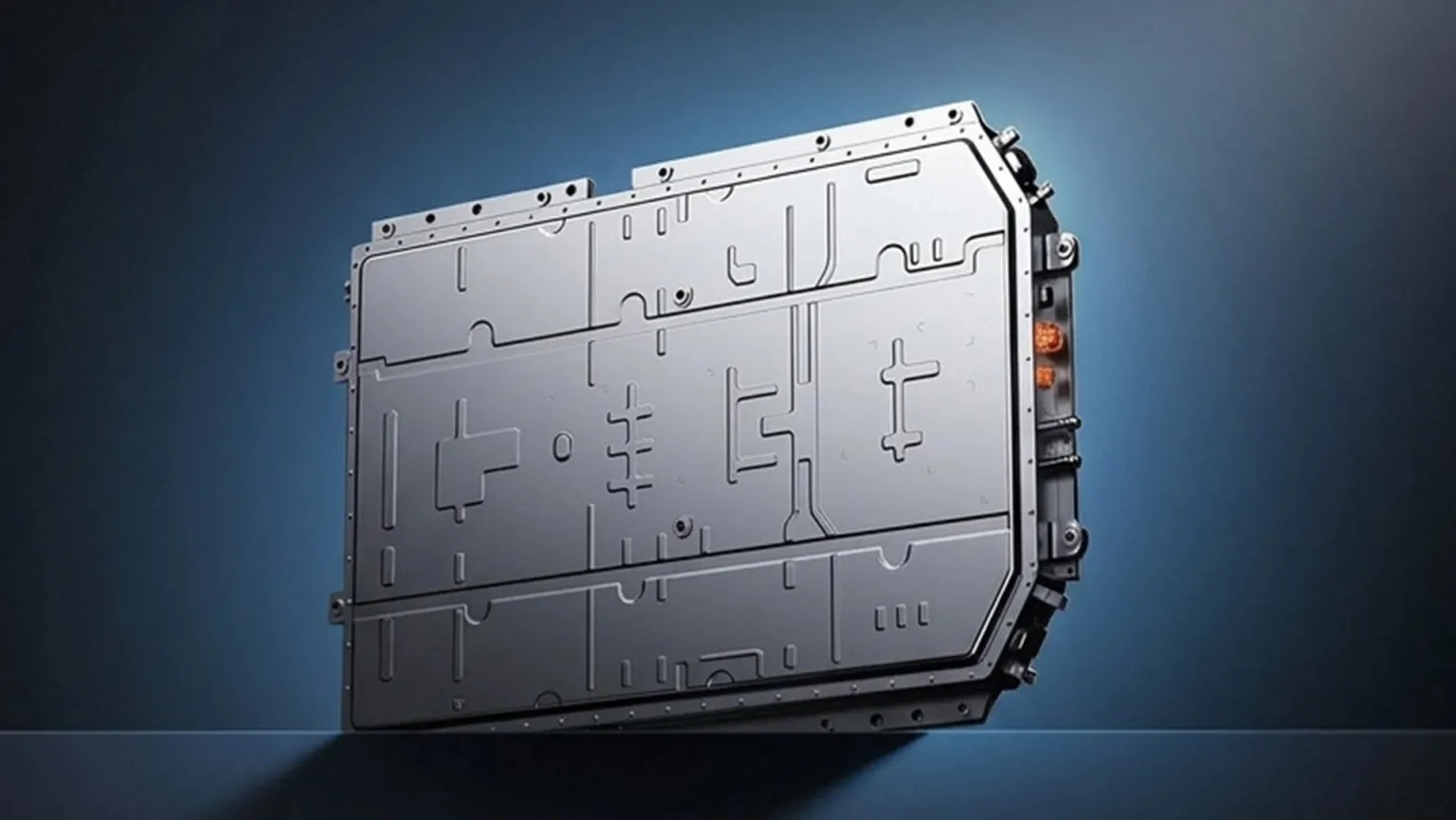 |
Xiaomi's new Dragonscale battery pack. Photo: Xiaomi |
Focus on fire propagation prevention
According to Xiaomi, the Dragonscale battery meets new Chinese safety requirements and has passed tests for battery pack longevity and thermal retention. The system incorporates a high-voltage circuit breaker that can isolate large currents within milliseconds, combined with multiple layers of insulation materials.
During rigorous testing, Xiaomi demonstrated that even if a single cell experiences uncontrolled thermal runaway, the system can isolate and extinguish the fire, preventing it from spreading to other cells.
The company also developed the Cloud battery management system (BMS), which uses artificial intelligence (AI) to monitor data from individual cells. Xiaomi states the system samples parameters from each cell 10 times more frequently than China's national standard and processes three times the data volume, aiming for early detection of abnormal temperature signs before a fire occurs.
The Dragonscale battery will first appear in the Skynomad SUV series, slated for launch on 7/9. In China, this vehicle line will be branded Pengcheng and utilize the Kunlun chassis platform.
The Skynomad is not a purely electric vehicle but an extended-range electric vehicle (EREV). It uses two motors with a combined output of 416 horsepower, paired with a 1,5-liter turbocharged gasoline engine that acts as a generator. The N90 Max version, featuring a 76 kWh battery, has a pre-sale price of nearly 45.000 USD. The smaller N70 version, with a 52 kWh battery, is priced at nearly 39.000 USD.
This move comes amid a significant decline in Xiaomi Auto sales. The company delivered 31.267 vehicles in July, a notable decrease from 50.212 units in 12/2025. In Q1/2026, Xiaomi also reported a loss exceeding 5.500 USD per vehicle manufactured.
Xiaomi expects EREV models to attract family customers in China who desire daily electric powertrain use but also need gasoline engine support for long-distance travel. Currently, Xiaomi has not confirmed the Dragonscale battery for its SU7 and YU7 electric vehicle models. These two series continue to use conventional battery packs from CATL and FinDreams.
Hai Dang (via ArenaEV)