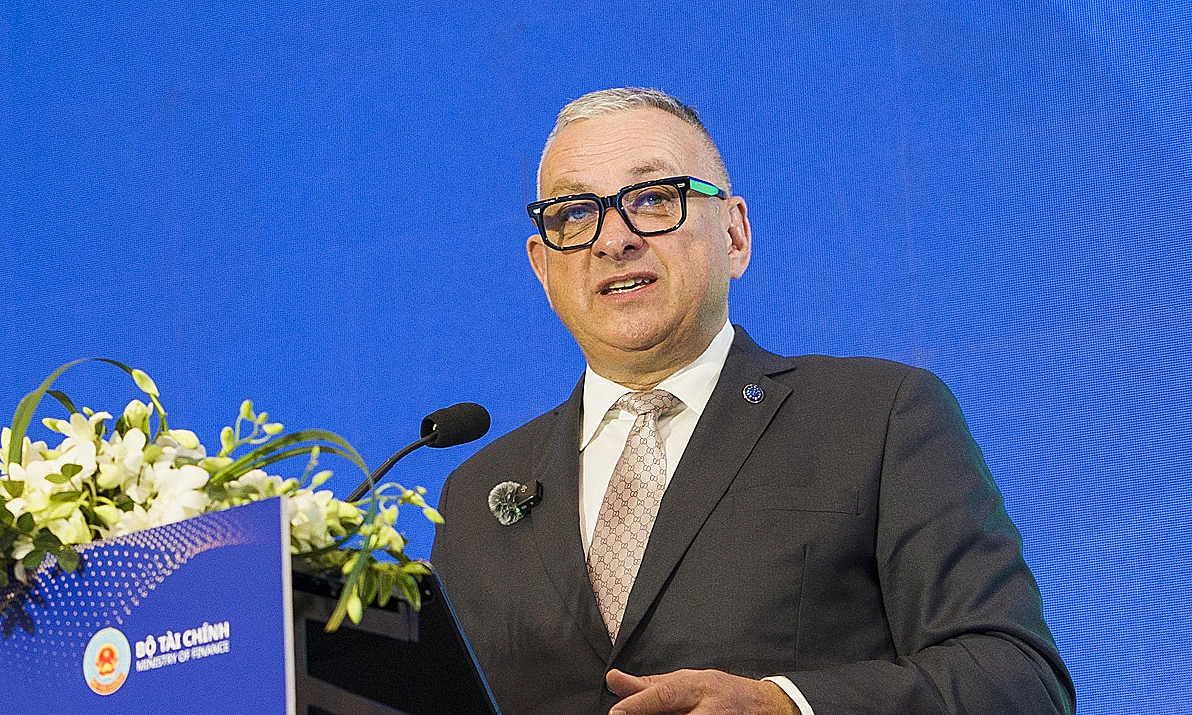
According to the International Energy Agency (IEA), the number of public charging ports in 2025 increased by 30% compared to 2024, representing the strongest growth in electric vehicle development history.
IEA experts believe this pace reflects charging infrastructure becoming a key indicator of economies' green transition capabilities. Following this trend, many nations are accelerating efforts to address the primary concern for electric vehicle users: charging stations.
China demonstrated remarkable expansion in its electric vehicle charging network, reaching over 20 million stations by the end of 2025. Of these, 4,7 million were public stations, and the average power output per station reached 46,5 kW, a 33% increase from the previous year. The network covered 98% of highway rest stops, serving over 40 million new energy vehicles.
The National Energy Administration (NEA) reported that in just 18 months, the number of charging stations increased from 10 million to 20 million. The government continues to subsidize 30% of station construction costs, encouraging businesses to integrate solar energy, battery storage, and ultra-fast charging technology. The 2026 goal is to reduce charging time to 15-20 minutes for 80% battery capacity, while standardizing inter-regional connections. Sharjah24 evaluated this plan as feasible due to unified policies and domestic production capacity. However, experts noted that challenges remain in addressing power load issues in remote areas and technical standard discrepancies among different manufacturers.
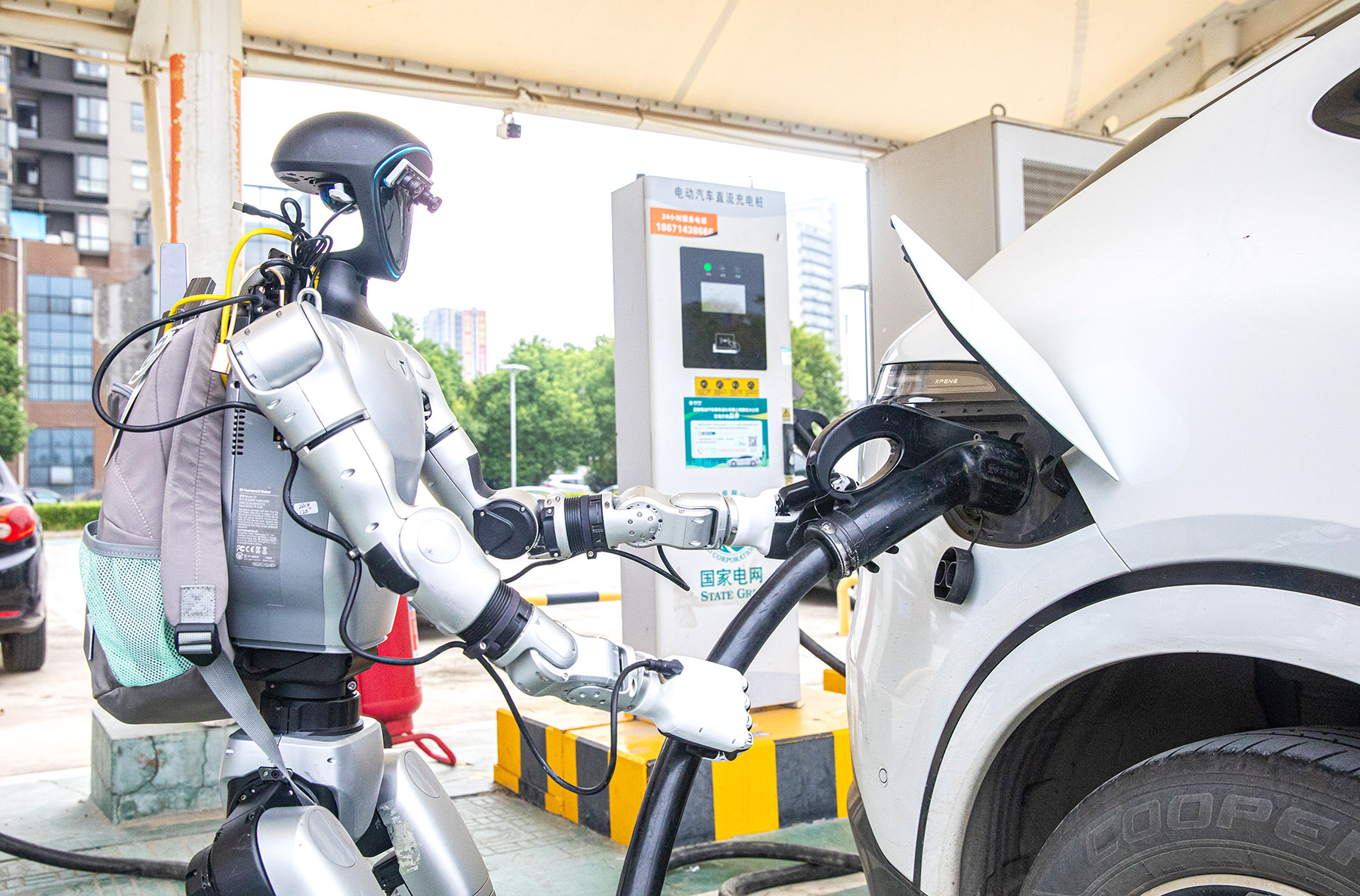 |
A robot assisting with electric vehicle charging at a station in Huangshi, Hubei province, in September 2025. *Photo: China Daily* |
Europe also saw significant strides as it advanced electric vehicle infrastructure standardization. Germany emerged with clear progress in 2025. According to data from European industrial organizations, Germany had over 88,000 operational charging points, a 40% increase from 2024. Growth focused on fast and ultra-fast stations (over 150 kW), serving major transport corridors.
The German government and the EU aim to complete fast-charging corridors every 60 km on highways, while supporting businesses through national funds and cost-sharing mechanisms. Experts evaluate Germany's advantages in planning, technical standards, and capital will help the country sustain infrastructure growth in 2026.
In the UK, Zapmap data shows that by the end of 2025, the country had nearly 88,000 charging points, including 17,000 fast and ultra-fast stations, a 24% increase from the previous year. This achieved about one-third of the 300,000-point target by 2030. In 2026, the UK aims to complete a network of fast stations every 60 km according to EU standards, with 381 million pounds in funding to shorten permitting times and encourage private sector participation.
India experienced impressive growth in electric vehicle charging infrastructure. By November 2025, India had over 29,000 electric vehicle charging stations, a five-fold increase since 2022, with Karnataka state leading. The government aims to install an additional 7,000 charging points and 100 battery swapping stations in Delhi in 2026 to encourage electric vehicle adoption. In Hyderabad, authorities are deploying charging stations at 25 bus depots, serving over 2,200 public electric vehicles.
Despite this growth, India still faces limitations in power infrastructure and spatial planning. According to the New Delhi Energy Policy Institute, each public charging station currently serves over 200 vehicles on average, indicating a substantial need for investment. A new government support package, including tax incentives and capital for the private sector, is expected to double station density in the next three years.
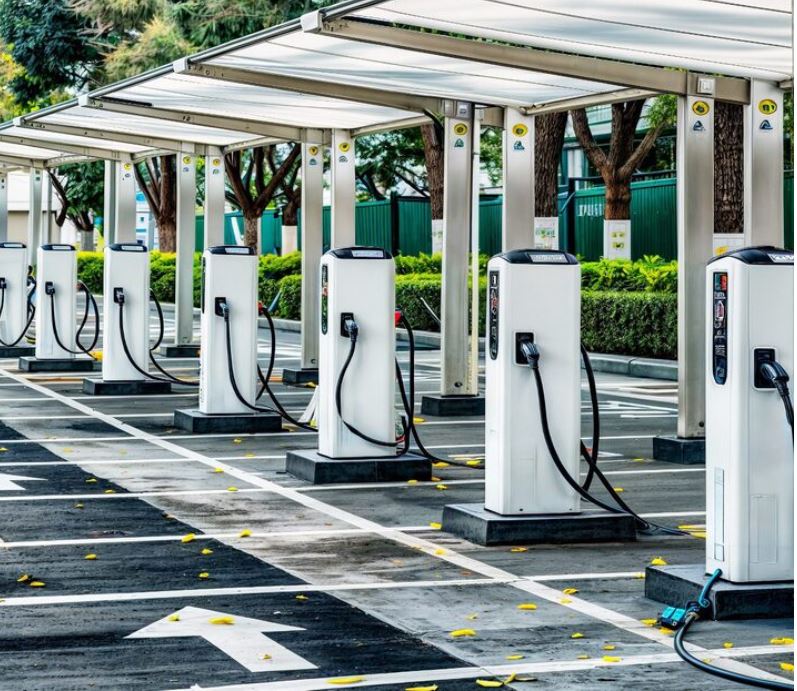 |
An electric oto charging area in India recently commenced operations. *Photo: Electreefi* |
Within the global electric vehicle charging station infrastructure landscape, Vietnam also recorded significant progress in 2025. Currently, Vietnam's electric vehicle charging network is primarily invested in by domestic enterprises. V-Green, VinFast's charging infrastructure network development unit, operates approximately 150,000 charging ports nationwide. This system is widely installed in urban areas, residential zones, commercial centers, and stops along national highways, serving both oto and electric moto.
One notable highlight is the large-scale charging station at the Vietnam Exhibition Center (Hanoi), operated by V-Green, equipped with 1,200 charging ports. Many of these are fast chargers ranging from 60 kW to 300 kW, serving both oto and electric moto. This was considered one of the largest charging stations in the country by the end of 2025. In major cities like Hanoi and TP HCM, 2025 also saw the emergence of numerous large-scale, high-speed charging stations, maximizing convenience for Vietnamese users.
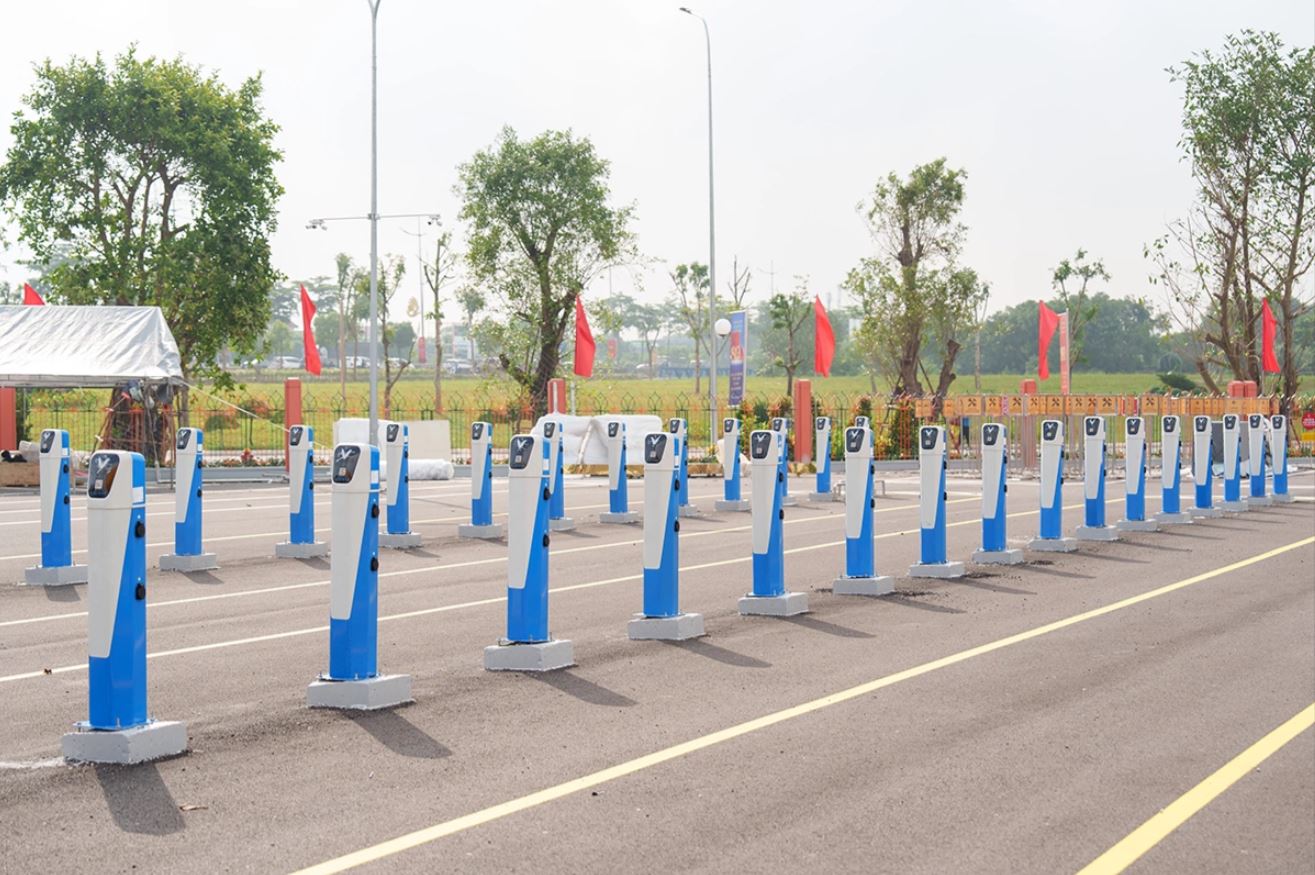 |
Dedicated charging pillars for electric moto at the Vietnam Exhibition Center. *Photo: Tuan Vu* |
For electric moto, V-Green is deploying a nationwide network of battery swapping cabinets. This technology allows users to swap batteries in just 1-2 minutes. The company has completed installing the first 4,500 battery swapping stations and expects to reach 45,000 cabinets in Quarter I/2026.
Thai Anh