 |
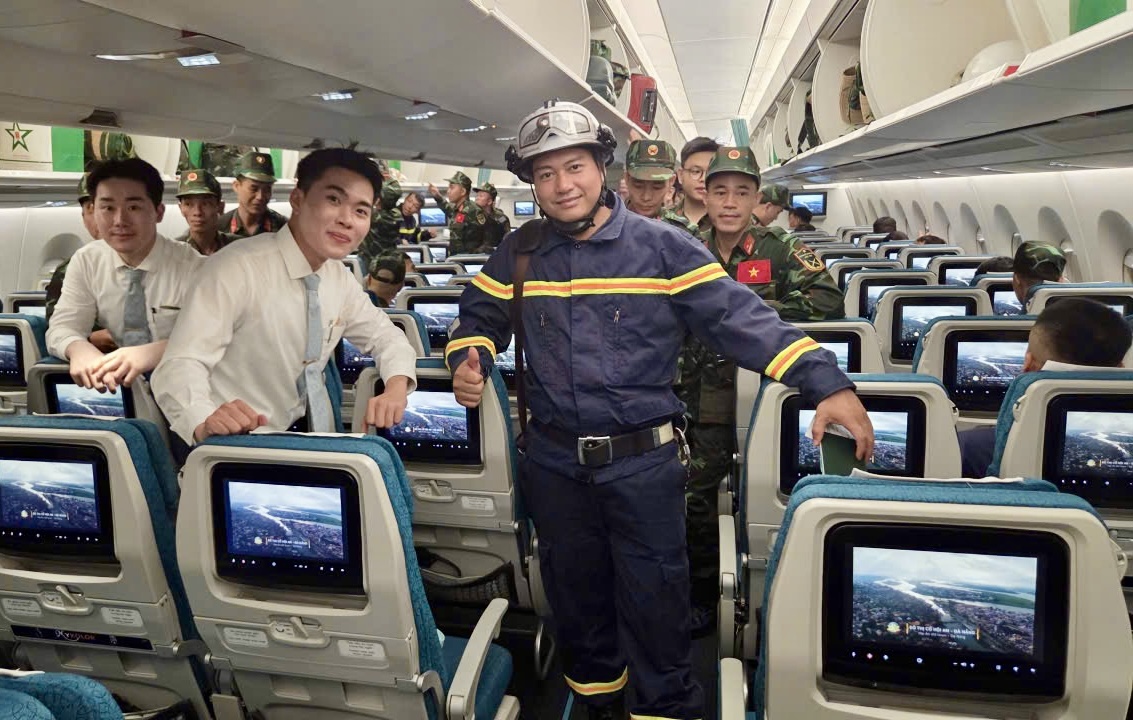
Vietnam Airlines transported 124 personnel and 10 K9 dogs from the Ministry of National Defense and the Ministry of Public Security to Venezuela on 29/6 for humanitarian efforts. Photo: Vietnam Airlines |
Vietnam Airlines, as the national airline, extends its operations beyond commercial flights to fulfill five strategic missions that underscore its vital role for the country. These responsibilities encompass critical humanitarian aid, ensuring the safety of special government flights, strategically expanding its flight network, developing aviation infrastructure and logistics, and promoting Vietnam's national brand on the global stage.
Undertaking urgent humanitarian relief missions
Vietnam Airlines regularly conducts special flights to areas with complex operating conditions or in emergency situations. In late June, the airline operated flight VN66, transporting rescue forces and dozens of tons of equipment to Venezuela for humanitarian work. To complete this half-a-world journey, the technical and operations teams had only 5 hours to devise a plan and secure flight permits across 29 countries. Immediately after, the airline transported nearly 47 tons of additional cargo to support search and rescue efforts in the partner country.
Previously, the airline undertook major operations such as evacuating citizens from the Ukraine conflict zone (2022), rescuing workers in Libya (2011), and bringing rescue forces back from the Myanmar earthquake disaster (2025). During the Covid-19 pandemic, flights to the epicenter of Wuhan or transporting vaccine and medical supplies played a significant role in the nation's epidemic prevention and control efforts.
Ensuring absolute safety for special government flights
One of Vietnam Airlines' most distinct responsibilities is operating special flights for high-ranking leaders of the Party and the State. Each flight must meet the most stringent technical, security, and diplomatic protocol standards. Operating these special flights requires coordinated efforts between the airline and various domestic and international entities.
These flights not only transport leaders to summits or multilateral forums but also contribute to the success of diplomatic activities. They lay the foundation for fostering political, economic, and investment cooperation between Vietnam and its strategic partners worldwide.
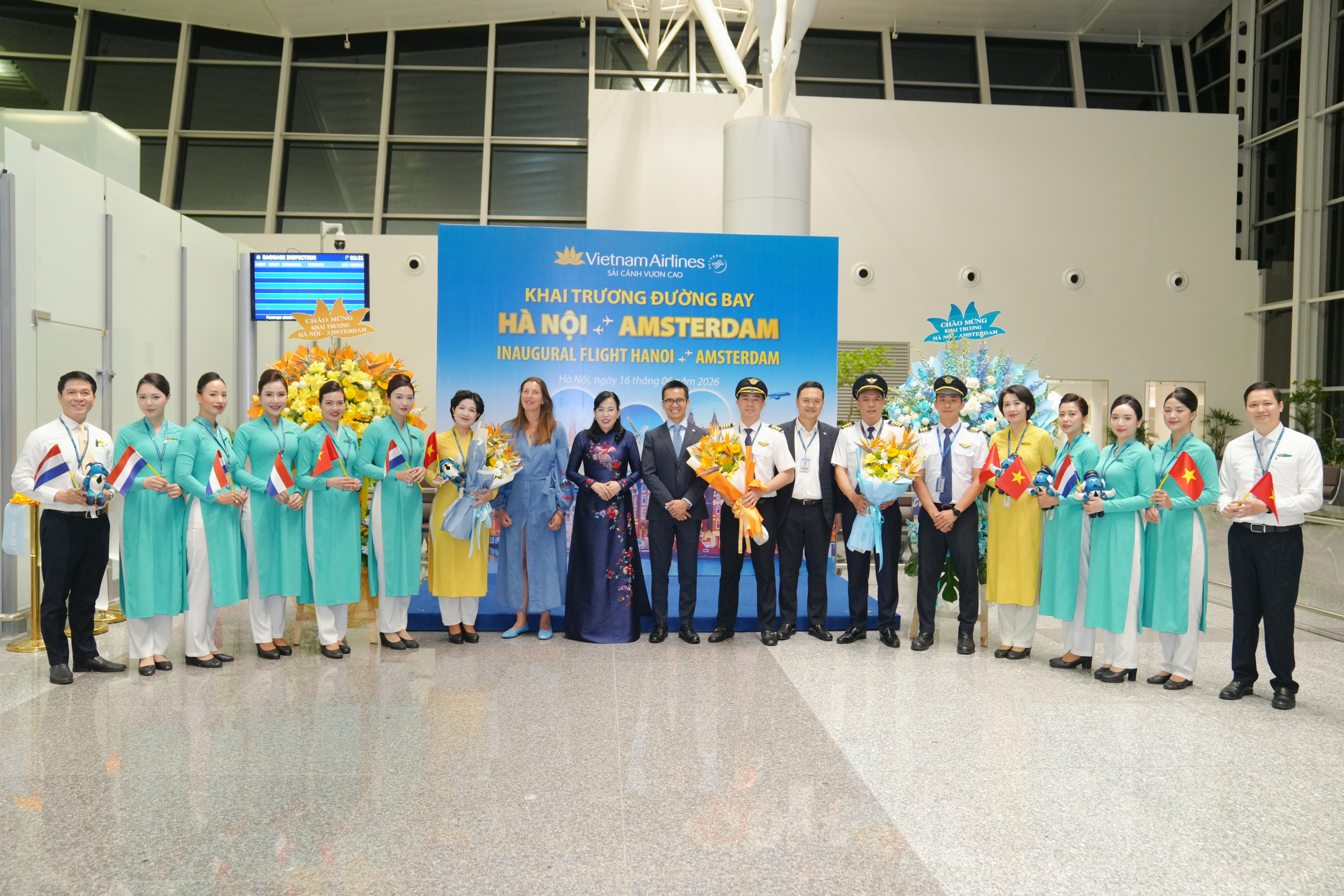 |
Representatives of Vietnam Airlines and partners at the Hanoi - Amsterdam route inauguration ceremony on 16/6. Photo: Vietnam Airlines |
Expanding the flight network in line with foreign policy goals
Vietnam Airlines frequently announces new routes or increased frequencies for direct flights immediately following high-level visits, creating momentum for trade and tourism. In July, the airline increased the Hanoi - Moscow route to 4 flights per week after resuming operations. In Sri Lanka, the airline also advanced its plan to launch the TP HCM - Colombo route from mid-August. This marks the first direct flight between Vietnam and the South Asian nation, expected to significantly boost trade cooperation.
In international cooperation, the airline signed an agreement to purchase 50 Boeing narrow-body aircraft valued at over 8 billion USD in the US. According to a Vietnam Airlines representative, this agreement not only enhances operational capacity but also strengthens the Strategic Partnership between Vietnam and the US.
Building aviation connectivity infrastructure and logistics
Vietnam Airlines currently operates a network of 120 routes, connecting 22 domestic and 41 international destinations. This year, the airline continues to expand its presence in Europe with the Hanoi - Amsterdam (Netherlands) route and in Southeast Asia with the TP HCM - Phuket (Thailand) route.
In addition to passenger transport, the airline aims to operate dedicated cargo aircraft. Proactive aviation logistics capabilities help domestic businesses reduce costs, increase competitiveness, and participate more deeply in the global value chain. The airline's business performance also contributes significantly to the State budget, maintaining annual payments exceeding 3,000 billion VND during the 2022-2025 period.
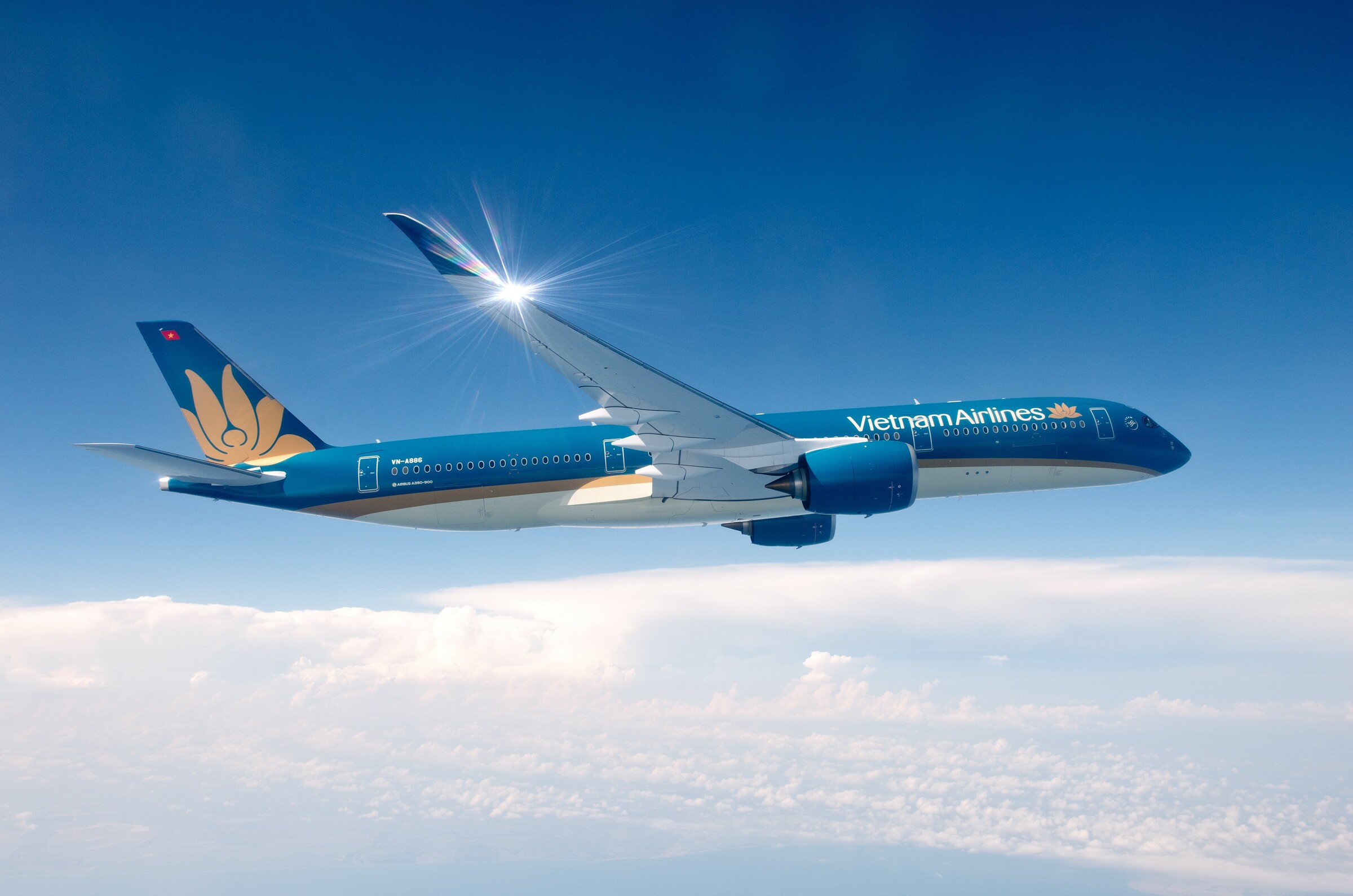 |
The airline's aircraft feature the golden lotus symbol. Photo: Vietnam Airlines |
Promoting the national brand in the international market
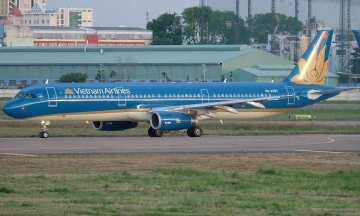
As a member of the SkyTeam alliance, Vietnam Airlines integrates advanced global service and management standards into its operations. "Each aircraft bearing the golden lotus symbol serves as a cultural ambassador. From the image of flight attendants, in-flight cuisine, to service style, all embody Vietnamese identity, helping to spread a professional and hospitable image of the country to international friends," a Vietnam Airlines representative shared.
According to its development orientation until 2035, Vietnam Airlines plans to increase its fleet size to approximately 150 aircraft by 2030 and exceed 200 aircraft by 2035. Investing in a modern fleet and expanding its network to strategic markets such as North America and the Middle East affirms the airline's determination to enhance national competitiveness in international skies.
Dang Ngoc Hoa, Chairman of the Board of Directors of Vietnam Airlines, emphasized that the role of the National Airline is not just a title but a responsibility to act for political missions and the country's interests in all situations. "Intercontinental flights or newly opened direct routes are testament to our continuous efforts in connecting Vietnam with the world," said Hoa.
Thanh Thu