Vietnamese consumers are driving significant growth in the beauty and personal care market, with spending projected to exceed USD 2.7 billion. According to data from German firm Statista, presented by experts at a recent cosmetics and healthcare supply chain event in Ho Chi Minh City, the market is expected to reach USD 2.74 billion by 2025 and is rapidly approaching the USD 3 billion mark. This market segment anticipates an annual growth rate of about 3.3% until 2029.
The personal care segment is set to account for the largest share of this market, estimated at USD 1.2 billion by 2025. Skincare and cosmetics are the fastest-growing categories, as Vietnamese consumers increasingly prioritize skin health and overall quality of life. Michelle Delac, Vice President of Personal Care at DKSH Chemical Ingredients, noted that Vietnam's beauty sector alone is experiencing double-digit growth, significantly exceeding the global average.
"This growth is fueled by a rising middle class, a young population, the widespread adoption of digital platforms, and the strong influence of the K-Beauty trend (Korean beauty industry)," Delac stated at the "DKSH Beauty Show 2026" on 10/7.
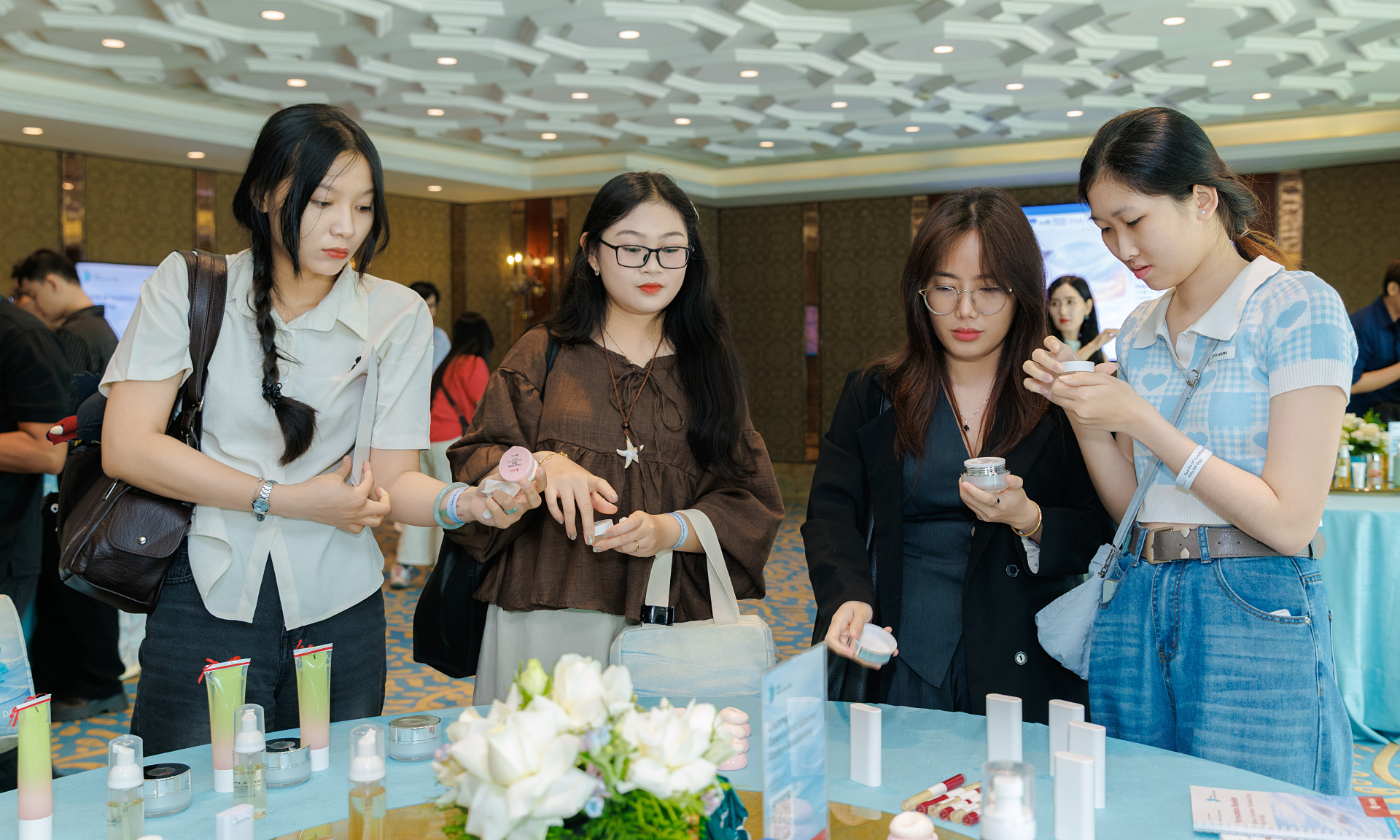 |
Visitors explore products displayed at DKSH Beauty Show 2026. Photo by event organizers |
Visitors explore products displayed at DKSH Beauty Show 2026. Photo by event organizers
Indeed, the beauty industry currently generates the largest gross merchandise value (GMV) in e-commerce. Metric reported that in 2025, Vietnamese consumers spent approximately VND 74.5 trillion on beauty products across four major e-commerce platforms: Shopee, TikTok Shop, Lazada, and Tiki. This trend continued into Q1, with the beauty category maintaining its top position, selling nearly 160 million products and generating close to VND 24.5 trillion in revenue, a more than 35% increase compared to Q1 2025. Many brands attribute significant momentum to their online channels.
For instance, Rohto-Mentholatum (Japan), the manufacturer of Hada Labo, LipIce, Acnes, and Sunplay, reported a 2.5 times increase in revenue on Lazada during Q1 compared to the same period last year. Similarly, Maybelline emerged as the leading make-up brand by sales on TikTok Shop in April, selling 75,000 lipsticks during a three-day campaign.
Looking ahead, experts predict that "clean beauty" will rise in prominence. Clean beauty is a cosmetics trend that prioritizes safe, transparent, and health- and environment-friendly ingredients. This market is projected to grow from USD 10.5 billion in 2025 to USD 35.3 billion by 2033. However, Delac cautioned that while clean beauty in Vietnam often emphasizes natural ingredients, "natural does not equate to safe." She highlighted that plant extract ingredients can vary between batches, underscoring the need for strict and transparent standards throughout the supply chain, from cultivation and input testing to production.
Furthermore, Vietnam's cosmetics and personal care market is undergoing significant legal transformation. Experts note that new regulations increasingly focus on product documentation, traceability, and accountability across the entire supply chain. Hoang Thi To Nga, Director of Chemical Ingredients at DKSH Vietnam, observed that the quality gap between domestic and international brands is narrowing. Domestic products are gaining popularity, creating opportunities for manufacturers to enhance compliance, product management, and transparency with customers.
"Consumers are knowledgeable about ingredients, meticulously reading packaging and labels," Nga explained. "Providing accurate and complete information is how businesses build trust."
By Dy Tung