During discussions with European partners, Vietnamese export businesses no longer solely face questions about product quality or price. Instead, criteria such as the carbon emissions of goods, compliance with chemical regulations, and a company's sustainable development strategy are becoming crucial requirements in the evaluation and selection of suppliers.
This reflects a shift in global trade standards, where environmental and sustainable development factors increasingly directly impact market access.
Specifically, from 1/1, the European Union's (EU) Carbon Border Adjustment Mechanism (CBAM) entered its official implementation phase. In the initial stage, this mechanism applies to a number of high-emission product categories, including iron and steel, aluminum, cement, fertilizers, electricity, and hydrogen.
According to regulations, EU importers must declare the emissions associated with goods and fulfill corresponding financial obligations. This means non-EU manufacturers need to provide transparent, traceable, and verifiable emission data using an EU-accepted methodology. A lack of data, or data that does not meet requirements, can affect the competitiveness of goods in the European market.
In addition to CBAM, the EU's REACH Regulation continues to impose requirements on export products regarding the registration, evaluation, authorization, and restriction of chemicals. Businesses must demonstrate that their products comply with the list of restricted or authorized substances before introducing goods to this market.
In the textile, garment, footwear, and fashion sectors, the Zero Discharge of Hazardous Chemicals (ZDHC) program is also increasingly adopted by international brands for their supplier systems. The program's goal is to gradually eliminate hazardous chemicals in the production process, enhance chemical management, and control wastewater throughout the supply chain.
Concurrently, ESG (Environmental, Social, and Governance) is becoming an important criterion when multinational corporations select partners. Beyond business performance, companies are increasingly evaluated based on their risk management capabilities, information transparency, and sustainable development strategies.
The common thread among these standards is the demand for data transparency across the entire supply chain, rather than focusing solely on the final product.
In late May, a seminar titled "Responding to CBAM and REACH – ZDHC Standards: Promoting Green Transformation, Enhancing Business Competitiveness" was held in Hai Phong. The seminar recorded many opinions from the business community regarding the challenges of meeting green standards for export markets.
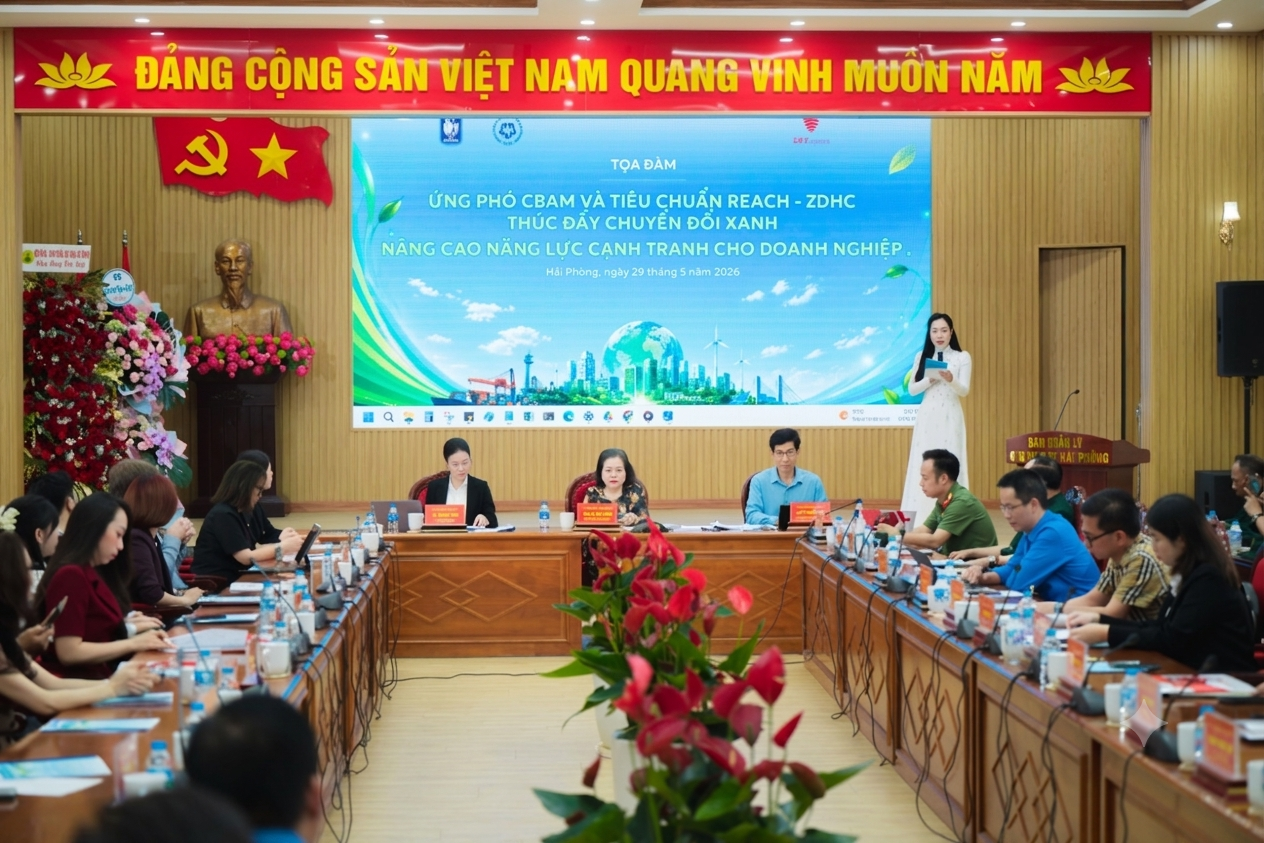 |
The seminar "Responding to CBAM and REACH – ZDHC Standards: Promoting Green Transformation, Enhancing Business Competitiveness" held in Hai Phong. Photo: 247Express |
The seminar "Responding to CBAM and REACH – ZDHC Standards: Promoting Green Transformation, Enhancing Business Competitiveness" held in Hai Phong. Photo: 247Express
Hai Phong is one of the large industrial and logistics centers in the Northern region, with a high proportion of goods exported to the EU market. Consequently, local businesses, especially small and medium-sized enterprises, are facing increasing pressure to meet new environmental, data, and governance standards.
According to experts at the seminar, the transformation process is no longer just a concern for manufacturing companies. Every link in the supply chain, from raw materials and production to logistics, plays a role in providing data to meet market demands for transparency.
Participating in the program as a partner, 247Express – a company providing delivery services for businesses in Vietnam – stated its objective was to update on new market requirements and understand the difficulties faced by export businesses during adaptation.
According to the company representative, when customers need to calculate and provide emission data associated with goods, transportation activities also become a part of the emission picture. Information on travel distance, mode of transport, fuel consumption, or emissions generated during the delivery process can all be used to compile supply chain data.
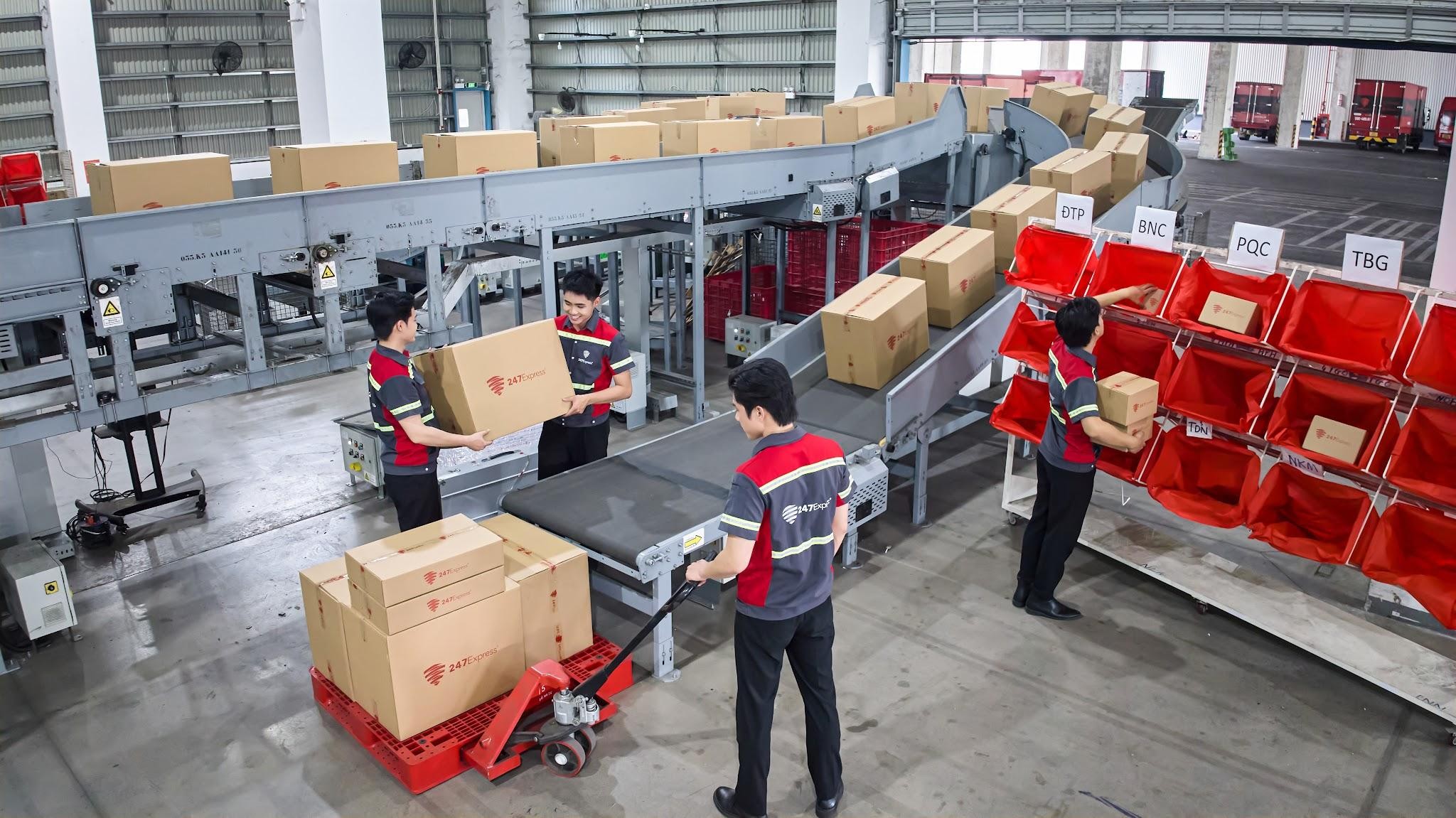 |
247Express is optimizing operations to adapt to the new situation. Photo: 247Express |
247Express is optimizing operations to adapt to the new situation. Photo: 247Express
Based on this reality, 247Express stated it is gradually optimizing its operations by enhancing vehicle utilization efficiency, optimizing delivery routes, researching the application of electric vehicles on suitable routes, and standardizing operational data to meet increasing demands for transparency from customers.
As green standards continue to expand globally, the adaptability of each link in the supply chain will increasingly affect a company's competitiveness. For the logistics sector, the role extends beyond merely transporting goods to providing data, helping businesses meet new requirements of export markets.
The Dan
Cong ty Co phan Hai Bon Bay (247Express), established in 2005, specializes in providing express delivery solutions for businesses in Vietnam. With over 200 post offices covering nearly 34 provinces and cities nationwide, a professional staff, and a smart technology platform, the company offers flexible, optimized transportation solutions tailored to each business model, meeting needs from domestic to international. Over 20,000 corporate clients have chosen 247Express as their transportation partner.