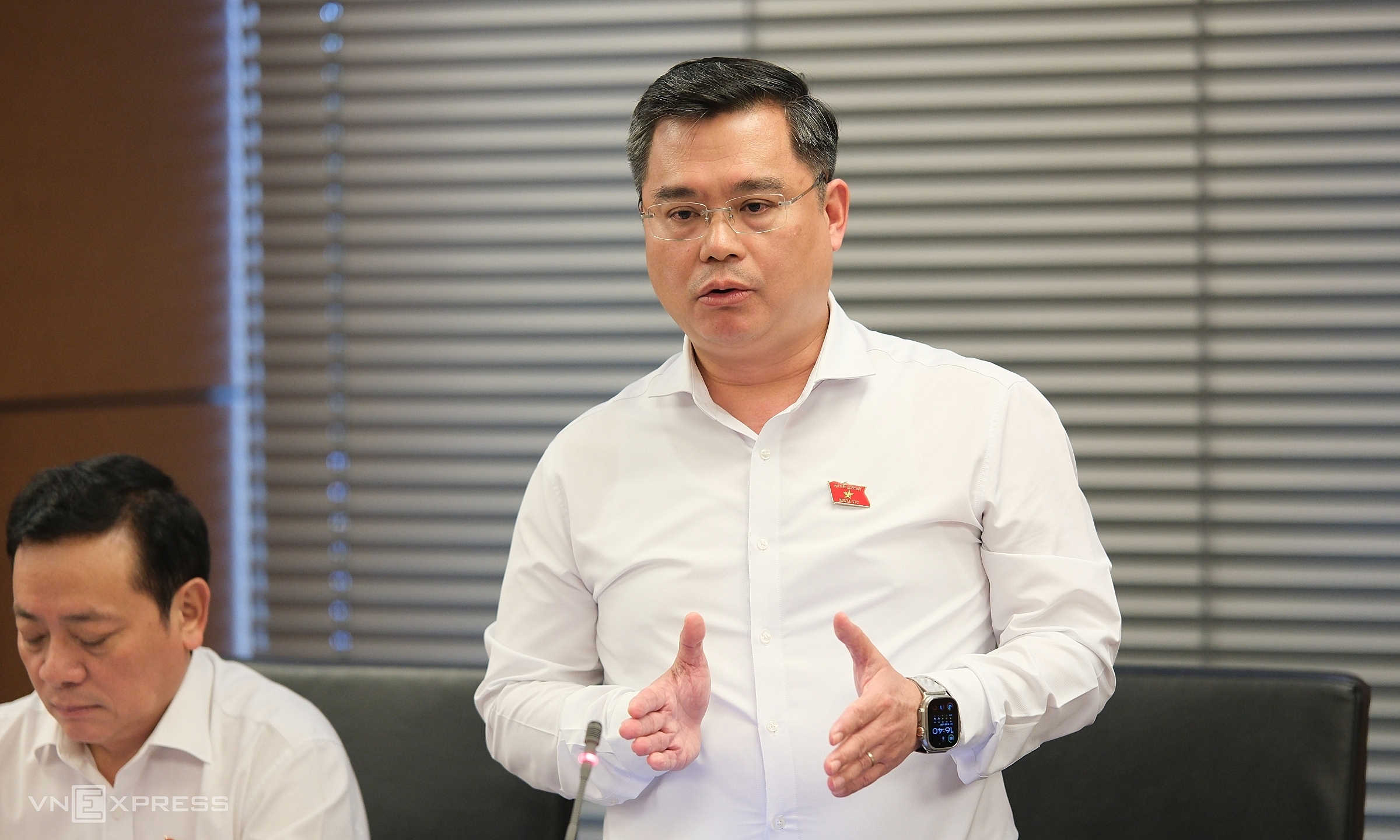
Hoang Thu Hang, Deputy Director of the Department of Housing and Real Estate Market Management under the Ministry of Construction, announced at a growth drivers workshop organized by Thanh Nien newspaper on 8/6 that the ministry is finalizing draft amendments to the Housing Law and the Real Estate Business Law. These amendments are expected to be submitted to the National Assembly during its upcoming October session.
According to Hang, the Ministry of Construction will investigate tax, land, and credit incentive mechanisms. These mechanisms aim to attract maximum social resources, especially private capital, to participate in the development of the rental housing segment. This initiative will provide workers, laborers, officials, public employees, and armed forces personnel with greater access to suitable housing options.
Developing rental housing currently faces two major bottlenecks: capital and land.
Regarding capital, the challenge lies in ensuring rental prices are low enough for workers to afford, while investors face lengthy capital recovery periods. Hang stated, "Few investors are willing to commit significant capital for small returns. Renting for 50 years would reduce prices, but also extend the payback period." Therefore, businesses need access to long-term loans with suitable interest rates.
The second challenge is the availability of clean land. Many localities lack synchronized development between housing and social infrastructure, such as healthcare, education, commerce, and services. Hang noted that rental housing projects located too far from residential areas or employment hubs struggle to attract tenants.
To address these issues, the Ministry of Construction proposes that localities review their planning. They should prioritize rental housing development in large urban areas, industrial zones, and areas with high concentrations of workers to ensure operational effectiveness. "Investing in densely populated areas ensures tenants. If built in desolate areas, properties will remain vacant even after completion", Hang emphasized.
 |
Hoang Thu Hang, Deputy Director of the Department of Housing and Real Estate Market Management (Ministry of Construction), spoke at the workshop on 8/6. Photo: Thanh Nien newspaper
Although policies for rental housing development are outlined in the Housing Law 2023, alongside for-sale and rent-to-own housing, this segment has seen limited growth. This limitation persists despite increasing demand driven by rapid urbanization, particularly in major cities.
General Secretary and President To Lam, along with the Prime Minister, have directed localities to accelerate rental housing development. The Ministry of Construction is tasked with implementing three core objectives. The first is to complete institutional frameworks and policies. The revised approach aims to shift from primarily developing commercial housing to simultaneously developing commercial housing, social housing, and rental housing.
In addition to rental housing, the Ministry of Construction is collaborating with other ministries and sectors to resolve issues in the real estate market. These efforts aim to increase the supply of affordable housing.
Currently, approximately 4,500 real estate projects nationwide face difficulties, with a total stagnant capital of around 3.3 million billion VND. To date, ministries and localities have resolved issues for over 1,000 projects, unlocking nearly 800 trillion VND in investment capital.
According to a Ministry of Construction representative, resolving these stalled projects not only releases resources for the economy but also adds supply to the market. This contributes to reducing housing prices and improving housing accessibility for citizens.
Phuong Dung