The proposal from Military Bank (MBBank) was outlined in a consolidated report on the draft amendments and additions to the Decree on cashless payment.
According to the draft, the State Bank of Vietnam plans to add a regulation allowing banks to proactively close accounts that have no transactions for three years or more. The regulator stated this timeframe is based on the practices of several countries. For example, the United States classifies accounts inactive for 3-5 years as dormant, while the UAE places accounts with no transactions for over three years on a separate monitoring list.
However, banks are actively reviewing and closing payment accounts inactive for over one year and find this period suitable.
Some institutions, such as Vietcombank and HSBC, advocate for this to be a decision left to individual banks. They suggest that, given specific conditions, banks should have the discretion to close or maintain accounts, unless otherwise agreed upon with the account holder.
Meanwhile, BIDV proposes a regulation to maintain accounts with a balance greater than 0, while closing accounts with zero balance and no transactions for three years (calculated from the last transaction date). This bank also suggests excluding accounts opened for specialized purposes, such as direct investment capital accounts, indirect investment, or foreign borrowing and debt repayment.
“Due to operational specifics, many customers do not make transactions for extended periods but still need to maintain specialized accounts for future needs,” BIDV commented.
In practice, many banks, including LPBank, NCB, Sacombank, and VIB, have already closed or changed the status of inactive payment accounts. The conditions for dormancy periods and minimum balances vary among institutions, ranging from one to two years and less than 50,000 VND. The minimum balance typically depends on account maintenance fees, allowing banks to deduct these fees before closing an account.
According to the State Bank of Vietnam, closing accounts with no transactions for long periods aims to mitigate fraud and scam risks. For banks, this helps conserve resources used for system maintenance, service quality, and security.
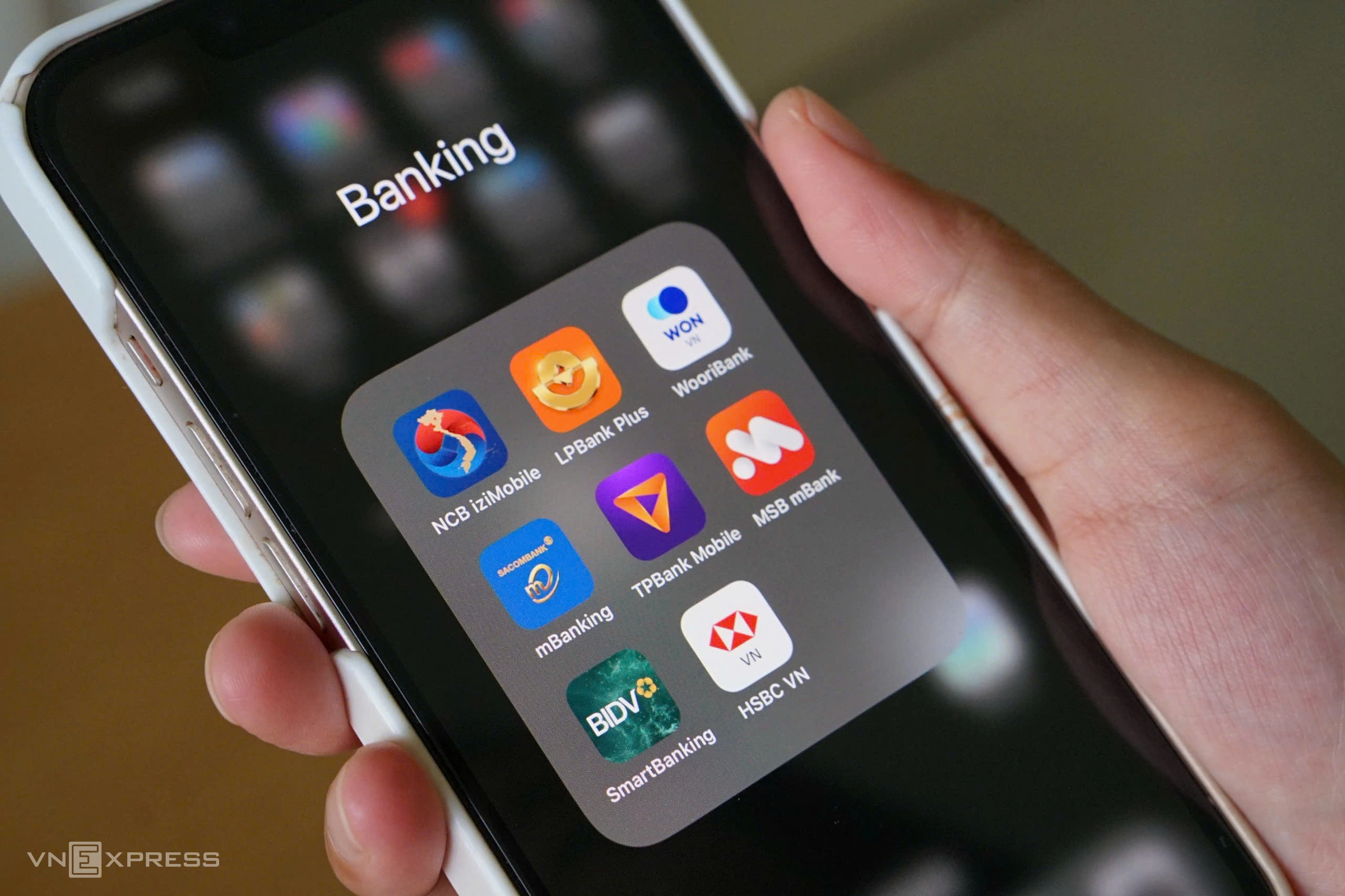 |
Mobile applications of several banks. Photo: Phuong Dong |
However, banks are concerned about the principles for handling remaining balances after closing dormant accounts. They raise questions regarding the monitoring period for these balances, their treatment after this period, and whether banks would be liable for interest if a legal beneficiary requests a refund.
In some countries, remaining balances are transferred to state governments for management, held as unclaimed property. Customers can reclaim these funds through the state's unclaimed property authority.
However, according to the State Bank of Vietnam, the balance in an account remains the customer's property. Currently, there is no legal basis for transferring remaining balances from closed accounts into the state budget. The drafting agency stated it would review feedback and establish specific regulations in a circular, following the decree's issuance.
Phuong Dong