


On 14/5, US President Donald Trump stated on Fox News that China had agreed to purchase 200 Boeing aircraft. "Today, he agreed to one thing, which is to order 200 aircraft. This is a large number. Boeing only needed to sell 150, but it got 200", he said, referring to Chinese President Xi Jinping.
This figure, however, was significantly lower than analysts' expectations prior to Trump's visit to China. Jefferies had anticipated Boeing receiving an order for 500 units. Reuters sources also indicated that during discussions preceding the summit between the two nations, the expected number was 500 aircraft. Consequently, Boeing's shares lost 4,7% in the trading session on 14/5.
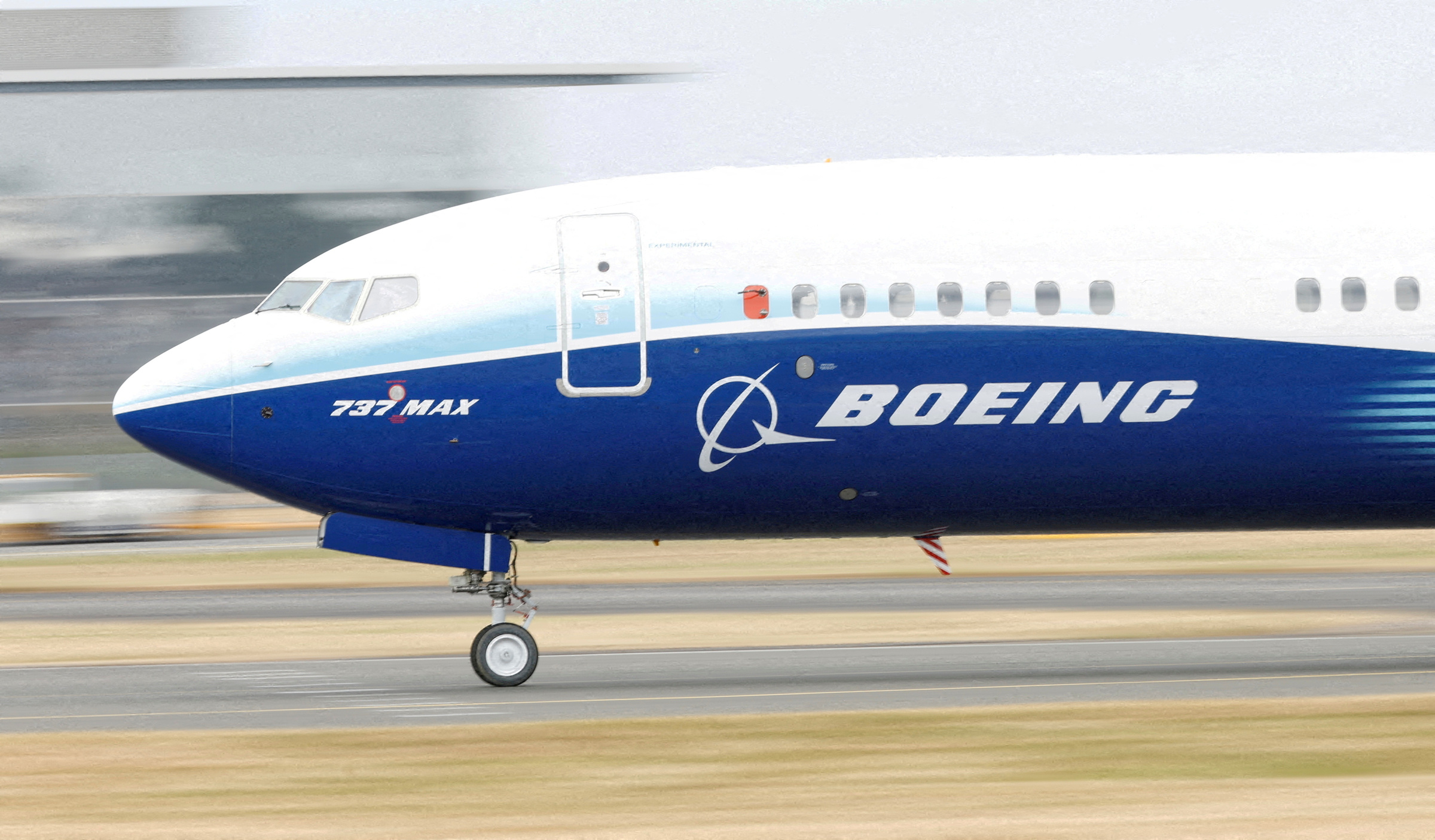 |
A Boeing 737 Max at Farnborough, England, in 7/2022. Photo: Reuters |
A Boeing 737 Max at Farnborough, England, in 7/2022. Photo: Reuters
Boeing has not secured any major orders with China for nearly 10 years. China has recently increased its aircraft purchases from Airbus, Boeing's main competitor.
Trump did not specify which types of aircraft China might purchase from Boeing. However, analysts expect the order to include the company's best-selling 737 Max model.
When announcing last quarter's financial results, Boeing CEO Kelly Ortberg stated that the summit between US and Chinese leaders "is a big opportunity" for them, as it could include aircraft orders. "I cannot disclose the number yet, but it will be a significant figure", he said. Ortberg was part of the business delegation accompanying the US President to China on this occasion.
In 2025, Boeing won the aircraft order race, with net orders last year totaling 1.173 aircraft, surpassing Airbus (889 units). This improvement in orders was a positive sign after a turbulent 2024.
Early in 2024, an Alaska Airlines aircraft had to make an emergency landing due to a door plug malfunction. Later that year, production at the Seattle area was halted for several weeks due to a worker strike. Following the Alaska Airlines incident, the US aircraft manufacturer tightened quality control and production under the supervision of the Federal Aviation Administration (FAA).
In Q1 this year, Boeing reported a 14% increase in revenue compared to the same period last year, reaching USD 22,2 billion, driven by a recovery in its commercial aircraft and defense-aerospace segments. Losses also narrowed to USD 7 million, compared to USD 31 million in Q1 2025.
Ha Thu (according to Reuters, WSJ)


