


 |
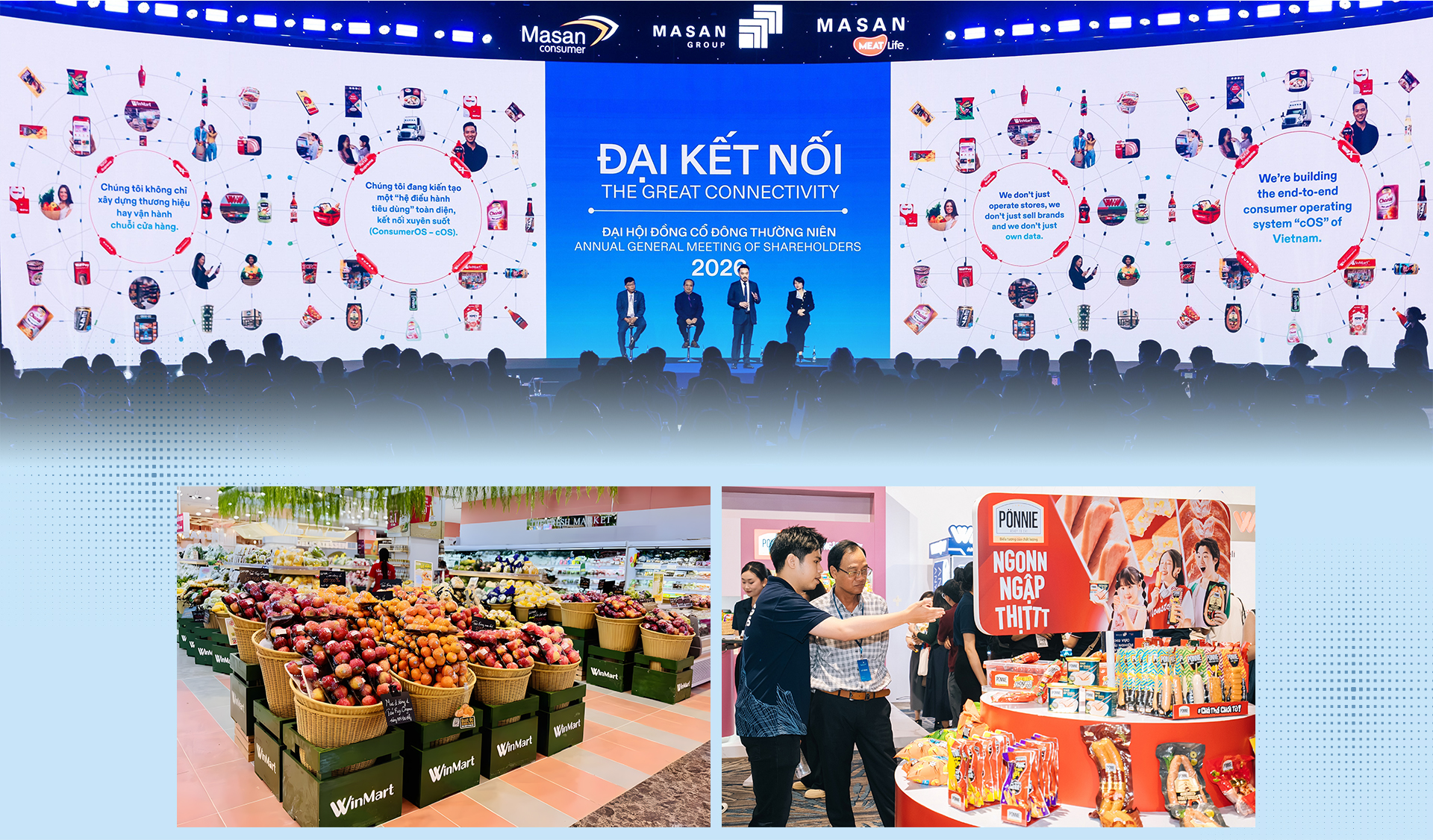
At the 2026 annual general meeting of shareholders, Masan chose "great connectivity" as its theme. On stage, Nguyen Dang Quang, Chairman of Masan Group's Board of Directors, explained the company's shift from a multi-industry model to an integrated platform: "After 30 years of building individual pieces, today we enter a phase of connecting all of them to create an entirely new growth platform." The pieces he referred to are three core pillars: the retail system, consumer brands, and technology.
With these integrated components, Masan continues to accelerate. The unaudited business results report for the first Quarter of 2026 recorded a post-tax profit of 1,974 billion VND, doubling compared to the same period last year. Operating profit (EBIT) from the consumer-retail platform increased to 2,455 billion VND, a rise of 23,6% year-on-year.
 |
 |
Danny Le, Chief Executive Officer of Masan Group, shared a story about a famous beverage company's development, using it as an analogy for the combined model's effectiveness. He noted that these brands are large and have popular products, but they do not own shelf space or control points of sale. Consequently, they rely on retailers to decide which brands and products appear on shelves. These retailers capture profit margins and limit the journey of brands and products to consumers.
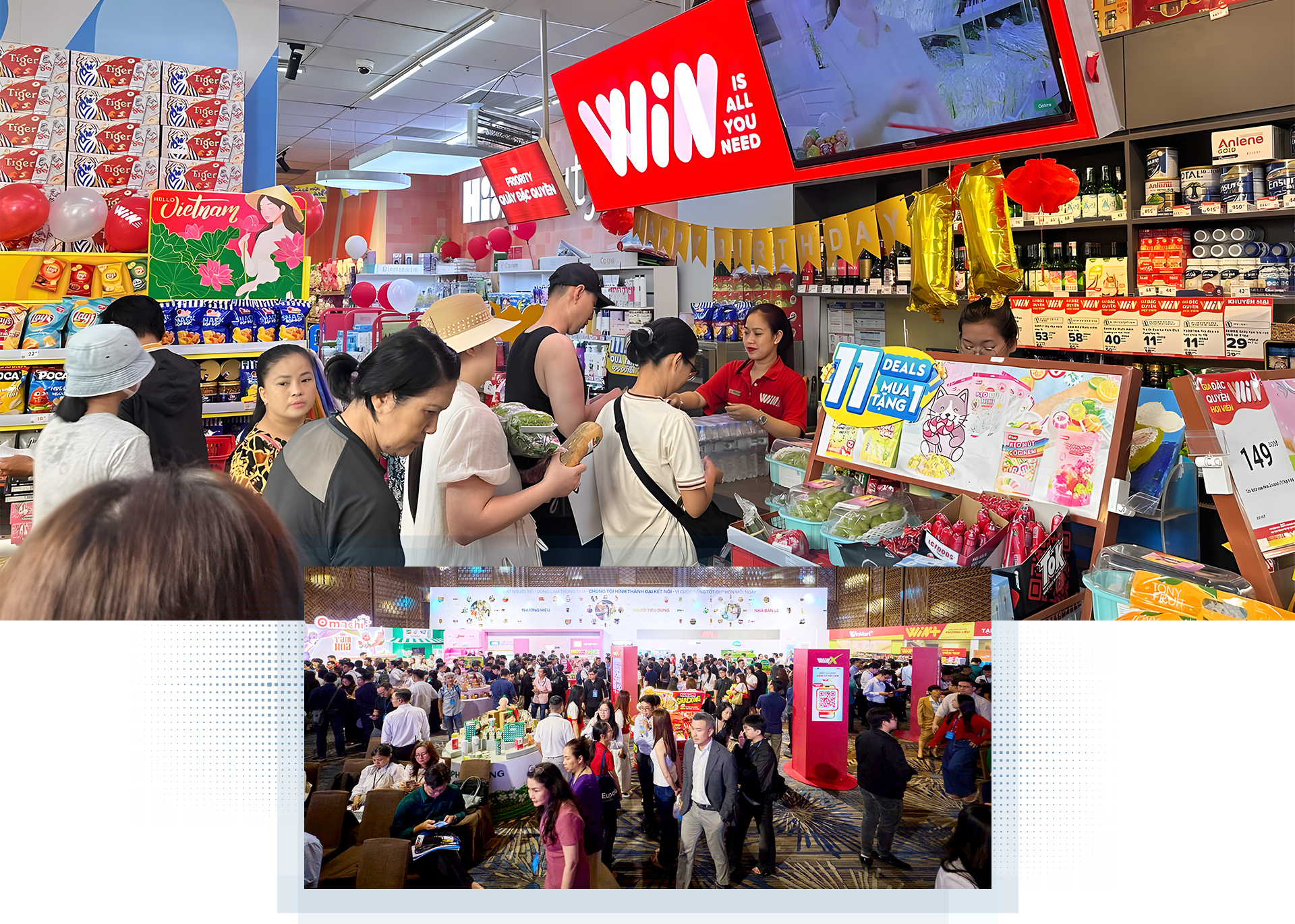
Retail is the first foundational pillar in the "great connectivity" structure, enabling Masan to directly reach consumers. Nguyen Dang Quang stated that acquiring WinCommerce was a strategic turning point over the past 7 years. In 2020, Masan took over the system, which had a loss of approximately 3,000 billion VND. However, after restructuring, the company successfully transformed it and aims for WinCommerce to generate profits equivalent to its previous losses.
 |
According to Quang, WinCommerce's value extends beyond financial efficiency; it lies in establishing a retail platform with extensive coverage. This platform serves as critical infrastructure, bringing products closer to consumers and facilitating the connection of other business segments into the ecosystem.
Building on this foundation, the consumer products and brands pillar generates pull. Danny Le argued that a business with only retail but no strong brands would struggle to create a long-term competitive advantage. Conversely, a brand without control over sales points would depend on external distribution systems. Therefore, Masan chose to integrate these two elements.
 |
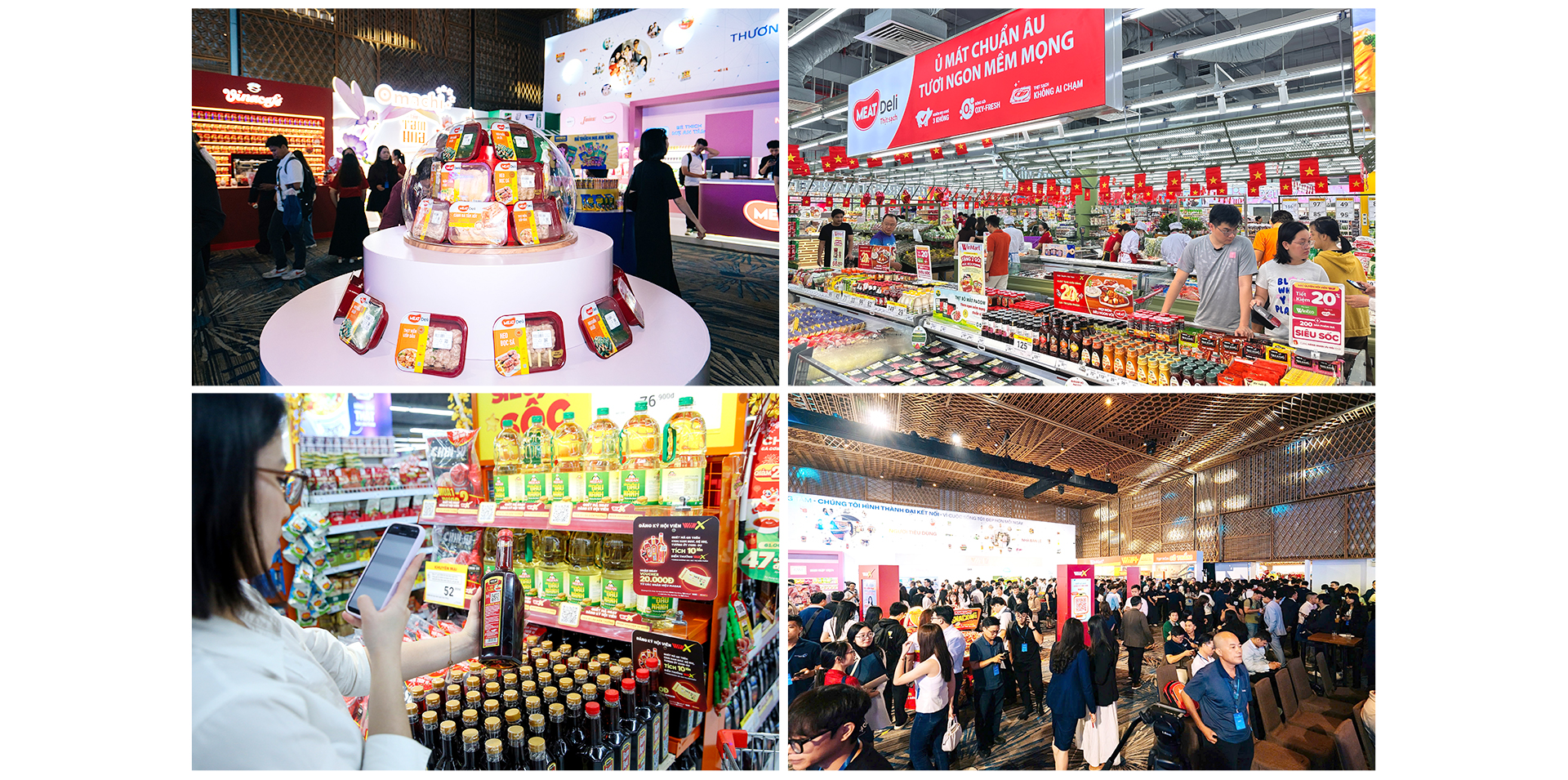
He cited MeatDeli fresh meat as an example: the product is distributed in about 5,000 WinMart, WinMart+, and WiN stores, with average sales of over 2 million VND per store per day. Integrating the product into the retail system allows Masan to better control the journey from production to consumption and fosters new consumer habits.
Nguyen Dang Quang observed that the meat segment still has significant growth potential. Currently, MeatDeli only holds about 2% market share, with a weighted distribution coverage of about 7%. With its retail platform and developing cold chain system, Masan aims to increase coverage to approximately 90% of the market.
"When we achieve this scale, the meat segment can become a growth pillar alongside Masan Consumer in a market worth about 15 billion USD," Quang said.
 |
 |
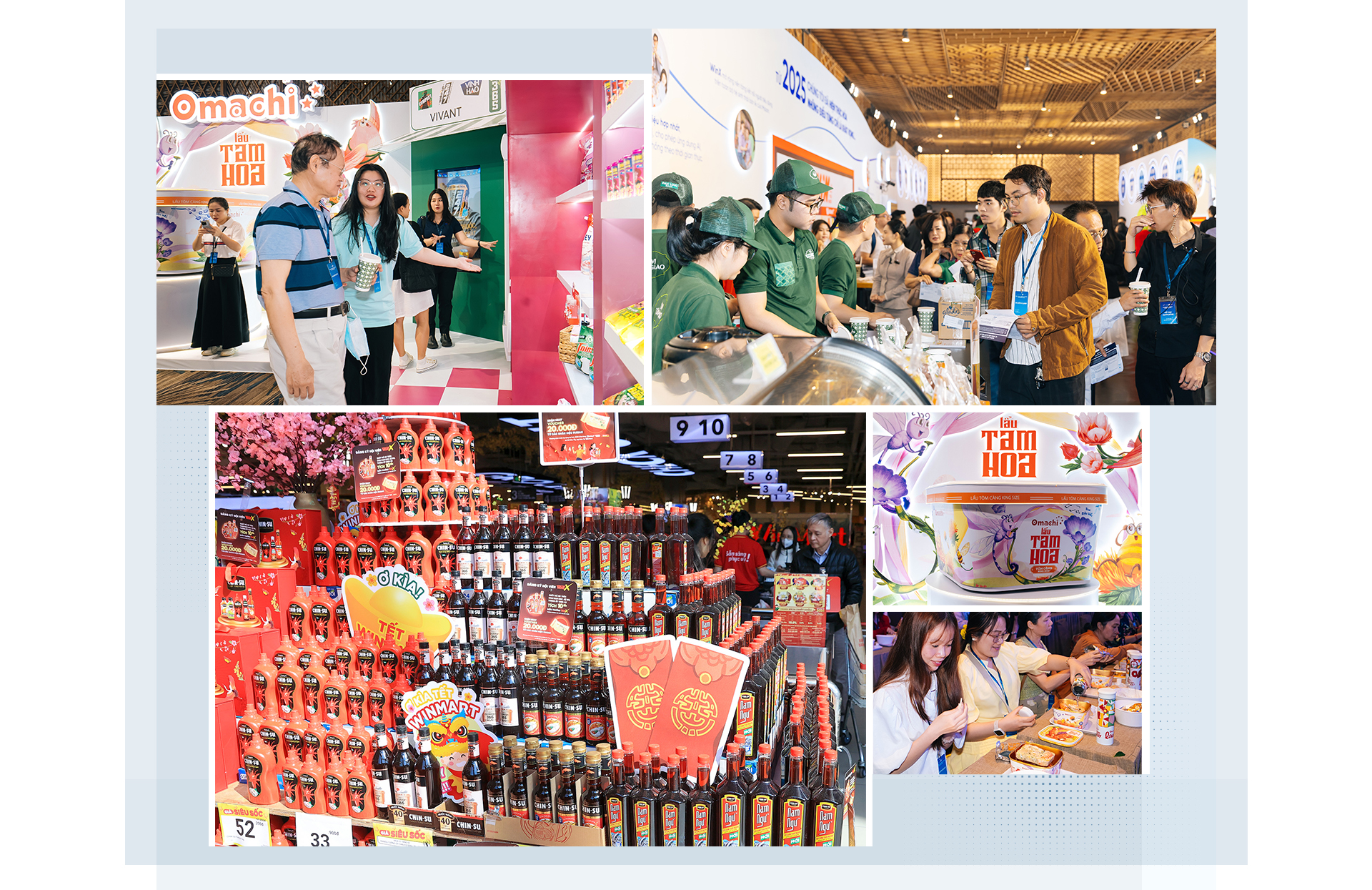
While retail and brands form the growth foundation, technology enables Masan to operate efficiently and scale. Danny Le explained that the company invested in technology platforms like WinX, Supra, and the Digital 4Ps system to integrate data across all operations.
According to him, WinX is not just a membership platform; it connects consumers, points of sale, and brands. Through WinX, Masan understands customer shopping behavior, preferences, and feedback. This enables the company to personalize interactions, optimize promotions, and enhance the consumer experience.
At an operational level, data helps Masan transform decision-making. The company now monitors real-time sales and performance for each product and store. This allows Masan to flexibly adjust product portfolios, pricing, and distribution strategies, reducing reliance on market research companies and cutting costs.
 |
In logistics, the Supra platform optimizes Masan's goods distribution. For example, by observing indicators on the Supra platform, the company knows how many stores stock MeatDeli pork belly, identifying fast-selling locations for timely replenishment and preventing stockouts. "That creates scale and efficiency in operations," a company leader stated.
Masan also digitized its entire 4P model: product, price, place, and promotion. According to Danny Le, data allows the company to identify effective products, suitable price points, and priority distribution channels. This leads to faster and more accurate business decisions.
 |
Masan will continue investing in internal technology rather than acquiring external companies. The company built its own data science team and AI tools to address specific challenges, a strategy that helps Masan maintain a long-term advantage.
The integrated model's effectiveness is evident in its cash flow. Danny Le reported that Masan's cash flow from business operations increased from approximately 80 million USD in 2020 to 500 million USD in 2026, demonstrating the efficiency of connecting the three pillars within a unified system.
Nguyen Dang Quang emphasized that the core differentiator of the model lies not just in its business structure, but in the cohesion of the entire ecosystem. Ultimately, these pillars help Masan work towards its goal: enabling consumers to spend 10% less on essential expenditures, meeting daily needs.
Content: Hoang Dan I Design: Hang Trinh I Photos: Masan


