This information was shared at the workshop "Organic fertilizer development orientation - from policy to Phu My strategy," organized by PVFCCo-Phu My on 24/9, in TP HCM.
Opening the event, Nguyen Xuan Hoa, Chairman of the Board of Directors of PVFCCo-Phu My, stated that after many years of intensive cultivation, some production areas have experienced issues related to soil quality degradation. This has created a clearer demand for balanced and sustainable nutritional solutions.
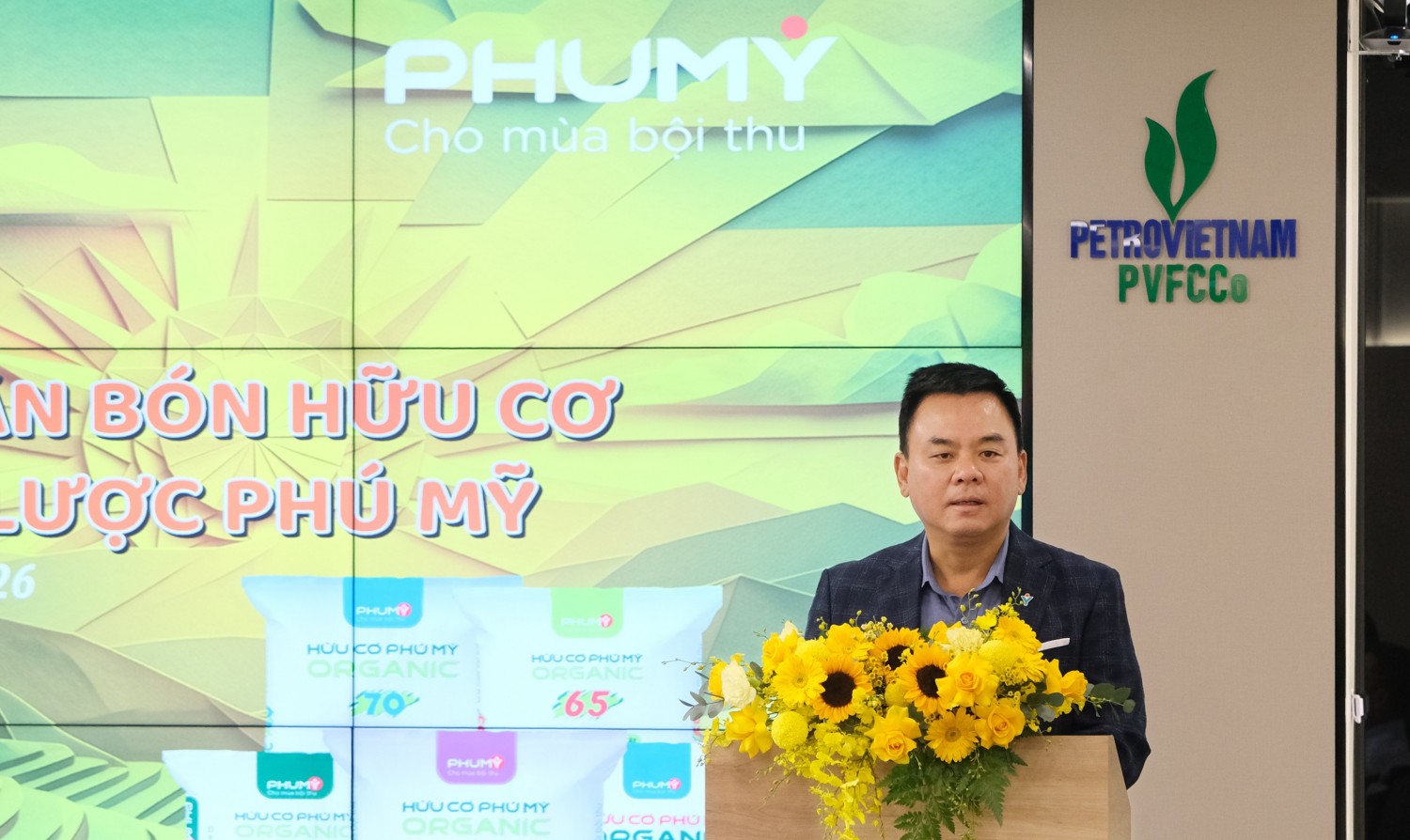 |
According to Nguyen Xuan Hoa, Chairman of the Board of Directors of PVFCCo-Phu My, organic fertilizer development is not a short-term activity but has been defined in the corporation's development strategy. Photo: PVFCCo-Phu My
Hoa emphasized that organic fertilizer development is part of the corporation's growth strategy. This direction aims to diversify the product portfolio, complement the traditional strength in inorganic fertilizers, gradually establish an ecosystem of crop nutrition solutions, and expand new growth opportunities.
In 2025, the company will introduce its organic products to the market with an initial consumption volume of about 3,000 tons. By 2026, the corporation targets expanding the scale to 30,000 tons, while simultaneously implementing various supply sources from Japan, South Korea, and domestic processing. This implementation process helps the company gain practical experience regarding product quality, packaging, logistics, specific market demands in each region, and how to organize the sales system.
At the workshop, Nguyen Le Duc Trong, Deputy Head of Marketing and Communications at PVFCCo-Phu My, presented the Phu My Organic Fertilizer development orientation until 2030. This strategy shifts from providing individual products to comprehensive nutritional solutions, aiming for crop productivity, soil health, and agricultural product quality.
With the message "Revitalizing soil - empowering plants - enhancing Vietnamese agricultural products," Phu My plans to complete its organic product groups. These include organic, organo-mineral, microbial organic, soil improvers, humic, and biochar, which will supplement the inorganic product system. The company also aims to build nutrition programs suitable for specific crops, soil types, and seasons. This orientation combines demonstration models, soil nutrition consulting, field activities, and the application of technology and digital platforms, aiming for long-term partnership with farmers and the distribution system.
During the discussion session, Duong Duc Huy, Director of the Crop Production and Plant Protection Department, emphasized that organic fertilizers should be viewed as complementary to inorganic fertilizers, rather than being separated or seen as a complete replacement. Nutrient use must ensure balance, correct type, proper timing, meet crop needs, and suit each ecological region.
According to Duong Duc Huy, raw materials for organic fertilizer production are diverse, ranging from agricultural by-products and livestock waste to other organic sources. The challenge lies in collection, sorting, processing, and quality control. A well-organized chain can help utilize by-products, develop a circular economy, and reduce environmental impact.
Huy assessed PVFCCo-Phu My's deeper involvement in the organic sector as a positive sign, noting that the company has advantages in production capacity, brand, and distribution system. However, products need to be researched for specific crops, growth stages, and nutritional needs, rather than applying a single formula.
"The crucial measure remains effectiveness in the field. When farmers clearly see the difference in soil, crops, yield, agricultural product quality, and economic efficiency, the production results themselves will convince the market," Huy stated.
From this perspective, developing the organic fertilizer market cannot rely solely on communication or sales policies. Companies must simultaneously invest in research, field models, technical guidance, monitoring results over multiple seasons, and building reliable data to prove usage effectiveness under specific production conditions.
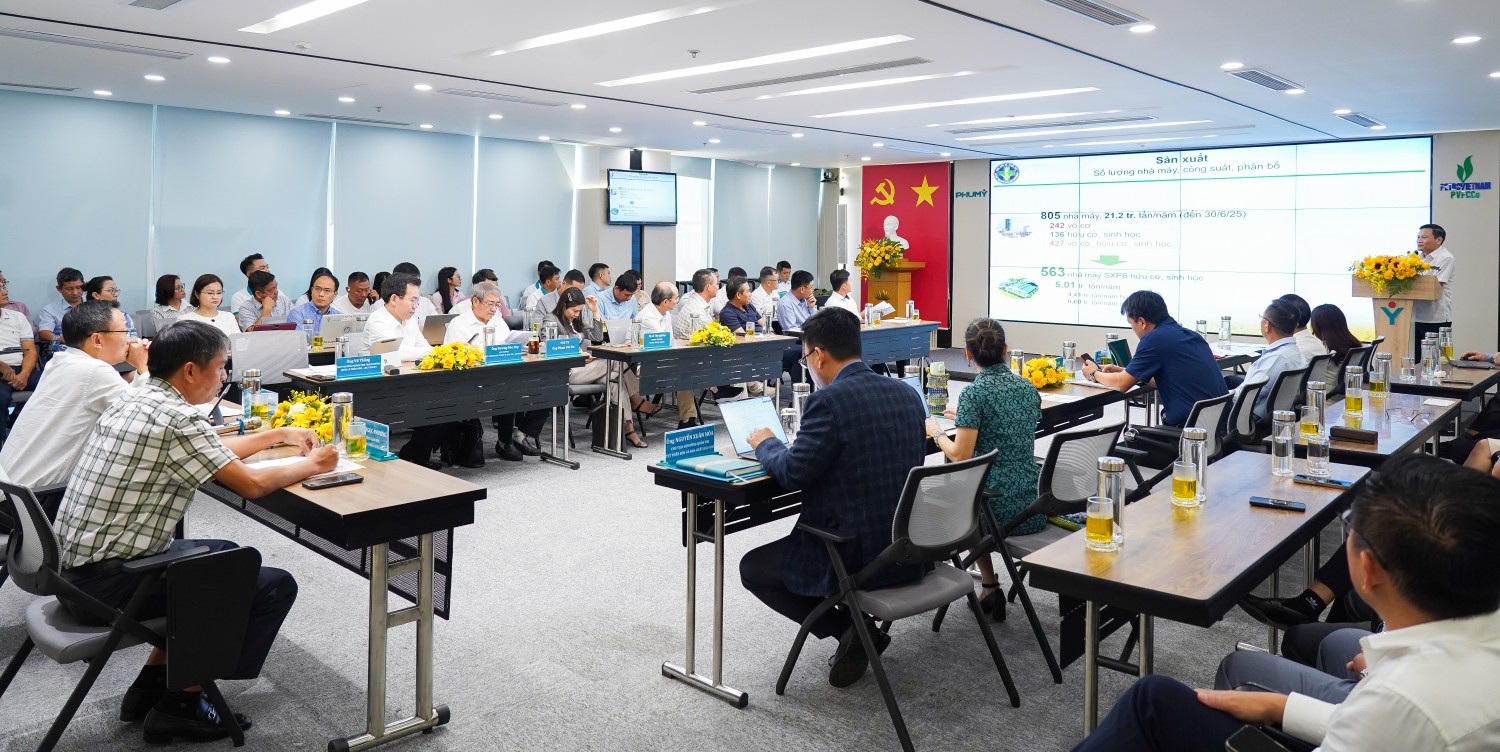 |
Overview of the workshop. Photo: PVFCCo-Phu My
At the workshop, distributors and sales points provided feedback on pricing, packaging, supply, delivery times, and market policies. They suggested that products need competitive prices, packaging suitable for each region, and clear territorial management mechanisms. The ability to supply products during the correct season was also highlighted, as a lack of goods at the right time can cause agents to lose sales opportunities and farmers to switch to other products. Therefore, developing the organic market requires stable supply and a robust distribution system.
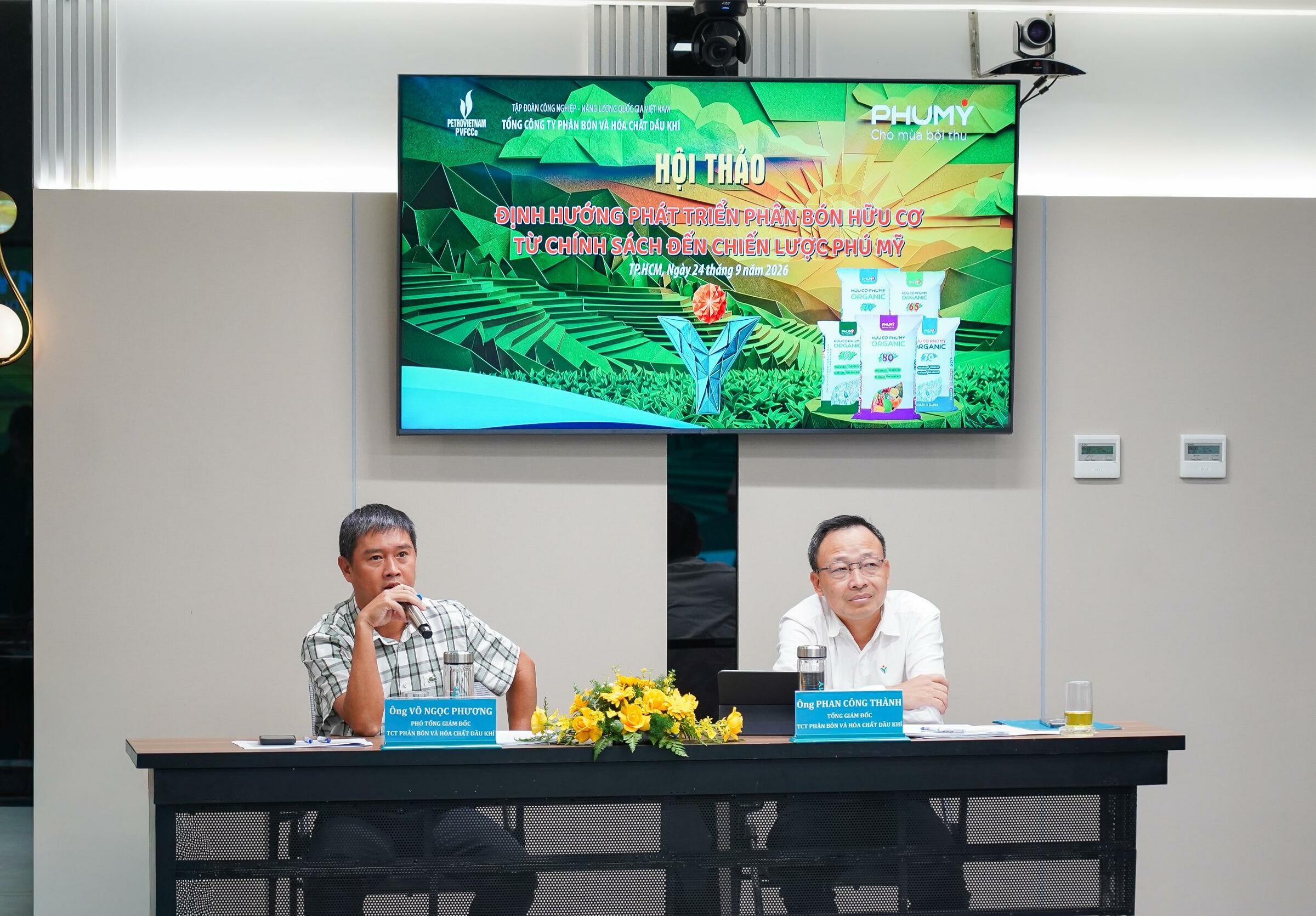 |
Vo Ngoc Phuong, Deputy General Director of PVFCCo-Phu My (left), acknowledged the feedback from workshop participants. Photo: PVFCCo-Phu My
Concluding the discussion, Vo Ngoc Phuong, Deputy General Director of PVFCCo-Phu My, acknowledged the feedback from the delegates. The corporation will continue to work with partners, calculate raw material sources, product supply, and long-term solutions to enhance price competitiveness while ensuring quality and stable supply capacity.
Delegates also proposed that Phu My continue to expand local demonstration models, monitoring results over multiple seasons to generate practical data on yield, agricultural product quality, and economic efficiency. This is considered one of the most direct ways to build trust and gradually change farmers' fertilizer usage habits.
 |
Phan Cong Thanh, General Director of PVFCCo-Phu My, emphasized that organic fertilizer development is a long-term orientation for the corporation. Photo: PVFCCo-Phu My
Concluding the workshop, Phan Cong Thanh, General Director of PVFCCo-Phu My, reiterated that organic fertilizer development is a long-term direction for the corporation. Expanding its scale must be linked to product quality, usage effectiveness, and the harmonious benefits of farmers and all parties in the value chain.
According to General Director Thanh, the insights from the workshop will serve as a basis for the corporation to further refine its products, supply chain, business policies, and market organization. Following the workshop, relevant departments will finalize the organic fertilizer product portfolio and business plan for 2027. They will also develop communication programs, demonstration models, and select key crops, areas, and distribution systems.
The Dan