With over 30 years of operation in Vietnam, Cargill participates in many stages of the agricultural value chain, from raw material supply and animal nutrition to technical consulting and integrated solutions for the livestock industry. The company operates 8 animal nutrition production plants nationwide, meeting diverse market demands.
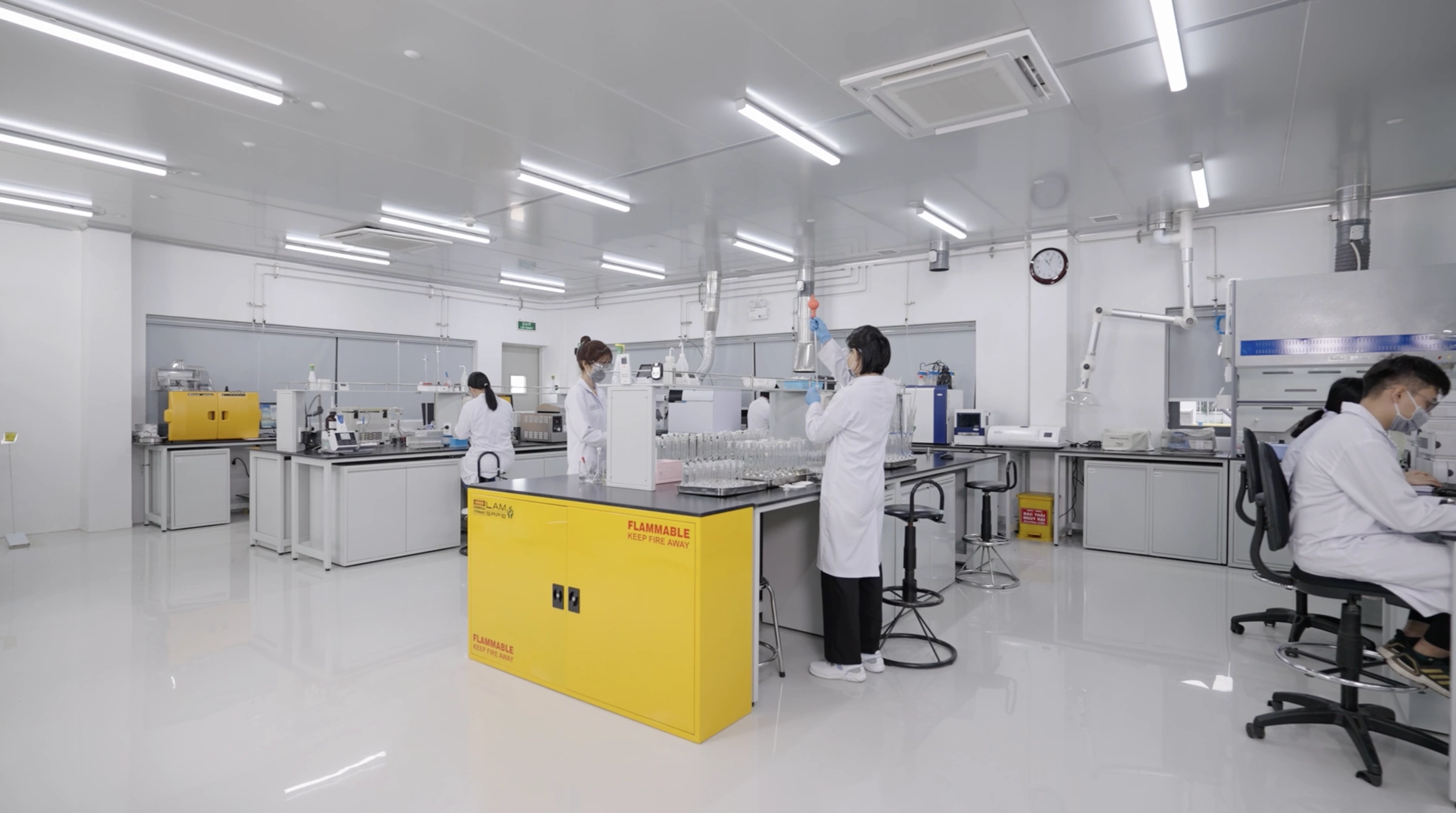 |
Cargill's laboratory. *Photo: Cargill* |
In recent years, the company has continued to expand investment in animal nutrition. In 2023, the Provimi Premix plant in Dong Nai commenced operations with a capacity of 40,000 tons per year, contributing to enhanced supply capabilities for both the domestic and export markets.
As part of Cargill's global animal nutrition network, Provimi focuses on premix solutions, additives, and specialized nutrition for livestock, poultry, and aquaculture. In Vietnam, the plant's operations aim to support farmers in improving feed efficiency, enhancing animal productivity, and optimizing production effectiveness under practical conditions.
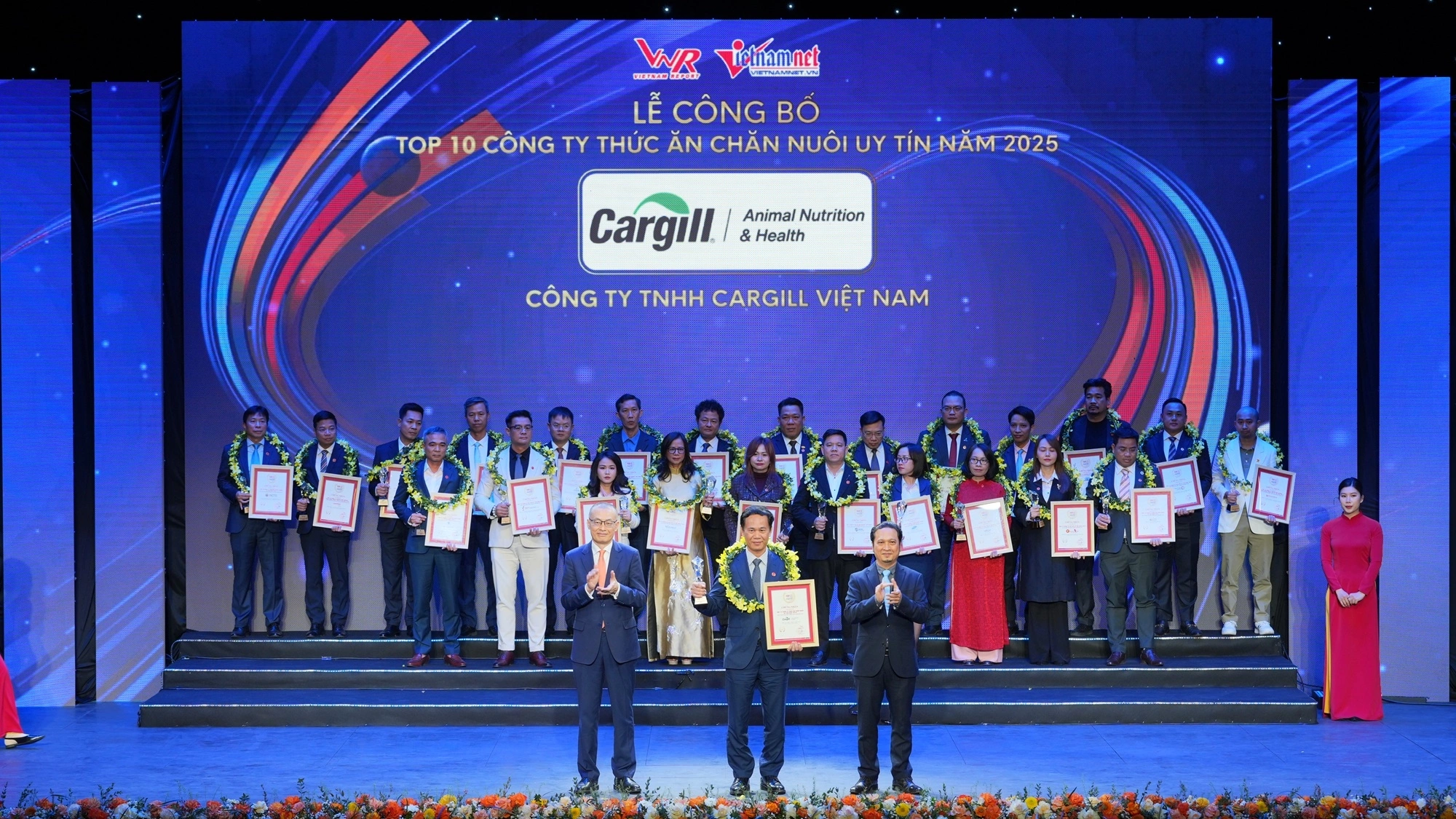 |
Cargill receives the Top 10 Reputable Animal Feed Company Award in 2025. *Photo: Cargill* |
Beyond production capacity, Cargill and Provimi also promote research, technical transfer, and solution consulting to help farmers improve feed utilization efficiency, biosecurity, and farm management, aligning with sustainable development goals. In Vietnam, Cargill and Provimi have been recognized for many consecutive years in industry rankings and awards, such as: Best Foreign Direct Investment (FDI) Supplemental Animal Feed Producer, Asia's Leading Reputable Brand, and Top 10 Reputable Animal Feed Companies.
Guided by its "people-centric" motto, Cargill actively fulfills its corporate social responsibility through initiatives and actions such as school and library construction programs and community development. The Cargill Cares Fund, a philanthropic initiative launched and led by company employees, has donated and sponsored over 190 billion VND since 1996 to implement community programs. To date, the Fund has built 126 schools and 41 libraries, with a goal of completing 150 schools and 100 libraries nationwide by 2030. The company also sponsored 500,000 USD for the "Vuon minh" (Rising Up) project, implemented by Care International and completed in 8/2025, aiming to improve livelihoods for ethnic minority communities in Buon Ho, Dak Lak province.
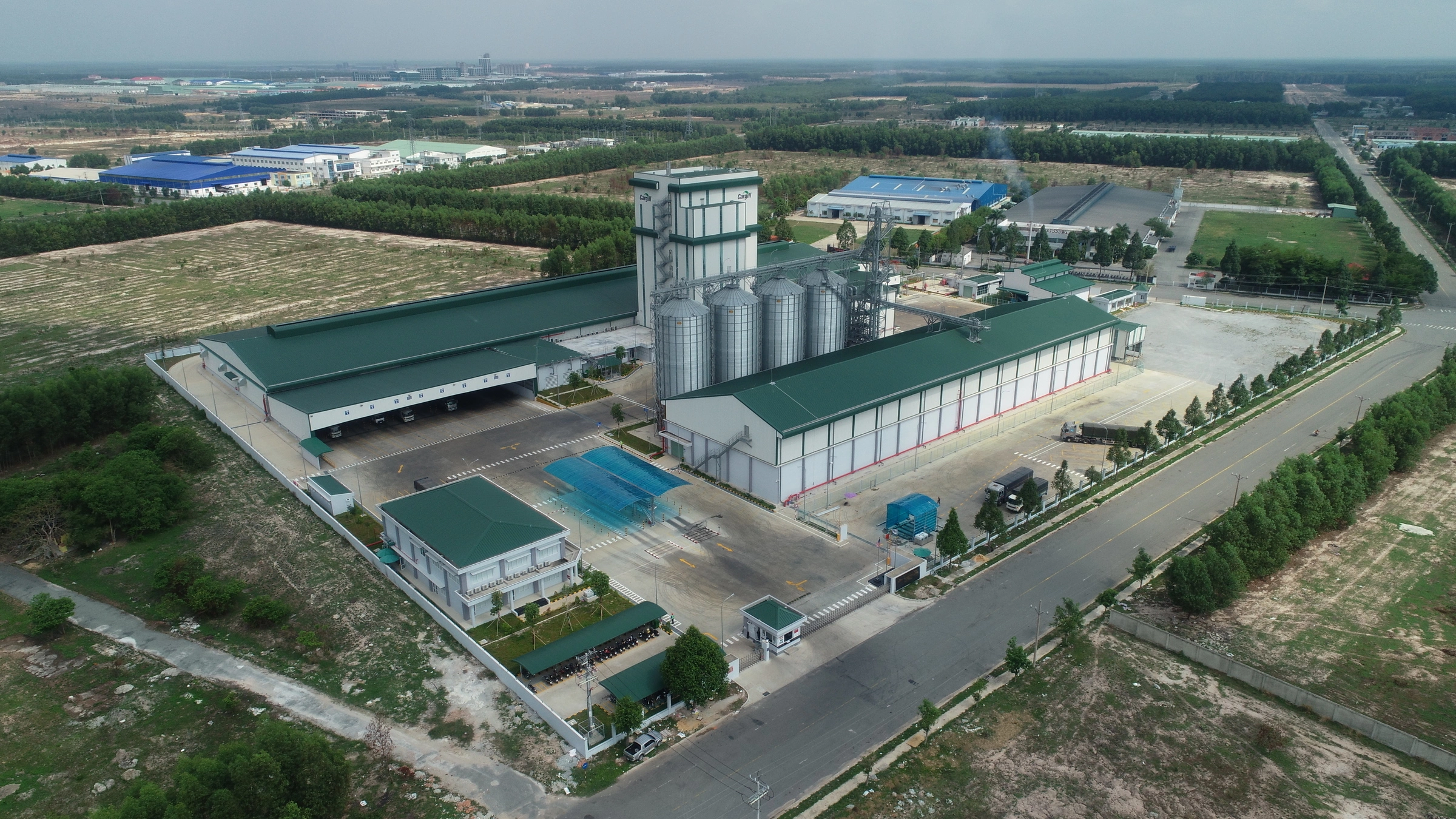 |
Cargill plant in Binh Duong. *Photo: Cargill* |
According to data from the Department of Livestock Production and Animal Health, Vietnam currently ranks 5th globally in pig herds and second in waterfowl herds. In 2025, Vietnam's industrial animal and aquaculture feed production reached over 26,5 million tons, ranking third in Asia and 8th worldwide. A recent international economic study indicates that Vietnam possesses strengths in an accessible food system and abundant supply, yet still faces challenges regarding resilience to climate change.
Against this backdrop, the livestock industry faces many significant challenges concerning biosecurity, disease control, and the capacity to respond to climate risks. Additionally, professionalism in livestock farming has not significantly improved; production costs remain high, with heavy reliance on imports; and competition between domestic and imported livestock products is intensifying. To transition towards sustainable development, many experts suggest that farmers need to enhance their capabilities, shifting from traditional mindsets to professional management, including farm management, disease prevention capacity, and biosecurity. Furthermore, optimizing costs and feed conversion efficiency, along with selecting nutritional solutions appropriate for local soil conditions and animal life cycles, are also primary concerns.
These challenges compel farmers to seek strategic partners with vision, long-term capabilities, and advanced technological solutions to enhance resilience against market fluctuations. Industry businesses also need to boost technical transfer, nutritional solutions, and technology to support farmers in improving production efficiency and achieving sustainable development.
The Dan