Global oil prices surged by 2% on 21/7, with Brent crude reaching 91.5 USD and West Texas Intermediate (WTI) hitting 84.6 USD per barrel at the opening of trading on 22/7. This marks the highest level in the past five weeks, fueled by escalating concerns over energy supply disruptions in the Middle East.
The price hike follows increased mutual attacks between the US and Iran. Iran-backed Houthi forces in Yemen announced a maritime blockade against Saudi Arabia, effectively opening a new front in their conflict with the US. This development significantly heightens fears of severe disruptions to regional energy supplies.
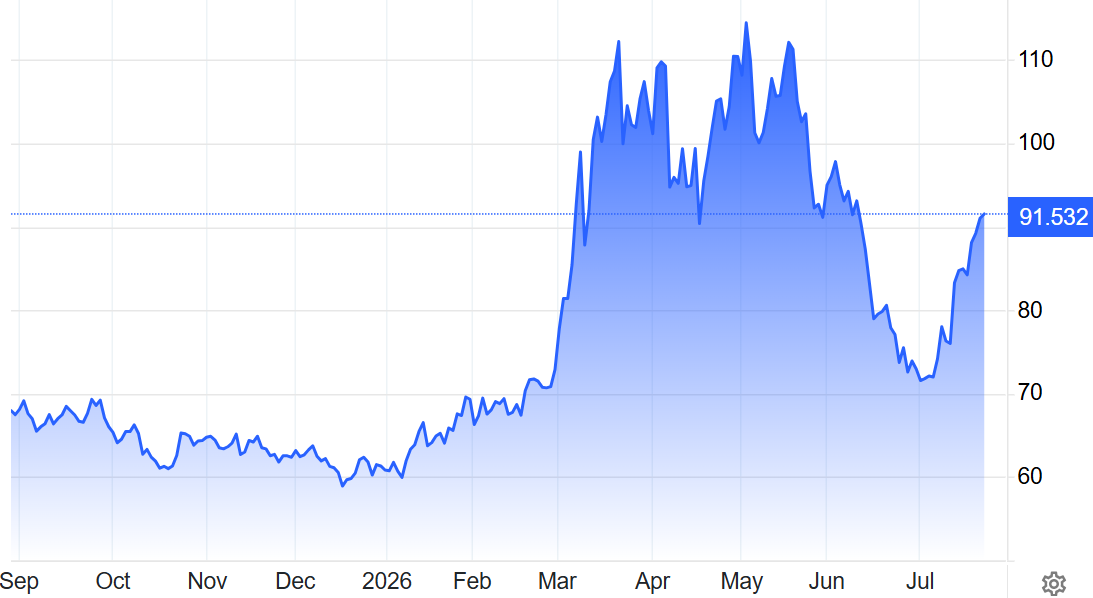 |
Brent oil price movements over the past year. Chart: Trading Economics.
On 21/7, two Saudi Arabian oil tankers en route to Asia were forced to turn back in the Red Sea due to threats from Houthi forces. Concurrently, the US military launched airstrikes against targets in southern and western Iran, while Tehran retaliated by attacking US facilities in Bahrain, Kuwait, and Jordan. At least one oil tanker was also struck in the Strait of Hormuz, underscoring the growing instability.
"This price surge does not immediately reflect lost oil volumes," commented analysts from consulting firm Gelber & Associates. "The market is assessing that logistics operations will remain unstable this week, especially if Saudi Arabian oil exports to Asia or shipping activities through the Red Sea continue to be disrupted."
Adding to supply anxieties, data released on 21/7 by the Joint Organizations Data Initiative (JODI) revealed that Saudi Arabia's crude oil exports in May fell for the third consecutive month to a record low. Separately, Reuters sources reported that the Caspian Pipeline Consortium (CPC) has stopped receiving oil from Kazakhstan as the Russia-Ukraine conflict spreads beyond Ukrainian territory, further impacting global supply chains.
The market is now awaiting weekly inventory reports from the American Petroleum Institute (API) and the US Energy Information Administration (EIA). Analysts estimate that energy companies withdrew approximately 500,000 barrels of oil from reserves last week, which would mark the second consecutive week of declining US crude oil inventories.
Ha Thu (according to Reuters)