A company representative stated that at airports, passengers typically move quickly, focusing on procedures and schedules. This results in short advertising exposure times and distraction from operational information, leading to lower recall and reach compared to high-frequency, close-proximity touchpoints, ultimately impacting brand return on investment.
Furthermore, starting in August, Chicilon Digital Media officially received a license to deploy 4G infrastructure. It is also gradually integrating near field communication (nfc) technology and an artificial intelligence (ai) monitoring system. These technologies allow advertising content to be transmitted flexibly and synchronously on a large scale, enhancing measurement and conversion capabilities. This shift highlighted certain technological and operational effectiveness limitations of airport media channels.
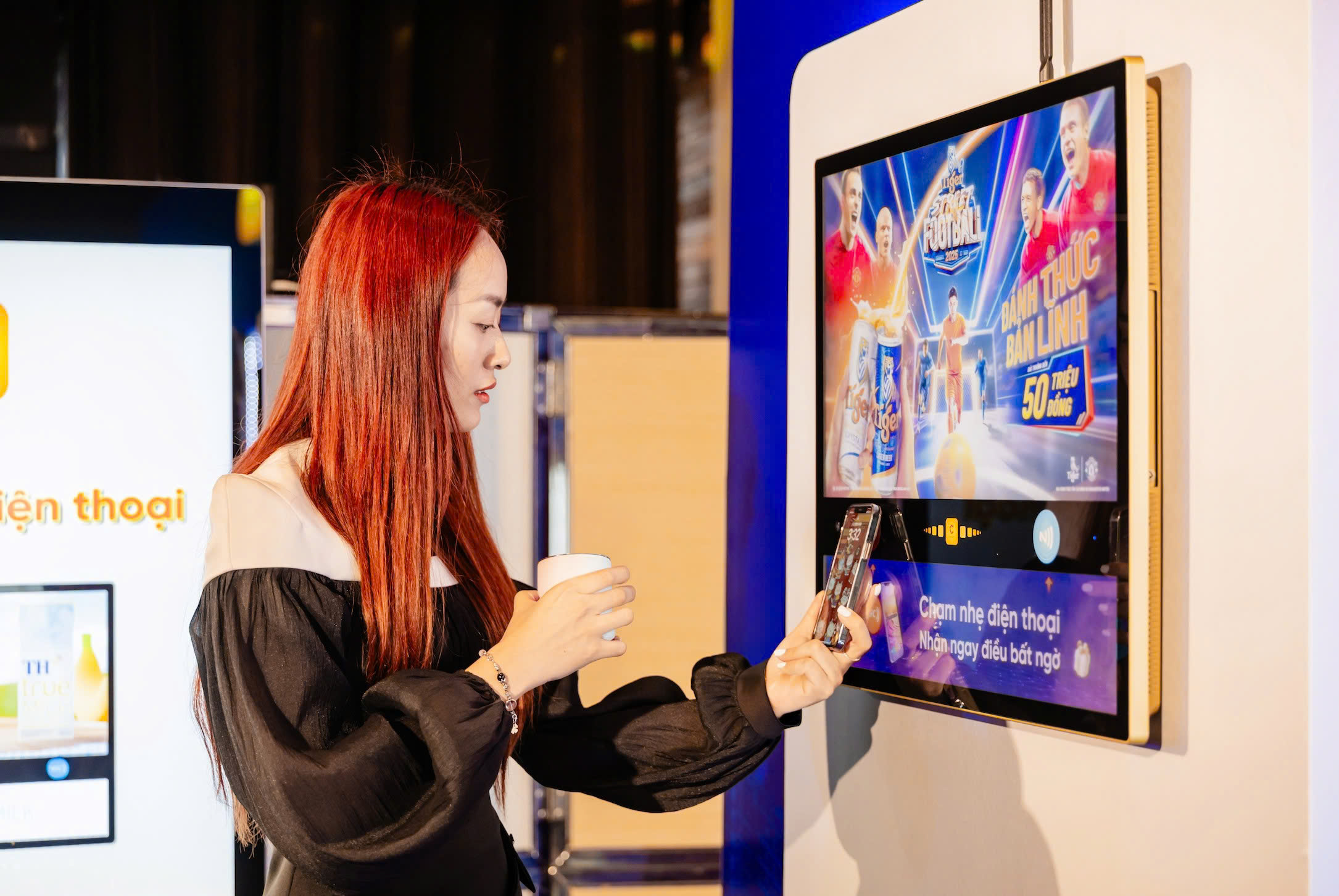 |
Guests trying out the nfc feature at the company's event. Photo: Chicilon Digital Media |
A company representative assessed that, compared to other touchpoints in its ecosystem, airport advertising must adhere to a content review process before broadcast, limiting real-time updates and adjustments. This approach is no longer compatible with the data- and technology-driven operating model the company is deploying across its entire system.
Additionally, Chicilon Digital Media's dynamic nfc-integrated screens serve as display platforms for interaction and behavioral data collection. However, current aviation security requirements do not permit the full deployment of these technological features in airport areas.
Based on these factors, Chicilon Digital Media decided to cease operating airport media channels to focus on a new strategy, as digital out-of-home (dooh) advertising in Vietnam enters a phase of comprehensive connectivity, digitalization, and smart integration.
 |
The company's elevator advertising screen system. Photo: Chicilon Digital Media |
Le Viet Hai Son, CEO of Chicilon Digital Media, stated that ceasing airport media operations is a strategic move in the transition to a high-tech media application model. According to him, platforms utilizing 4G, dynamic nfc, and ai tracking provide a clear competitive advantage, helping the company create more transparent and sustainable value for customers. Mr. Son affirmed the goal of focusing on areas where media technology can be maximally developed, indicating a shift from "traditional display channels" to "data-driven touchpoint platforms."
"We are reallocating our strength to channels with better touchpoints, delivering transparent and verifiable effectiveness. This is an inevitable trend in the global advertising industry," said Le Viet Hai Son.
 |
The Retail BotMedia model focuses on retail points and supermarkets nationwide. Photo: Chicilon Digital Media |
Alongside adjusting its channel portfolio, the company continues to expand its digitized media ecosystem, notably with the Retail BotMedia model – smart retail media. This solution focuses on retail points and supermarkets nationwide, directly influencing shopping behavior through touchpoints throughout the consumer journey, thereby enhancing conversion capabilities for brands.
Currently, Chicilon Digital Media's system covers buildings, retail points, and many high-contact density areas. As the State promotes the digitalization of out-of-home advertising, the company is gradually building new media infrastructure, aiming for clear, transparent measurement effectiveness and higher conversion potential for the Vietnam market.
(Source: Chicilon Digital Media)