In March, China had instructed oil refineries to halt new fuel export contracts and sought to cancel existing commitments to safeguard domestic supply. This move to ease restrictions for July follows a temporary peace agreement signed last month between the US and Iran. China is currently one of Asia's largest fuel exporters.
This current development is expected to ease transportation fuel prices in the region. The world's largest oil refining nation is gradually normalizing operations after disruptions caused by Middle East conflicts. Notably, private refinery Zhejiang Petrochemical has been permitted to resume exports after a suspension of over three months.
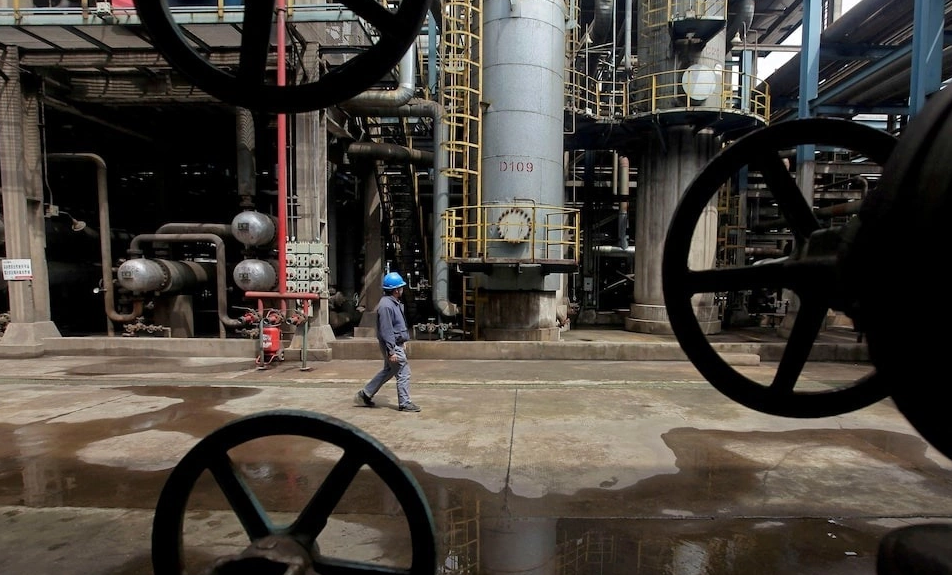 |
Workers walk past oil pipelines at an oil refinery in Wuhan (Hubei, China). Photo: *Reuters*
The policy change could also incentivize state-owned refineries to boost production, leveraging high export margins. This would further support the recovery of oil deliveries to China, the world's largest oil importer. According to two Reuters sources, export margins for Chinese refineries are attractive, reaching around 1,000 yuan (147 USD) per ton or more this week.
For several months, only state-owned enterprises were authorized to export gasoline, diesel, and jet fuel, requiring monthly applications for export volume approval.
Chinese refineries are projecting to export approximately 3 million tons of fuel in July, a volume consistent with last year's average.
It remains uncertain whether these relaxed export restrictions will continue into August, according to the sources. The temporary agreement between the US and Iran previously boosted Middle Eastern oil exports, lowering global prices and alleviating supply concerns. However, renewed attacks this week have introduced market instability, causing prices to rise again.
Ha Thu (according to Reuters)